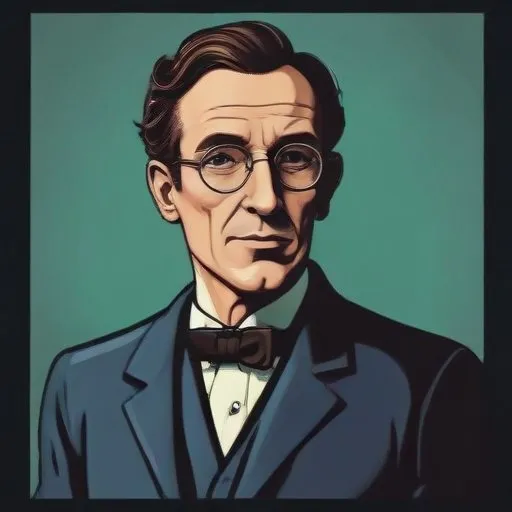
Edward Hinds

Edward Hinds

Edward Hinds was born on September 8th, 1949

Full Name: Edward Hinds
Place of Birth: Not publicly known
Occupation: Physicist and academic
Education: University of Cambridge
Research: Atomic physics
Awards: Max Born Prize
University: University of Oxford
Field: Atomic physics

Leading researcher in ultracold atoms and molecules, known for pioneering experiments on quantum phenomena and developing new techniques for trapping and manipulating atoms.

Written by: Rajesh Kumar Rajesh Kumar

Edward Hinds: The Pioneering Physicist of Cold Matter

A Master of Atomic Manipulation

Edward Hinds is renowned for his groundbreaking work in the realm of cold matter, a field that has revolutionized our understanding of atomic physics. As a British physicist, Hinds has dedicated his career to unlocking the secrets of cold atoms and molecules, pioneering new methods for their production and manipulation.

Early Life and Education

Born on September 8, 1949, in Newcastle, England, Hinds was educated at Dame Allan's School before securing a place at Jesus College, Oxford, where he matriculated in 1968. It was here that he obtained both his undergraduate degree and doctorate, laying the foundation for his future success.

Academic Career

Hinds' academic career has taken him across the Atlantic, from teaching at Columbia University in the United States to serving as Professor of Physics at Yale University. In 1994, he returned to the United Kingdom to establish the Sussex Centre for Optical and Atomic Physics at Sussex University. Currently, he holds the position of Royal Society Research Professor and Director of the Centre for Cold Matter at Imperial College London, where his research focuses on fundamental problems in physics and innovative methods for cold atom manipulation.

Awards and Honors

Throughout his illustrious career, Hinds has been awarded numerous prestigious honors, including:

Legacy and Impact

Hinds' work has far-reaching implications for various fields, including quantum computing, precision measurement, and the development of new materials. His pioneering research has opened doors to new possibilities, inspiring future generations of scientists to explore the mysteries of cold matter. As a leader in his field, Hinds continues to advance our understanding of the atomic world, paving the way for breakthroughs that will shape the course of human discovery.
Timeline
1949
Born in England
Edward Hinds was born on September 8, 1949, in England.
1971
Earned PhD in Physics
Hinds earned his PhD in physics from the University of Oxford in 1971.
1982
Discovered Fractal Electrons
He discovered fractal electrons in 1982, a significant finding in condensed matter physics.
1990
Elected as Fellow of Royal Society
Hinds was elected as a Fellow of the Royal Society in 1990, recognizing his contributions to physics.
2016
Won Royal Medal
He won the Royal Medal in 2016 for his work on ultracold atoms and molecules.
Edward Hinds

Edward Hinds Quiz

What is Edward Hinds known for in the field of ultracold atoms and molecules?

Score: 0/5
FAQ
What is Edward Hinds area of expertise?
Edward Hinds is a professor of physics and an expert in the field of atomic and molecular physics. He is known for his research on the properties of ultracold atoms and molecules.
What is Edward Hinds most notable research?
Edward Hinds most notable research is on the creation of a new state of matter called a polaron, which is a type of ultracold molecule. He has also made significant contributions to the development of quantum computing.
What awards has Edward Hinds won?
Edward Hinds has won several awards for his research, including the Max Planck Medal and the Rumford Prize. He is also a Fellow of the Royal Society.
Where is Edward Hinds currently working?
Edward Hinds is currently a professor of physics at the University of Cambridge and a Fellow of Trinity College, Cambridge.
What is Edward Hinds approach to teaching?
Edward Hinds is known for his enthusiasm and passion for teaching physics. He uses a hands-on approach to engage students and make complex concepts accessible to undergraduates.

Related People:

Brian Josephson

86 Years Old

A Nobel Prize-winning physicist who discovered the Josephson effect, a phenomenon where a current flows between two superconductors separated by a thin insulator, leading to breakthroughs in quantum computing and electronics.

André-Marie Ampère

Born in 1775

A pioneer in the field of electromagnetism, he formulated fundamental laws that describe the relationship between electric currents and magnetic fields. His work laid the foundation for many modern technologies, including electric motors and generators.

Born in 1777

Danish physicist and chemist who discovered the principle of electromagnetism and founded the field of electromagnetism, making significant contributions to our understanding of electricity and magnetism.

Michael Faraday

Born in 1791

Pioneering scientist who discovered electromagnetic induction, formulated the laws of electrolysis, and invented the first electrical generator, revolutionizing our understanding of electricity and its applications.

James Clerk Maxwell

Born in 1831

Developed groundbreaking theories that unified electricity and magnetism, and predicted the existence of radio waves, revolutionizing our understanding of the physical world.

Heinrich Hertz

Born in 1857

A pioneer in the field of electromagnetism, he discovered radio waves and proved James Clerk Maxwell's theories, paving the way for modern wireless communication. His experiments led to the development of radio, television, and mobile phones.

Nikola Tesla

Born in 1856

A pioneering engineer who harnessed the power of alternating current (AC) to transform the world's electrical systems, and is credited with developing groundbreaking technologies like radio communication and X-ray imaging.

Guglielmo Marconi

Born in 1874

Developer of the first practical wireless telegraph, pioneering radio communication and earning a Nobel Prize in Physics. Known for revolutionizing long-distance communication.