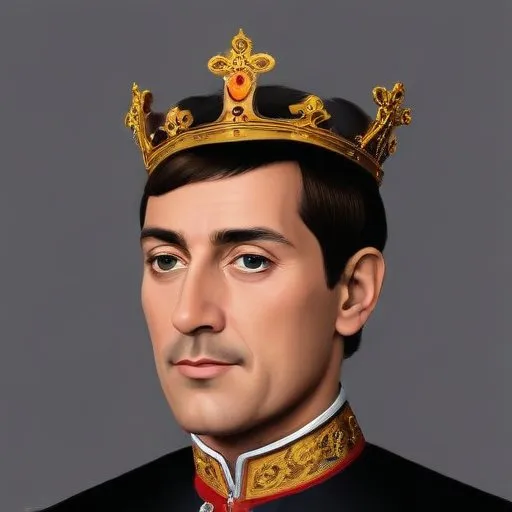
Edward, King of Portugal: The Philosopher King of Exploration
A Legacy of Maritime Exploration and Cultural Enlightenment
Edward, King of Portugal, also known as Edward the Philosopher King or the Eloquent, is famously recognized for his significant contributions to the development of Portuguese civilization during the 15th century. As the King of Portugal from 1433 until his death in 1438, he played a pivotal role in shaping the country's maritime exploration and cultural landscape.
Early Life and Ascension to the Throne
Born on October 31, 1391, in Viseu, Portugal, Edward was the oldest son of King
John I of Portugal and his wife,
Philippa of Lancaster. He was the second-born male legitimate son, but after his brother Afonso's death in 1400, Edward became the heir to the throne. As a youth, Edward followed his father in the affairs of the kingdom, gaining valuable experience and insight into the workings of the Portuguese government.
Rise to Power and Leadership
In 1415, Edward was knighted after the Portuguese capture of the city of Ceuta in North Africa, a significant milestone that marked the beginning of his journey as a leader. Upon his father's death in 1433, Edward ascended to the throne, bringing with him a strong sense of justice, diplomacy, and a vision for a more prosperous Portugal.
The Philosopher King's Legacy
Edward's reign was marked by his unwavering commitment to building internal political consensus. He convened the Portuguese Cortes, the national assembly, no less than five times to discuss the political affairs of his kingdom. This approach earned him the respect and admiration of his people, who saw him as a just and fair ruler.
Maritime Exploration and the African Coast
Edward continued his father's policies concerning maritime exploration, encouraging and financing his famous brother,
Henry the Navigator. This led to several expeditions along the west coast of Africa, including the historic expedition of Gil Eanes in 1434, which successfully rounded Cape Bojador. This achievement paved the way for further exploration southward along the African coast, cementing Portugal's position as a leader in maritime exploration.
Colonial Affairs and the Importance of Tangier
Edward realized that the colony at Ceuta was rapidly becoming a drain on the Portuguese treasury. He understood that without the city of Tangier, possession of Ceuta was worthless. This led to a shift in focus, with Tangier becoming a crucial strategic location for the Portuguese.
Cultural Contributions and Enlightenment
Edward was not only a skilled leader and navigator but also a patron of the arts and education. He encouraged the development of literature, art, and architecture, earning him the nickname "The Philosopher King." His court attracted scholars, poets, and artists from across Europe, fostering a culture of intellectual curiosity and creativity.
Personal Milestones and Life Events
- October 31, 1391: Born in Viseu, Portugal
- 1415: Knighted after the Portuguese capture of Ceuta in North Africa
- 1433: Ascended to the throne after the death of his father, King John I
- 1438: Died on September 9, marking the end of his five-year reign
Legacy and Impact
Edward, King of Portugal, left an indelible mark on the world. His commitment to maritime exploration, cultural enlightenment, and internal political consensus has inspired generations to come. His legacy serves as a testament to the power of visionary leadership, intellectual curiosity, and the pursuit of knowledge.
Through his remarkable achievements, Edward, King of Portugal, has secured a place in history as one of the most influential and revered leaders of the 15th century.
FAQ
Who was Edward, King of Portugal?
Edward, King of Portugal was a king of Portugal who ruled from 1433 to 1438.
What is Edward, King of Portugal known for?
Edward, King of Portugal is known for his efforts to strengthen the Portuguese economy and his military campaigns against the Kingdom of Castile.
What were Edward, King of Portugals major achievements?
Edward, King of Portugals major achievements include the establishment of the Portuguese Navy and the signing of the Treaty of Amiens with the Kingdom of England.
How did Edward, King of Portugal die?
Edward, King of Portugal died on September 9, 1438, after falling ill while on a campaign against the Moors in North Africa.
What was the significance of Edward, King of Portugals reign?
Edward, King of Portugals reign marked a significant period in Portuguese history, during which the country expanded its territories and strengthened its economy.