


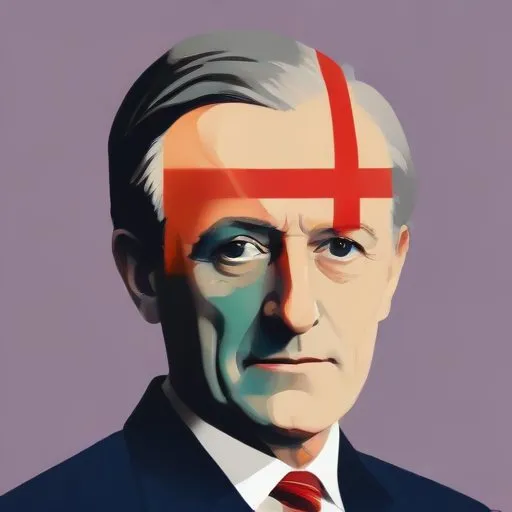
A pioneering advocate for free trade, he championed the cause in Australia, shaping the country's economic policies. His efforts led to significant reforms, fostering growth and development.
Edward Pulsford, a stalwart advocate of free trade and racial tolerance, left an indelible mark on Australian politics and society during the late 19th and early 20th centuries. As a co-founder of the Free Trade and Liberal Association, Pulsford was instrumental in shaping the country's economic and social landscape.
Born on September 29, 1844, in Burslem, Staffordshire, England, Edward Pulsford was the son of Mary Ann (née Cutler) and James Eustace Pulsford, a Baptist minister and businessman. He received a private education and worked with his father as a commission agent in Hull, Yorkshire, from 1870 to 1884.
In 1883, Pulsford set sail for New South Wales, where he established a successful business as a commission agent. His entrepreneurial spirit and strong advocacy for free trade soon propelled him into the realm of politics.
Pulsford's relentless pursuit of free trade ideals led him to co-found the Free Trade and Liberal Association in New South Wales. This organization would later become the driving force behind the Free Trade Party. His unwavering commitment to the cause earned him a reputation as a fierce opponent of protectionism.
In 1895, Pulsford was appointed to the Legislative Council, where he served until 1901. During this period, he consistently championed the cause of free trade, often finding himself at odds with his contemporaries.
Pulsford's advocacy extended beyond economic policy to social justice. He was a vocal critic of the White Australia policy and other forms of racial discrimination. As the financial editor of the Daily Telegraph, he attacked restrictive immigration laws, and later, as a senator, he was one of the few to oppose the 1901 Immigration Restriction Act.
This unwavering commitment to racial tolerance, combined with his opposition to women's suffrage, has led some historians to describe Pulsford as "probably the least racist but perhaps the most sexist member of the Australian Senate in its first decade."
Edward Pulsford's contributions to Australian politics and society are multifaceted and far-reaching. His unwavering advocacy for free trade and racial tolerance has left an indelible mark on the country's economic and social fabric.
Pulsford married Mary Charlotte Stainforth on February 23, 1870, and was predeceased by her. Despite his many accomplishments, Pulsford's personal life remains somewhat enigmatic, shrouded in the annals of history.
Edward Pulsford's remarkable life serves as a testament to the power of conviction and the importance of standing against the tide of popular opinion. His legacy continues to inspire generations, offering a powerful reminder of the enduring importance of racial tolerance and free trade.
Born in 1815
A pioneering figure in Australian politics, instrumental in shaping the country's federation and unity, known for his tireless advocacy for a unified Australia.
Born in 1849
Australia's first Prime Minister, who played a key role in the country's federation and shaped its early government, is most known for uniting the country's six colonies into one nation. He was a strong advocate for Australian independence and self-governance.
Born in 1856
The 2nd Prime Minister of Australia, a key figure in the country's early development, known for his role in shaping Australia's constitution and federation. He played a crucial part in uniting the country's six colonies into a single nation.
Born in 1867
Third Prime Minister of Australia, serving from 1904 to 1905, known for his efforts to establish a national government and implement progressive reforms.
Born in 1862
The 5th Prime Minister of Australia, a key figure in the country's early 20th-century politics, known for his role in shaping Australia's social and economic landscape. He played a crucial part in establishing the country's old-age pension and maternity allowance systems.
Born in 1845
The 4th Prime Minister of Australia, a Scottish-Australian lawyer and politician who served from 1904 to 1905, known for his role in shaping the country's early years and contributing to its growth.
Born in 1860
The 6th Prime Minister of Australia, a key figure in the country's early 20th-century politics, known for his role in shaping Australia's economy and foreign policy. He played a crucial part in Australia's transition from a British colony to an independent nation.
