


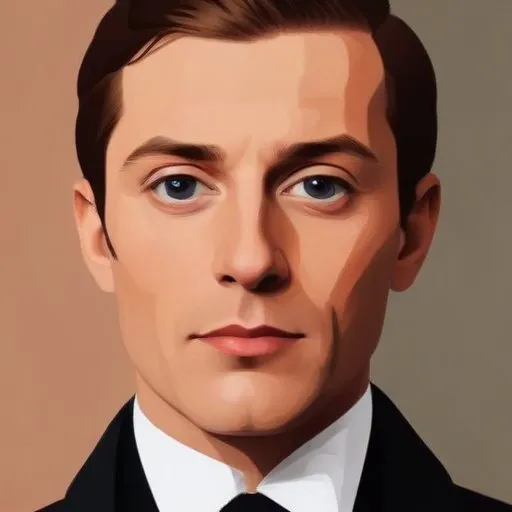
A powerful nobleman who plotted against King Henry VIII, ultimately leading to his execution for treason. He's known for his failed rebellion and tragic downfall.
Edward Stafford, 3rd Duke of Buckingham, is best known for his ill-fated rebellion against King Henry VIII, which ultimately led to his execution for treason in 1521. A first cousin once removed of King Henry VIII, Stafford's life was marked by a complex web of alliances, rivalries, and power struggles that defined the tumultuous landscape of 16th-century English politics.
Born on February 3, 1478, at Brecon Castle in Wales, Stafford was the eldest son of Henry Stafford, 2nd Duke of Buckingham, and Catherine Woodville, daughter of Richard Woodville, 1st Earl Rivers. Through his mother's marriage, Stafford became a nephew of Elizabeth Woodville, queen consort of King Edward IV, and a cousin of King Henry VIII.
Stafford's family was marked by a history of notable alliances and marriages. His father's marriage to Catherine Woodville produced two younger siblings: Henry Stafford, 1st Earl of Wiltshire, and two sisters, Elizabeth and Anne. After his father's execution in 1483, Stafford's mother remarried twice, first to Jasper Tudor, half-brother of King Henry VII, and then to Sir Richard Wingfield.
In 1483, Stafford's father led a rebellion against King Richard III, which ended in his beheading without trial. Stafford himself was forced into hiding in various houses in Herefordshire, where he remained until the end of Richard III's reign.
Stafford's own career was marked by a tumultuous relationship with the Tudor monarchy. He frequently attended the courts of Henry VII and Henry VIII, but his growing resentment towards the king's absolute power and favoritism towards low-born advisors ultimately led him to conspire against Henry VIII. In 1521, Stafford was arrested, charged with treason, and executed on Tower Hill.
Stafford's rebellion against Henry VIII has been seen as a precursor to the English Reformation, which would shake the foundations of English politics and religion in the following decades. His tragic fate serves as a cautionary tale of the dangers of courting royal favor and the consequences of challenging absolute power.
In terms of his personal legacy, Stafford's marriage to Eleanor Percy, daughter of Henry Percy, 4th Earl of Northumberland, produced four children, including Mary Stafford, who would go on to become a prominent lady-in-waiting to Anne Boleyn, Henry VIII's second wife.
Edward Stafford, 3rd Duke of Buckingham, remains a complex and fascinating figure in English history, a testament to the intricate web of power struggles, alliances, and rivalries that defined the Tudor era.
Born in 1457
First Tudor king of England, who ended the Wars of the Roses and established a strong, centralized government, bringing stability and prosperity to the country.
Born in 1926
The monarch of the United Kingdom and its Commonwealth realms, serving as a unifying figurehead and symbol of national identity, while also carrying out various ceremonial and charitable duties.
Born in 1574
An English explorer and cartographer who mapped the New World and created innovative navigational tools, contributing significantly to the development of modern cartography.
Born in 1489
Leader of the English Reformation, instrumental in creating the Church of England and authoring the Book of Common Prayer.
Born in 1239
Conqueror of Wales and hammer of the Scots, he strengthened the English monarchy and established parliamentary representation.
75 Years Old
A renowned actress, producer, and jewelry designer, best known for her iconic roles in film and television, including the Bond girl Solitaire and Dr. Quinn, Medicine Woman.
