


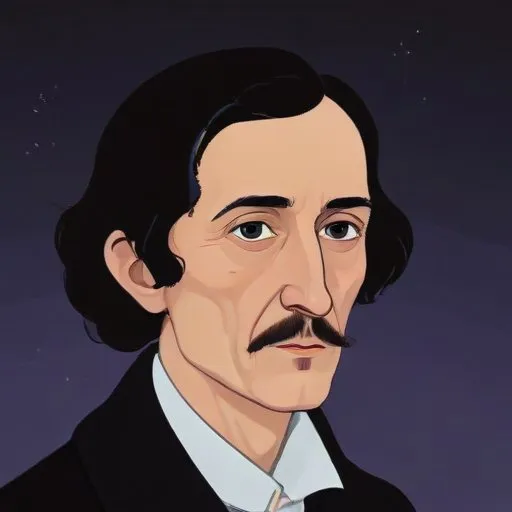
A poet, dramatist, and literary critic, best known for his poem "Night-Thoughts", a meditation on death and the human condition. His work explores themes of mortality, faith, and the human experience.
Edward Young, an English poet, is best remembered for his philosophical masterpiece, "Night-Thoughts," a series of poignant writings in blank verse that reflect his state of mind following a string of bereavements. This iconic work, considered one of the most popular poems of the 18th century, has had a profound influence on literary giants like Goethe and Edmund Burke, among many others.
Born on June 3, 1683, at his father's rectory in Upham, near Winchester, Young was the son of Edward Young, later Dean of Salisbury. He was educated at Winchester College and later matriculated at New College, Oxford, in 1702. Young migrated to Corpus Christi and, in 1708, was nominated by Archbishop Tenison to a law fellowship at All Souls. He ultimately earned his degree of Doctor of Canon Law in 1719.
Young's literary career spanned multiple genres, including poetry, plays, and essays. His first publication was an "Epistle to... Lord Lansdoune" in 1713, followed by "A Poem on the Last Day" in the same year, dedicated to Queen Anne. Other notable works include "The Force of Religion or Vanquished Love" (1714), a poem on the execution of Lady Jane Grey and her husband, and "Busiris" (1719), a play produced at Drury Lane.
The crowning jewel of Young's literary achievements, however, is "Night-Thoughts on Life, Death, and Immortality," a series of nine nights' contemplations on the human condition. This magnum opus, with its striking illustrations by William Blake, has had a lasting impact on literature and continues to inspire readers to this day.
"Night-Thoughts" has been hailed as a masterpiece of 18th-century literature, influencing a wide range of writers and thinkers. Goethe, Edmund Burke, and even the French philosopher, Jean-Jacques Rousseau, have been inspired by Young's work. The poem's haunting reflections on mortality, the fleeting nature of life, and the human search for meaning have resonated with readers across generations.
Young's personal life was marked by controversy, particularly his perceived insincerity in his pursuit of preferment. His fawning letters to influential figures, including the Duke of Wharton, have been criticized as self-serving and opportunist. Despite these criticisms, Young's literary legacy remains unquestionable, and his iconic poem continues to captivate readers with its timeless themes and haunting beauty.
You can still feel the echoes of Young's "Night-Thoughts" in the works of later writers, from William Wordsworth to Samuel Taylor Coleridge. His innovative use of blank verse and his willingness to explore the darker recesses of the human experience have made him a pioneer in the realm of English literature.
In conclusion, Edward Young's remarkable life and literary career continue to inspire and captivate readers today. His masterpiece, "Night-Thoughts," remains a testament to his genius and his ability to tap into the human condition, making him one of the most enduring and influential poets of the 18th century.
Born in 1846
A Nigerian priest and historian who wrote the first comprehensive history of the Yoruba people, providing valuable insights into their culture and traditions.
Born in 1707
Wrote influential and satirical novels of manners, such as "Tom Jones", that explored the social and moral issues of 18th-century England.
Born in 1731
A renowned poet and hymnwriter, known for his evocative and expressive works that explored themes of nature, faith, and the human experience. His hymns, such as "Light Shining Out of Darkness", remain popular to this day.
61 Years Old
An American-Finnish author who wrote gritty, hard-boiled crime novels that explored the darker side of human nature, often drawing from his own experiences as a convict and a soldier.
Born in 1716
A renowned 18th-century poet and scholar, celebrated for his lyrical and melancholic works, particularly the iconic "Elegy Written in a Country Churchyard".
Born in 1721
A physician and poet who wrote influential works on aesthetics and the sublime, exploring the intersection of art and morality. His poetry is known for its rich, descriptive language and philosophical themes.
