


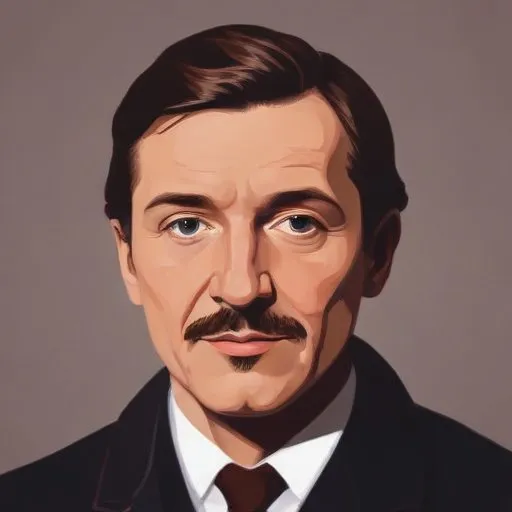
A physician and poet who wrote influential works on aesthetics and the sublime, exploring the intersection of art and morality. His poetry is known for its rich, descriptive language and philosophical themes.
Mark Akenside was an 18th-century English poet and physician who left an indelible mark on the world of literature and medicine. He is best known for his poignant and thought-provoking poetry, particularly his didactic poem "The Pleasures of the Imagination", which is still widely read and studied today.
Akenside was born on November 9, 1721, in Newcastle upon Tyne, England, to a butcher and a family of Dissenters. A childhood accident left him slightly lame, but it did not hinder his intellectual pursuits. He attended the Royal Free Grammar School of Newcastle and a dissenting academy in the town before moving to the University of Edinburgh to study theology in 1739.
While still a student, Akenside's literary talents began to shine. He contributed to the Gentleman's Magazine, publishing "The Virtuoso" in 1737, an imitation of Spenser's style and stanza. His poem "A British Philippic, occasioned by the Insults of the Spaniards, and the present Preparations for War" was also published separately in 1738.
Akenside's interests soon shifted from theology to medicine, and he repaid the money advanced for his theological studies. He became a deist and pursued his medical studies with zeal. His ambitions lay beyond his profession, and his exceptional oratory skills made him aspire to enter Parliament one day.
In 1740, Akenside printed his "Ode on the Winter Solstice" in a small volume of poems. His magnum opus, "The Pleasures of the Imagination", was inspired by a visit to Morpeth in 1738. This didactic poem was well received and later described as being of great beauty.
Akenside formed a lifelong friendship with Jeremiah Dyson in 1742, which was a significant milestone in his personal life. He also began to call himself a surgeon, although it is uncertain whether he practiced medicine actively.
Akenside's poetry and medical pursuits left a lasting legacy. His poetry inspired a generation of writers, and his medical contributions paved the way for future physicians. His work continues to be studied and admired, a testament to his enduring impact on literature and medicine.
Akenside's poetry is filled with quotable lines, one of which is: "The human mind is not capable of bearing the whole burden of itself." This quote reflects his poignant and thought-provoking style, which continues to inspire readers to this day.
Akenside lived during a time of great change and upheaval, but his work transcended the boundaries of time and space. His poetry and medical pursuits continue to be relevant, and his legacy endures as a testament to his innovative spirit and literary talent.
Mark Akenside's remarkable life and achievements serve as a testament to his innovative spirit and literary talent. His poetry and medical pursuits continue to inspire and influence generations, cementing his place in the annals of English literature and medical history.
Born in 1631
A dominant literary figure of the Restoration era, known for his influential poetry, plays, and critical essays that shaped the English literary landscape. He's often credited with creating a new style of heroic drama and satire.
Born in 1672
A renowned 18th-century writer and statesman who penned influential essays and plays, shaping English literature and politics. He's most famous for his witty, insightful writings in The Spectator magazine.
Born in 1672
A pioneering journalist and playwright who co-founded The Tatler and The Spectator, influential publications that shaped 18th-century British literature and culture.
Born in 1667
A witty wordsmith who penned scathing social commentaries, including the iconic "Gulliver's Travels", which continue to delight and provoke readers to this day.
Born in 1707
Wrote influential and satirical novels of manners, such as "Tom Jones", that explored the social and moral issues of 18th-century England.
Born in 1689
Pioneering epistolary novelist and publisher who penned influential works like "Pamela" and "Clarissa", shaping the English novel and exploring themes of morality and social class.
Born in 1713
Wrote influential and innovative novels, particularly "Tristram Shandy", that experimented with narrative structure and style, influencing the development of modern literature.
Born in 1728
A celebrated 18th-century writer, known for his witty plays and novels of manners that satirized the social class system, leaving a lasting impact on English literature.
