


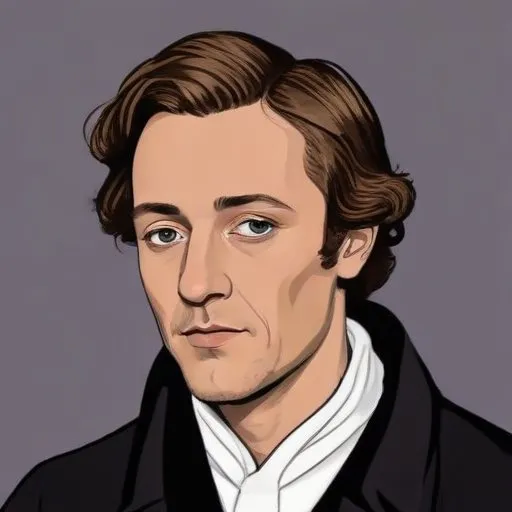
A renowned 18th-century poet and scholar, celebrated for his lyrical and melancholic works, particularly the iconic "Elegy Written in a Country Churchyard".
Thomas Gray is perhaps most famously known for his poem, "Elegy Written in a Country Churchyard," published in 1751, which cemented his reputation as a master of elegiac poetry. This iconic work, with its haunting descriptions of mortality and the transience of human life, has resonated with readers for centuries, making Gray one of the most celebrated poets of the 18th century.
Born on December 26, 1716, in Cornhill, London, Gray was the fifth of twelve children to Philip Gray, a scrivener, and Dorothy Antrobus, a milliner. Against the odds, he was the only one to survive infancy, thanks to his mother's quick thinking and bravery in saving his life from suffocation.
Gray's early years were spent living with his mother after she left his abusive and mentally unstable father. His mother's unwavering support and encouragement enabled him to attend Eton College, where his uncles, Robert and William Antrobus, worked. Under their guidance, Gray developed a passion for botany, observational science, and literature.
At Eton, Gray forged strong bonds with three close friends – Horace Walpole, son of Prime Minister Robert Walpole, Thomas Ashton, and Richard West, son of Lord Chancellor of Ireland Richard West. This tight-knit group, dubbed the "Quadruple Alliance," shared an appreciation for beauty, humor, and style, earning them a reputation as stylish and cultured young men. Gray's nickname within the group was Orozmades, after the Zoroastrian divinity.
Despite Gray's popularity and literary talent, he was a self-critical writer who published only 13 poems during his lifetime. His most famous work, "Elegy Written in a Country Churchyard," showcased his mastery of elegiac poetry and earned him widespread recognition.
Gray's writing style was characterized by its lyricism, precision, and attention to detail. He drew inspiration from classical literature and mythology, as well as the natural world. His other notable poems include "Ode on a Distant Prospect of Eton College" and "The Bard."
In 1757, Gray declined the position of Poet Laureate, which was offered to him after the death of Colley Cibber. Although he shunned the spotlight, his talent and contributions to literature were recognized by his contemporaries, solidifying his place in the pantheon of English poetry.
Thomas Gray's work has had a profound impact on literature and poetry. His "Elegy Written in a Country Churchyard" has influenced generations of writers, including William Wordsworth and Percy Bysshe Shelley. Gray's legacy extends beyond his poetry, as he played a significant role in shaping the literary landscape of the 18th century.
Today, Gray's work remains a testament to the power of poetry to capture the human experience. His mastery of language, form, and emotion continues to inspire readers and writers alike, ensuring his place as one of the most celebrated poets in English literature.
Born in 1846
A Nigerian priest and historian who wrote the first comprehensive history of the Yoruba people, providing valuable insights into their culture and traditions.
Born in 1631
A dominant literary figure of the Restoration era, known for his influential poetry, plays, and critical essays that shaped the English literary landscape. He's often credited with creating a new style of heroic drama and satire.
Born in 1672
A renowned 18th-century writer and statesman who penned influential essays and plays, shaping English literature and politics. He's most famous for his witty, insightful writings in The Spectator magazine.
Born in 1672
A pioneering journalist and playwright who co-founded The Tatler and The Spectator, influential publications that shaped 18th-century British literature and culture.
Born in 1667
A witty wordsmith who penned scathing social commentaries, including the iconic "Gulliver's Travels", which continue to delight and provoke readers to this day.
Born in 1731
A renowned poet and hymnwriter, known for his evocative and expressive works that explored themes of nature, faith, and the human experience. His hymns, such as "Light Shining Out of Darkness", remain popular to this day.
Born in 1754
A priest, surgeon, and poet who wrote realistic and often somber verse about rural life, influencing the development of the narrative poem. Known for his vivid descriptions of everyday people and their struggles.
Born in 1728
A celebrated 18th-century writer, known for his witty plays and novels of manners that satirized the social class system, leaving a lasting impact on English literature.
