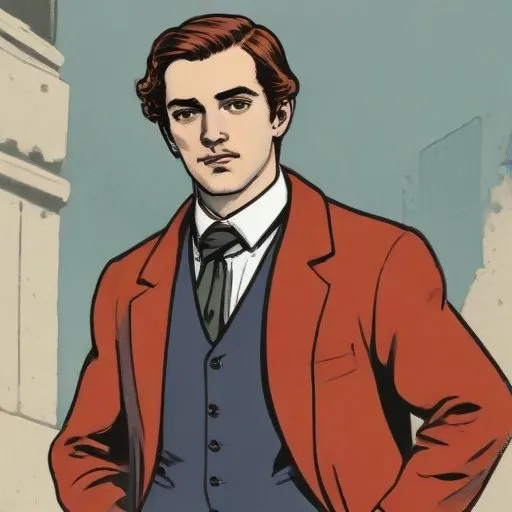
Edwin Austin Abbey: The Visionary Muralist and Illustrator of the Golden Age
The Quest for Masterpiece: Abbey's Most Famous Work
Edwin Austin Abbey is renowned for his breathtaking murals and illustrations that transport viewers to the realm of Shakespearean and Victorian grandeur. His magnum opus,
The Quest and Achievement of the Holy Grail, adorns the Boston Public Library, showcasing his mastery of color, composition, and narrative storytelling.
Early Life and Education: Laying the Foundations
Born on April 1, 1852, in Philadelphia, Pennsylvania, Abbey was the son of commercial broker William Maxwell Abbey and Margery Ann Kiple. He began his artistic journey at the Pennsylvania Academy of the Fine Arts, where he honed his skills under the guidance of Christian Schuessele. This early training laid the groundwork for his future success in the art world.
Rise to Prominence: Illustrations and Sketches
Abbey's prolific career as an illustrator began in the early 1870s, with his work appearing in esteemed publications such as
Harpers Weekly and
Scribner's Magazine. His unique style, influenced by French and German black-and-white art, captured the essence of literary masterpieces. He illustrated several bestselling books, including
Charles Dickens'
Christmas Stories (1875),
Robert Herrick's
Selections from the Poetry of (1882), and
Oliver Goldsmith's
She Stoops to Conquer (1887).
Transatlantic Triumph: Abbey's European Sojourn
In 1878, Abbey relocated to England, where he was commissioned to illustrate Robert Herrick's poems. This move marked the beginning of his permanent residence in England, where he continued to refine his craft. In 1883, he was elected to the Royal Institute of Painters in Water-Colours, solidifying his reputation as a master artist.
Crowning Achievement: The Coronation of Edward VII
Abbey's impressive portfolio includes a majestic painting of
Edward VII's coronation, a testament to his skill in capturing the grandeur of historical events. This monumental work cemented his status as a preeminent artist of his time.
Legacy and Impact: Abbey's Enduring Influence
Abbey's contributions to the world of art are immeasurable. His murals and illustrations continue to inspire generations of artists, writers, and art lovers. As a pioneer of the Golden Age of Illustration, he paved the way for future masters, leaving an indelible mark on the art world.
Quotes and Memorable Sayings
- "Art is the only way to run away without leaving home."
- "The greatest glory in living lies not in never falling, but in rising every time we fall."
Historical Context and Legacy
Abbey's life and work are a testament to the artistic fervor of the late 19th and early 20th centuries. His contributions to the Golden Age of Illustration continue to captivate audiences, offering a glimpse into a bygone era of elegance and sophistication. As a master of his craft, Abbey's legacy endures, inspiring future generations to pursue their artistic passions.
Comparative Analysis with Contemporaries
Abbey's work is often compared to that of his contemporaries, such as
Howard Pyle and
Charles Dana Gibson. While each artist brought their unique style to the table, Abbey's mastery of mural painting and his ability to capture the essence of literary classics set him apart as a visionary of his time.
Personal Relationships and Anecdotes
Abbey's life was marked by his dedication to his craft, as well as his warm and engaging personality. He was known for his humility and kindness, often taking the time to mentor and encourage aspiring artists. His warm relationships with fellow artists and writers, including Robert Herrick and Charles Dickens, are a testament to his generosity of spirit.
Trivia and Fun Facts
- Abbey was one of the youngest artists to be elected to the Royal Institute of Painters in Water-Colours.
- He was known for his love of literature and music, often incorporating these passions into his artistic work.
Awards and Honors
Abbey's numerous accolades include his election to the Royal Institute of Painters in Water-Colours and his recognition as a master artist by his contemporaries. His most enduring legacy, however, lies in the timeless beauty and elegance of his art, which continues to captivate audiences to this day.
FAQ
What style of art did Edwin Austin Abbey practice?
Edwin Austin Abbey was an American painter and illustrator known for his work in the Victorian era, particularly in the style of Romanticism and Illustration.
What were Edwin Austin Abbeys most famous works?
Edwin Austin Abbeys most famous works include his illustrations for books such as The Quest of the Holy Grail and The Rubaiyat of Omar Khayyam, as well as his paintings of historical and literary scenes.
What was Edwin Austin Abbeys role in the development of American art?
Edwin Austin Abbey played a significant role in the development of American art, particularly in the late 19th and early 20th centuries, as a prominent illustrator and painter.
What awards and recognition did Edwin Austin Abbey receive?
Edwin Austin Abbey received numerous awards and recognition for his work, including a gold medal at the 1904 Worlds Fair in St. Louis and election as a member of the National Academy of Design.
What is Edwin Austin Abbeys legacy in American art?
Today, Edwin Austin Abbey is remembered as one of the most important American illustrators and painters of his time, known for his meticulous attention to detail and his ability to bring literary and historical scenes to life.