


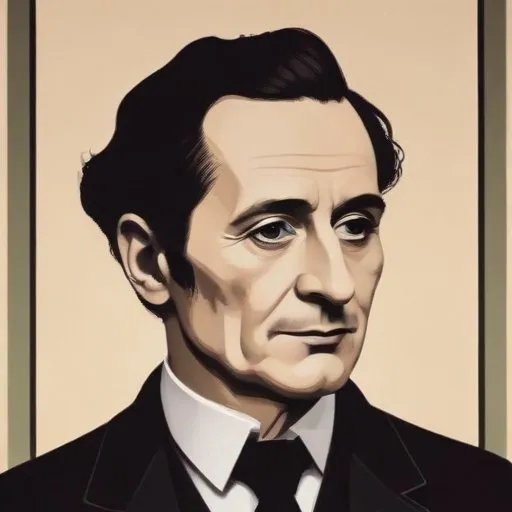
A British author and poet, best known for translating and popularizing the works of German authors, such as Goethe and Schiller, making German literature accessible to the English-speaking world.
Edwin Keppel Bennett, a prominent English writer, poet, and Germanist, is best known for his esteemed presidency of Gonville and Caius College, Cambridge, from 1948 to 1956. His extensive academic contributions, particularly in the field of German literature, have made him a household name in academic circles.
Born on September 26, 1887, in Wareham, Dorset, England, Bennett was the son of Alfred Hockey Bennett, a confectioner, and his wife Emilie, née Keppel. He received his early education at Elm House School, Wareham, under the tutelage of A.E. Skewes. Later, he attended the Universität Straßburg, Germany (now in France), where he was mentored by Professor Bartholdy.
Bennett entered Gonville and Caius College, Cambridge in 1914, graduating with a B.A. in 1919 and an M.A. in 1923. During his time at Cambridge, he was the editor of the Caian, a college magazine, and delivered a lecture on "Poetry and Pessimism" in 1922. He became an unofficial fellow of the college in 1923 and a lecturer in German, subsequently becoming an official fellow in 1926 and a tutor in 1931.
During World War I, Bennett served in an intelligence unit of the British Army, holding the rank of second lieutenant from 1916 to 1918, primarily in Palestine.
Bennett's literary career began with the publication of his first book, Built in Jerusalem's Wall: A Book in Praise of Jerusalem, under the pseudonym Francis Keppel in 1920. His magnum opus, A History of the German Novelle from Goethe to Thomas Mann, was published by Cambridge University Press in 1934, with a revised edition appearing in 1961. Another notable work is his critical study of Stefan George, titled Stefan George: A Critical Study, published in 1954.
Bennett's presidency of Gonville and Caius College, Cambridge, from 1948 to 1956, was marked by his commitment to academic excellence and his role as a mentor to several notable scholars, including Erich Heller, whom he guided through his doctoral studies.
Bennett's legacy as a Germanist, poet, and academic has left an indelible mark on the world of academia, and his contributions continue to inspire and influence scholars to this day.
Born in 1879
This celebrated author crafted novels and plays that probed the human condition, exploring themes of social class, morality, and personal relationships, with a distinctive wit and insight. Their works continue to captivate audiences with their nuanced portrayals of English society during the early 20th century.
Born in 1885
A pioneering writer of the early 20th century, known for exploring themes of human nature, relationships, and the clash between individual desire and societal expectations through novels like "Sons and Lovers" and "Lady Chatterley's Lover".
Born in 1894
Author of dystopian classics like Brave New World, exploring the consequences of technological advancements on humanity. Known for prophetic warnings about government control and manipulation.
Born in 1903
A renowned writer of dystopian classics, such as "1984" and "Animal Farm", who warned of totalitarianism's dangers through allegorical fiction.
Born in 1903
A renowned English writer, known for his witty satires and novels of manners, particularly "Brideshead Revisited", which explores the British aristocracy's decline.
Born in 1907
A renowned poet, playwright, and composer who explored themes of love, morality, and social justice through his works, leaving a lasting impact on 20th-century literature.
Born in 1898
Renowned author of fantasy series, including The Chronicles of Narnia, and prominent Christian apologist, exploring the intersection of faith and reason.
Born in 1892
Creator of Middle-earth, a richly detailed fantasy world, and author of The Hobbit and The Lord of the Rings trilogy, which have become cultural touchstones.
