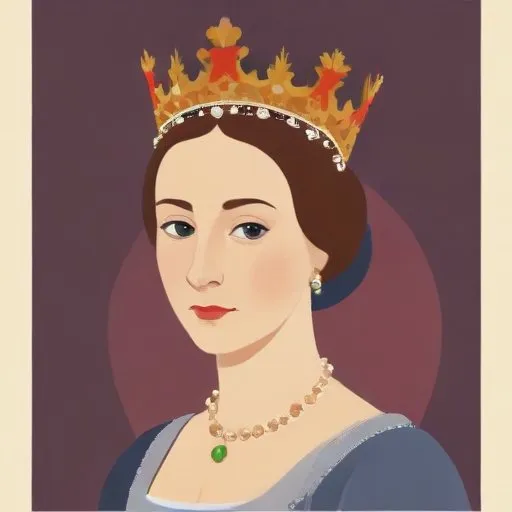
Eleonore of Austria, Queen of Poland

Eleonore of Austria, Queen of Poland

Eleonore of Austria, Queen of Poland was born on May 21st, 1653

Full Name: Eleonore of Austria
Nationality: Austrian-Polish
Profession: Queen of Poland
Born: November 28, 1653
Died: December 17, 1697
Spouse: Michael Korybut Wiśniowiecki
Children: None
Reign: 1670-1673

The wife of King Michael Korybut Wi?niowiecki of Poland, she played a significant role in the country's royal court and was known for her strong personality and influence on her husband's decisions.

Written by: Aisha Patel Aisha Patel

Eleonore of Austria, Queen of Poland: A Life of Loyalty and Dedication

A Royal Marriage and a United Kingdom

Eleonore of Austria, Queen of Poland and Grand Duchess of Lithuania, is best known for her marriage to King Michael Korybut Winiowiecki, which united the Habsburg dynasty with the Polish-Lithuanian Commonwealth. This strategic alliance, forged on February 27, 1670, at the Jasna Gra Monastery, marked a significant turning point in European history.

A Life of Devotion

Born on May 21, 1653, in Regensburg, Eleonore was the daughter of Holy Roman Emperor Ferdinand III and his wife, Eleonora of Mantua. Despite her privileged upbringing, little is known about her childhood. However, it is recorded that she received a good education, speaking both French and Italian with ease.

A Queen of Character

Eleonore's marriage to King Michael was a harmonious friendship, marked by loyalty and dedication. She learned Polish, although Latin remained her language of choice, and accompanied her husband on official journeys across Poland. Her lady-in-waiting, Klara Izabella Pacowa, played a significant role in guiding her as queen and became her influential favorite.

A Season of Triumph and Tragedy

The couple's marriage was not without its challenges. In 1670, Eleonore suffered a stillborn son, followed by a miscarriage in 1671. Rumors circulated about the king's alleged impotence or homosexuality, with some even suggesting that she faked pregnancies. However, these claims are largely discredited, and Eleonore's loyalty to her husband remained unwavering.

A Defender of the Throne

When the pro-French opposition, led by John III Sobieski and Mikoaj Pramowski, sought to convince Eleonore to divorce the king, she refused. Instead, she demonstrated remarkable courage and loyalty, earning her a reputation as an ideal model of a supportive and devoted spouse.

A Second Chapter: Duchess of Lorraine

After King Michael's death in 1673, Eleonore married Charles V, Duke of Lorraine, in 1678. As Duchess of Lorraine, she acted as nominal regent for her son during his minority between 1690 and 1697.

A Legacy of Devotion

Eleonore of Austria, Queen of Poland, left an indelible mark on European history. Her unwavering loyalty to her husband and her adopted country, Poland, etched her place as a revered figure in the annals of royalty. Her remarkable story serves as a testament to the power of devotion, courage, and dedication.

Eleonore of Austria, Queen of Poland, will forever be remembered as a shining example of loyalty, devotion, and dedication to her husband, her country, and her people.

Timeline
1653
Born in Regensburg
Eleonore of Austria, Queen of Poland, was born on May 21, 1653, in Regensburg, Holy Roman Empire (now Germany).
1670
Married Michael Korybut Wiśniowiecki
Eleonore married Michael Korybut Wiśniowiecki, becoming the Queen of Poland and Grand Duchess of Lithuania.
1673
Became Queen of Poland
Eleonore became the Queen of Poland and Grand Duchess of Lithuania after her husbands accession to the throne.
1674
Widowed and Returned to Austria
Eleonore was widowed and returned to Austria, where she lived out the rest of her life.
1697
Died in Wischnitz
Eleonore of Austria, Queen of Poland, passed away on December 17, 1697, in Wischnitz, Austria (now Poland).
Eleonore of Austria, Queen of Poland

Eleonore of Austria, Queen of Poland Quiz

Who was the husband of Eleonore of Austria, Queen of Poland?

Score: 0/5
FAQ
What is Eleonore of Austrias most significant role in history?
Eleonore of Austria was a Queen of Poland and played a significant role in the political and cultural development of Poland during the 17th century.
How did Eleonore of Austria become Queen of Poland?
Eleonore of Austria became Queen of Poland through her marriage to King Sigismund III Vasa of Poland in 1632.
What is Eleonore of Austrias legacy in Polish history?
Eleonore of Austrias legacy in Polish history is one of cultural and artistic patronage, as she promoted the arts and education in Poland and supported the development of the Polish court.
Did Eleonore of Austria have any notable conflicts or challenges?
Yes, Eleonore of Austria faced several challenges during her reign, including conflicts with the Polish nobility and the tensions between Poland and Sweden.
What is Eleonore of Austrias impact on womens roles in politics?
Eleonore of Austrias reign highlights the important role that women could play in politics during the early modern period, as she was an influential queen who shaped Polish politics and culture.

Related People:

Sigismund III Vasa

Born in 1566

The Polish and Swedish monarch who ruled from 1587 to 1632, known for his attempts to restore Catholicism in Sweden and his involvement in the Polish-Lithuanian Commonwealth's Golden Age. He played a significant role in shaping the fate of Eastern Europe during the 17th century.

Born in 1595

The Polish king who ruled from 1632 to 1648, known for his military campaigns and cultural achievements, including the establishment of the first Polish opera house. He was a strong leader who promoted arts and education.

John II Casimir Vasa

Born in 1609

The last king of the Polish-Lithuanian Commonwealth, who fought to preserve his country's independence and unity, and is remembered for his bravery and diplomatic efforts.

John III Sobieski

Born in 1629

The Polish-Lithuanian king who led the Polish-Lithuanian Commonwealth to victory against the Ottoman Empire in the Battle of Vienna in 1683, saving Europe from Ottoman conquest. He's also known for his military prowess and cultural achievements.

Augustus II the Strong

Born in 1670

A powerful Polish king who transformed his country into a major European power through military conquests and cultural achievements, earning him the nickname "the Strong".

Born in 1677

The last king of Poland before the country's partitions, he's known for his diplomatic skills and attempts to reform the Polish-Lithuanian Commonwealth. He's also famous for being the father-in-law of Louis XV of France.

Born in 1732

The last king of the Polish-Lithuanian Commonwealth, who ruled from 1764 to 1795 and is remembered for his attempts to reform and strengthen the state, but ultimately failed to prevent its partitioning.