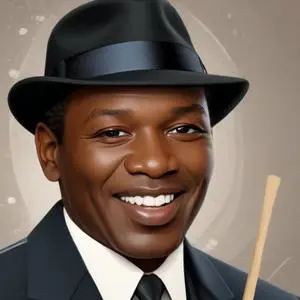
Elvin Jones: The Revolutionary Jazz Drummer
A Legacy of Innovation and Rhythm
Elvin Jones is widely regarded as one of the most influential drummers in the history of jazz, known for his innovative and dynamic playing style that redefined the role of the drummer in jazz music. As a member of
John Coltrane's legendary quartet, Jones appeared on iconic albums such as
My Favorite Things,
A Love Supreme,
Ascension, and
Live at Birdland, cementing his reputation as a master percussionist.
A Childhood of Rhythm and Curiosity
Born on September 9, 1927, in Pontiac, Michigan, Jones grew up in a family of musicians, with his elder brothers Hank and Thad also becoming renowned jazz musicians. By the age of two, Jones was fascinated by drums, watching circus parades march past his home and marveling at the marching band drummers. This early passion led him to join his high school's black marching band, where he developed his foundation in rudiments.
Military Service and the Birth of a Career
After serving in the United States Army from 1946 to 1949, Jones used his mustering-out pay to purchase his first drumset. This marked the beginning of his professional career, which took off in 1949 with a short-lived gig in a Detroit club. Jones went on to play with notable artists such as
Billy Mitchell and Wardell Gray, eventually landing in New York City in 1955.
The Rise to Fame: John Coltrane and Beyond
Jones' big break came when he joined John Coltrane's quartet in 1960, a collaboration that lasted until 1965. During this period, Jones contributed to some of Coltrane's most iconic albums, showcasing his innovative and dynamic drumming style. After leaving Coltrane's quartet, Jones formed his own trio and later led larger groups under the name The Elvin Jones Jazz Machine.
Awards, Accolades, and Legacy
Jones' impact on jazz music was recognized with numerous awards and honors, including his induction into the Modern Drummer Hall of Fame in 1995. He was also ranked at Number 23 on Rolling Stone magazine's 100 Greatest Drummers of All Time.
Personal Milestones and Key Life Events
- 1946-1949: Served in the United States Army
- 1949: Purchased his first drumset and began his professional career
- 1955: Moved to New York City and joined the jazz scene
- 1960-1965: Member of John Coltrane's quartet
- 1966: Formed his own trio and later led The Elvin Jones Jazz Machine
- 1995: Inducted into the Modern Drummer Hall of Fame
Influence on Modern Society
Jones' groundbreaking playing style and innovative approach to rhythm have had a profound impact on jazz music and beyond. His influence can be heard in the work of countless drummers and jazz musicians who followed in his footsteps.
Quote and Memorable Sayings
"The way I play is a reflection of the way I think, and the way I think is a reflection of the way I am."
Trivias and Fun Facts
- Jones' brothers Hank and Thad were also celebrated jazz musicians.
- He was particularly inspired by the marching band drummers he saw as a child.
Historical Context and Legacy
Jones' contributions to jazz music have left an indelible mark on the genre, inspiring generations of musicians and cementing his place as one of the most influential drummers in jazz history.
FAQ
What is Elvin Joness significance in jazz drumming?
Elvin Jones was a pioneering American jazz drummer who revolutionized the art of drumming through his innovative polyrhythmic style, earning him recognition as one of the greatest drummers in jazz history.
How did Elvin Jones collaborate with John Coltrane?
Elvin Joness work with John Coltranes iconic quartet helped shape the course of modern jazz, producing some of the most influential and enduring music of the 1960s.
What defined Elvin Joness drumming style?
Elvin Joness distinctive drumming style was characterized by his use of polyrhythms, subtle dynamic shifts, and a deeply intuitive sense of swing, which greatly influenced generations of jazz drummers.
How did Elvin Jones transition from sideman to bandleader?
After his work with Coltrane, Elvin Jones went on to lead his own ensembles, exploring a wide range of musical styles and mentoring numerous young musicians.
What is Elvin Joness legacy in jazz education?
Elvin Jones was an dedicated educator who taught and inspired countless students, fostering a new generation of jazz musicians and perpetuating the art of jazz drumming.