


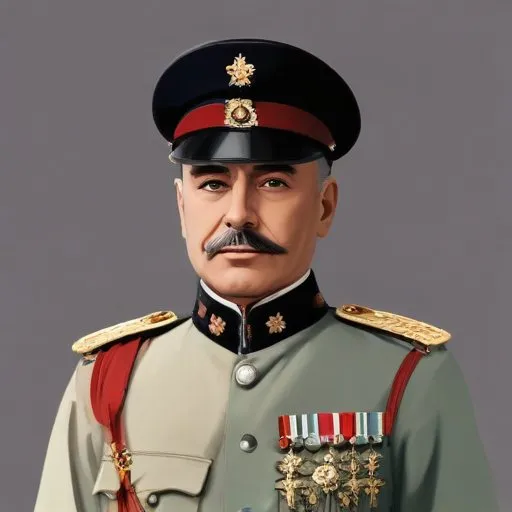
Leader of Austria during the 1930s, implemented authoritarian regime, and assassinated by Nazi agents. Known for his anti-Nazi stance and attempts to preserve Austrian independence.
Engelbert Dollfuss, also known as Dolfuss, was an Austrian politician who served as Chancellor of Austria between 1932 and 1934, leaving an indelible mark on the country's history. During his tumultuous tenure, Dollfuss navigated Austria through a crisis-ridden period, ultimately establishing the Austrofascist regime that would define the nation's political landscape.
Born on October 4, 1892, in the hamlet of Great Maierhof, Lower Austria, Dollfuss came from humble beginnings. Despite his poverty-stricken childhood, the priests of his local parish recognized his potential and helped finance his education. This support allowed him to attend high school in Hollabrunn and later study law at the University of Vienna.
His foray into politics began as a member of the Students' Social Movement, a student organization dedicated to social and charitable work among workers. This experience laid the groundwork for his future involvement in Austrian politics.
In 1932, Dollfuss assumed the role of Federal Chancellor, tasked with stabilizing the conservative government amidst a deepening crisis. He responded by engineering a coup, dissolving the Austrian Parliament and cementing his grip on power.
As Chancellor, Dollfuss implemented policies aimed at suppressing the Socialist movement, which ultimately led to the Austrian Civil War. He also banned the Austrian Nazi Party, solidifying his anti-Nazi stance. These measures paved the way for the establishment of Austrofascism, a ideology that blended Catholic and nationalist elements.
The First of May Constitution, enacted in 1934, formalized Austrofascism, granting the government sweeping powers and concentrating authority in Dollfuss's hands.
Tragically, Dollfuss's life was cut short on July 25, 1934, when he was assassinated during a failed coup attempt by Nazi agents. His successor, Kurt Schuschnigg, maintained the Austrofascist regime until Adolf Hitler's Anschluss in 1938.
Despite the controversy surrounding his regime, Dollfuss's impact on Austria's history is undeniable. His leadership during a time of crisis and his role in shaping the nation's political identity continue to be debated by historians and scholars.
Standing at under 5 feet 0 inches (1.52 m) tall, Dollfuss was nicknamed "Millimetternich" due to his diminutive stature. Despite this physical limitation, he left an indelible mark on Austrian politics.
His early intention to become a priest, later replaced by a career in law, highlights the complexities of his character and the multifaceted nature of his personality.
Dollfuss's regime was marked by authoritarianism and a strong anti-Nazi stance, which ultimately led to his demise. His Austrofascist ideology, although problematic, played a significant role in shaping Austria's identity and response to the rising Nazi threat.
In the broader context of European history, Dollfuss's leadership serves as a reminder of the complexities and challenges faced by nations during times of crisis, and the delicate balance between authoritarianism and democracy.
Dollfuss's legacy continues to influence Austrian politics and society. His Austrofascist ideology, although discredited, serves as a cautionary tale about the dangers of authoritarianism and the importance of democratic values.
As Austria grapples with its past and seeks to come to terms with its complex history, Engelbert Dollfuss's story serves as a poignant reminder of the power of political leadership and the importance of responsible governance.
Born in 1889
The dictator of Nazi Germany, responsible for the genocide of six million Jews and millions of other people during World War II, and infamous for his extreme nationalist and anti-Semitic ideology.
Born in 1883
Italian fascist revolutionary and politician who led the National Fascist Party and ruled Italy from 1922 to 1943, known for his authoritarian regime and aggressive military campaigns.
Born in 1897
A mastermind of Nazi propaganda, he crafted a persuasive narrative that fueled the Third Reich's rise to power, leaving a lasting impact on the world.
Born in 1893
A high-ranking Nazi official, he was a decorated World War I fighter pilot and later became a prominent politician, serving as Minister President of Prussia. He's infamous for his role in the Nazi regime and war crimes trials.
Born in 1893
A German diplomat who served as the Nazi regime's Foreign Minister, orchestrating key alliances and treaties that led to World War II. He was a close associate of Adolf Hitler and played a crucial role in shaping Nazi foreign policy.
Born in 1897
The 15th Federal Chancellor of Austria, a strong opponent of Nazi Germany, who tried to maintain Austria's independence before its annexation in 1938. He's known for his courageous but ultimately unsuccessful resistance against Hitler's regime.
Born in 1879
A German nobleman who served as Chancellor of Germany in 1932, known for his role in appointing Adolf Hitler as Chancellor, paving the way for the Nazi regime.
