


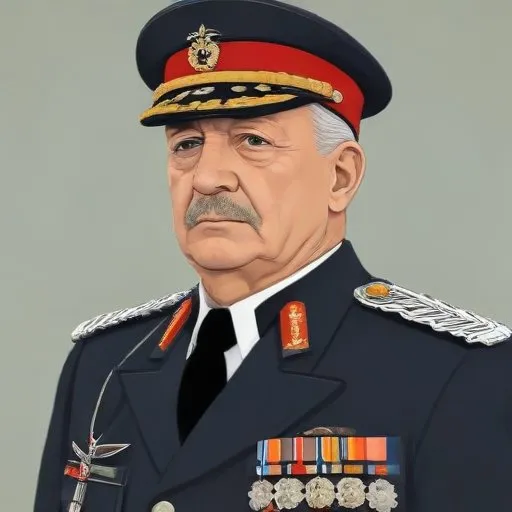
Erhard Milch, a German Generalfeldmarschall, is infamous for overseeing the development of the German air force, Luftwaffe, during the rearmament of Nazi Germany from 1933 to 1945. His leadership played a pivotal role in shaping the air force into a formidable military power, earning him the dubious distinction of being one of the most prominent figures in the Nazi war machine.
Born on March 30, 1892, in Wilhelmshaven, Germany, Milch was the son of Anton Milch, a Jewish pharmacist who served in the Imperial German Navy. This ancestry would later become a point of controversy in Milch's life. Despite his complicated heritage, Milch rose through the ranks of the German military, serving as a pilot during World War I and eventually becoming a staff officer in the Reichswehr, the German armed forces.
In 1933, Milch's career took a dramatic turn when he was appointed State Secretary in the Reich Ministry of Aviation, overseeing the development of the Luftwaffe. Under his leadership, the air force underwent rapid modernization and expansion, becoming a key component of the Nazi war machine. Milch's role in this process earned him the admiration of Hermann Göring, the commander-in-chief of the Luftwaffe, who became his mentor and protector.
In the aftermath of World War II, Milch was put on trial for war crimes and crimes against humanity. In 1947, a U.S. military court convicted him and sentenced him to life imprisonment. The trial revealed Milch's involvement in the forced labor and brutal treatment of concentration camp inmates, as well as his role in the planning and execution of strategic bombing campaigns.
Milch's complicated ancestry and the controversy surrounding his Jewish heritage continued to plague him throughout his life. Although he was issued a German Blood Certificate, which declared him to be of Aryan descent, rumors persisted that his father was a Jew. This led to investigations by the Gestapo and eventually, an affidavit from his mother claiming that his true father was her uncle, Karl Brauer.
In 1951, Milch's sentence was commuted to 15 years, and he was paroled in 1954. He spent the remainder of his life in relative obscurity, passing away on January 25, 1972. Milch's legacy is marred by his involvement in the Nazi war machine and his complicity in war crimes, serving as a stark reminder of the devastating consequences of blind ambition and ideological extremism.
Erhard Milch's life serves as a cautionary tale about the dangers of unchecked ambition and the importance of moral accountability. His legacy is a reminder of the devastating consequences of ideology-driven extremism and the need for eternal vigilance in protecting human rights and dignity.
Born in 1893
A high-ranking Nazi official, he was a decorated World War I fighter pilot and later became a prominent politician, serving as Minister President of Prussia. He's infamous for his role in the Nazi regime and war crimes trials.
Born in 1889
The dictator of Nazi Germany, responsible for the genocide of six million Jews and millions of other people during World War II, and infamous for his extreme nationalist and anti-Semitic ideology.
Born in 1897
A mastermind of Nazi propaganda, he crafted a persuasive narrative that fueled the Third Reich's rise to power, leaving a lasting impact on the world.
Born in 1900
Leading the SS and Gestapo, he oversaw the Nazi regime's brutal security apparatus and implemented the "Final Solution," orchestrating the genocide of six million Jews during World War II.
Born in 1893
A German diplomat who served as the Nazi regime's Foreign Minister, orchestrating key alliances and treaties that led to World War II. He was a close associate of Adolf Hitler and played a crucial role in shaping Nazi foreign policy.
Born in 1891
A German naval commander who led the U-boat fleet during World War II and briefly served as President of Germany after Hitler's death, known for his role in the war and its aftermath.
Born in 1876
A German naval leader who played a key role in the Kriegsmarine during World War II, overseeing the German U-boat fleet and naval operations. He was a close advisor to Adolf Hitler and implemented the German naval strategy during the war.
Born in 1880
A German field marshal who led the Wehrmacht during World War II, playing a key role in the invasion of Poland and the Battle of Moscow. He was a prominent figure in the German high command during the war.
