


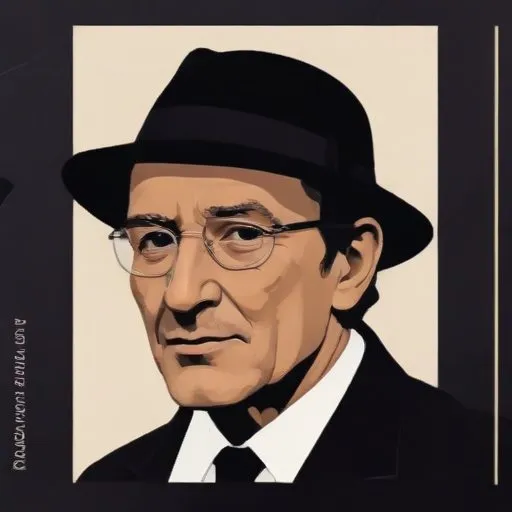
Ernest Chausson, a French Romantic composer, is renowned for his captivating orchestral works, operas, and chamber music that seamlessly blended traditional French music with the innovative spirit of the late 19th century. His compositions, characterized by lush harmonies, rich textures, and a deep sense of emotional expression, have left an indelible mark on the world of classical music.
Born into an affluent bourgeois family in Paris on January 20, 1855, Chausson's early life was marked by a passion for the arts. Despite his father's wish for him to pursue a career in law, Chausson's creative inclinations led him to explore music, writing, and drawing. He frequented the Paris salons, where he rubbed shoulders with celebrated artists, including Henri Fantin-Latour, Odilon Redon, and Vincent d'Indy.
In 1879, Chausson began attending the composition classes of Jules Massenet at the Paris Conservatoire, where he honed his craft and developed a deep appreciation for the works of Csar Franck. Despite an initial setback in 1881, when he failed to win the Prix de Rome, Chausson persevered, and his unique voice began to emerge. His travels to Bayreuth in 1882 and 1883 to experience the operas of Richard Wagner further enriched his musical perspective.
From 1886 until his untimely death in 1899, Chausson served as secretary of the Socit Nationale de Musique, a organization dedicated to promoting French music. During this period, his home became a hub for artistic gatherings, where he welcomed luminaries such as Henri Duparc, Gabriel Faur, Claude Debussy, Isaac Albniz, Stphane Mallarm, Ivan Turgenev, and Claude Monet.
Chausson's oeuvre includes the brooding and intense Symphonie en Si bémol, the opulent and expressive Poème de l'amour et de la mer, and the tragic opera Le Roi Arthus. These works, characterized by their sensuality, lyricism, and dramatic flair, have secured Chausson's place as one of the most important French composers of the late Romantic era.
Ernest Chausson's life was tragically cut short in a cycling accident on June 10, 1899. However, his creative legacy continues to inspire and enchant audiences today, serving as a testament to the power of artistic innovation and the enduring spirit of French Romanticism.
"Music is the silence between the notes." - Ernest Chausson
Chausson's music embodies the essence of his own words, inviting listeners to revel in the spaces between the notes, where emotion, beauty, and truth reside.
Ernest Chausson's remarkable journey serves as a poignant reminder of the transformative power of music and the importance of embracing one's creative calling, even in the face of adversity.
Born in 1822
A Belgian organist and composer who created iconic works that blended Romanticism and Impressionism, leaving a lasting impact on classical music.
Born in 1835
A French Romantic-era mastermind who composed iconic works like "The Carnival of the Animals" and "Danse Macabre", leaving an indelible mark on classical music.
Born in 1845
A renowned French pianist, composer, and educator, he is most known for his romantic and impressionistic compositions, particularly his Requiem and nocturnes.
Born in 1862
A renowned French pianist and composer who revolutionized classical music with his unique, dreamy, and unconventional style, creating iconic works like "Clair de Lune" and "Prelude to the Afternoon of a Faun".
Born in 1875
A renowned French musician who blended classical and modern styles, creating iconic works like "Bolero" that continue to mesmerize audiences with their beauty and complexity.
Born in 1895
A versatile performer who excelled in film, stage, and music, starring in iconic movies like "Watch on the Rhine" and introducing the character of Zorro to the big screen.
Born in 1869
A French composer who blended impressionism and neoclassicism, creating complex, expressive works that showcased his mastery of orchestration.
