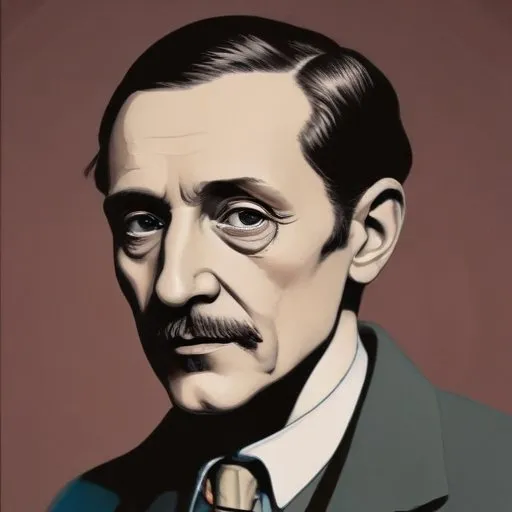
Ernest Thayer

Ernest Thayer

Ernest Thayer was born on August 14th, 1863

Full Name: Ernest Lawrence Thayer
Occupation: Poet, Author
Nationality: American
Notable Work: Casey at the Bat
Birth Date: August 14, 1863
Death Date: February 21, 1940
Place of Birth: Lawrence, Massachusetts
Alma Mater: Harvard University

Wrote humorous baseball poem "Casey at the Bat," a classic of American literature, still widely popular today.

Written by: Fatima Ahmed Fatima Ahmed

Ernest Thayer: The Bard of Baseball

The Man Behind the Iconic Poem "Casey at the Bat"

Ernest Lawrence Thayer, an American writer and poet, is forever etched in the annals of baseball history for crafting the most famous baseball poem ever written, "Casey at the Bat." This iconic ballad has become an integral part of American folklore, rivaled only by the tall tales of Johnny Appleseed and Paul Bunyan.

Thayer's masterpiece, first published in 1888, tells the story of a fictional baseball player named Casey, who strikes out at the bat, crushing the hopes of his team, the Mudville Nine. The poem's clever language, humor, and poignancy have made it a beloved classic, transcending generations and baseball enthusiasts alike.

Early Life and Education

Thayer was born on August 14, 1863, in Lawrence, Massachusetts, and raised in nearby Worcester. He graduated magna cum laude in philosophy from Harvard University in 1885, where he honed his writing skills as editor of the Harvard Lampoon and member of the theatrical society Hasty Pudding.

A Humor Columnist and Poet

After college, Thayer's friend William Randolph Hearst, a fellow Harvard alumnus, hired him as a humor columnist for The San Francisco Examiner. Thayer's wit and satire graced the publication from 1886 to 1888. During this period, he wrote his last piece for the Examiner, the now-famous "Casey at the Bat," which he signed with the nickname "Phin," a nod to his Harvard Lampoon days.

Rise to Fame and Legacy

Thayer's poem didn't gain widespread recognition until several months after its publication. The poet's humility and lack of self-promotion contributed to the delay. However, once the poem's popularity grew, Thayer became an overnight sensation, earning the title of "one-poem poet."

Today, "Casey at the Bat" is celebrated as a masterpiece of American literature, with its themes of triumph and defeat, hope and despair, resonating with readers beyond the realm of baseball. Thayer's work has been translated into numerous languages and has inspired countless adaptations, parodies, and references in popular culture.

Personal Milestones and Key Life Events

Historical Context and Legacy

Thayer's "Casey at the Bat" emerged during a time when baseball was gaining popularity in the United States. The poem not only captured the essence of the game but also reflected the American spirit – optimistic, resilient, and full of humor.

Thayer's work has been celebrated alongside other American literary giants, such as Mark Twain and Walt Whitman. His poem has become an integral part of American cultural heritage, symbolizing the nation's love affair with baseball and its rich literary tradition.

Inspirational Quotes and Memorable Sayings

"There was joy in Mudville – mighty Casey had struck out." – Ernest Thayer, "Casey at the Bat"

This iconic line has become a symbol of the human experience, reminding us that even in defeat, there is beauty and poetry to be found.

Timeline
1863
Born in Massachusetts
Ernest Thayer was born on August 14, 1863, in Lawrence, Massachusetts. He would go on to become an American poet and author.
1887
Publishes Casey at the Bat
Thayer published his famous poem Casey at the Bat, which told the story of a fictional baseball players dramatic failure.
1895
Becomes Editor of The Harvard Lampoon
Thayer became editor of The Harvard Lampoon, a humorous publication that showcased his wit and satire.
1914
Serves in World War I
Thayer served in World War I, where he was stationed in France and wrote about his experiences.
1940
Dies in Massachusetts
Ernest Thayer died on February 21, 1940, in Santa Barbara, California, leaving behind a legacy in poetry and satire.
Ernest Thayer

Ernest Thayer Quiz

What is Ernest Thayer's most famous literary work?

Score: 0/5
FAQ
What is Ernest Thayers most famous poem?
Ernest Thayer is best known for his humorous poem Casey at the Bat, which was first published in 1888 and has since become an American classic. The poem tells the story of a baseball players strikeout and has been widely anthologized and parodied.
What was Ernest Thayers role in the Boston literary scene?
Ernest Thayer was an American poet and author who played a significant role in the Boston literary scene in the late 19th and early 20th centuries. He was a member of the Boston literary club, The Tavern Club, and was known for his witty humor and clever wordplay.
How did Ernest Thayer get his start in writing?
Ernest Thayer began his writing career as a journalist, working as a reporter for the San Francisco Examiner and later as an editor for the New York World. He eventually turned to writing fiction and poetry, publishing his work in various magazines and newspapers.
What is the theme of Ernest Thayers poetry?
Ernest Thayers poetry is known for its humorous and satirical take on American culture. Many of his poems, including Casey at the Bat, explore themes of sports, politics, and social commentary.
Why is Casey at the Bat still popular today?
Despite being written over 130 years ago, Casey at the Bat remains a beloved American poem due to its timeless themes of perseverance, failure, and the human experience. Its continued popularity is also due to its adaptability, having been translated into numerous languages and adapted into various forms of media.

Related People:

Rudyard Kipling

Born in 1865

A renowned author and poet, best known for his imaginative and vivid stories, particularly "The Jungle Book", which have captivated readers of all ages with their timeless themes and memorable characters.

Robert Frost

Born in 1874

Pulitzer Prize-winning poet and playwright celebrated for rural New England-inspired works that explore human nature, morality, and the American experience.

Edgar Guest

Born in 1881

A popular poet and writer, known as the "People's Poet," who wrote uplifting and sentimental verse that celebrated everyday life and ordinary people. His poetry was widely read and appreciated during his lifetime.

James Whitcomb Riley

Born in 1849

Wrote nostalgic and sentimental poetry and stories that celebrated childhood and rural life, capturing the hearts of many Americans. Known as the "Children's Poet" and "Hoosier Poet" for his contributions to American literature.

Eugene Field

Born in 1850

Wrote whimsical children's poetry and humorous essays that captured the American heart, earning a spot as the "Children's Poet" of his era.

Henry Wadsworth Longfellow

Born in 1807

A celebrated poet and educator, known for his lyrical and narrative poems that often explored American history and culture, including the iconic "Paul Revere's Ride".

Mark Twain

Born in 1835

Witty writer of classics like "The Adventures of Tom Sawyer" and "The Adventures of Huckleberry Finn", known for humor and social commentary.