


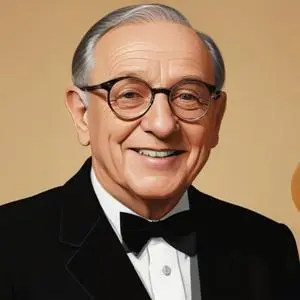
Physicist who split the atom, pioneering nuclear physics and earning a Nobel Prize in Physics in 1951 for his groundbreaking work on atomic nuclei.
Ernest Walton, a renowned Irish physicist, made history by becoming the first person to split the atom, earning him a Nobel Prize in Physics in 1951. Alongside John Cockcroft, Walton constructed the Cockcroft-Walton generator, a groundbreaking particle accelerator that enabled the transformation of one element into another.
Walton was born on October 6, 1903, in Abbeyside, County Waterford, Ireland, to a Methodist minister father, Rev. John Walton, and Anna Sinton. His family's frequent relocations due to his father's clerical duties took Walton to various parts of Ireland, where he attended schools in counties Down and Tyrone, and later, Wesley College Dublin.
In 1915, Walton became a boarder at Methodist College Belfast, where he excelled in science and mathematics. He was awarded scholarships to Trinity College Dublin, where he studied mathematics and science, earning bachelors and masters degrees in 1926 and 1927, respectively. During his college years, Walton received seven prizes for excellence in physics and mathematics, including the prestigious Foundation Scholarship in 1924.
After completing his education, Walton was awarded an 1851 Research Fellowship from the Royal Commission for the Exhibition of 1851 and joined Trinity College, Cambridge, as a research student under the supervision of Sir Ernest Rutherford, Director of the Cavendish Laboratory. It was during this period that Walton collaborated with John Cockcroft to construct the Cockcroft-Walton generator, an innovative particle accelerator that accelerated protons to high speeds, enabling the transformation of one element into another.
Their groundbreaking experiment, performed in the early 1930s, was recognized by the Nobel Committee, which awarded Walton and Cockcroft the Nobel Prize in Physics in 1951 "for their pioneer work on the transmutation of atomic nuclei by artificially accelerated atomic particles."
Walton's contributions to physics went beyond his Nobel Prize-winning work. He was elected a Fellow of the Royal Society (FRS) in 1939 and was a Research Fellow at the Cavendish Laboratory from 1934 to 1937. Walton held various academic positions, including Professor of Theoretical Physics at Trinity College Dublin and Chairman of the Irish Committee for the International Council of Scientific Unions.
Throughout his career, Walton received numerous honors, including the Hughes Medal in 1938 and the Royal Medal in 1941, both awarded by the Royal Society. His legacy extends beyond his scientific contributions, inspiring generations of physicists and researchers.
Walton married Freda Wilson in 1934, and the couple had three children together. He passed away on June 25, 1995, leaving behind a legacy that continues to shape the world of physics.
Ernest Walton's remarkable journey, from his early life in Ireland to his groundbreaking work in Cambridge, serves as a testament to the power of human ingenuity and the importance of collaboration in scientific discovery.
Born in 1901
A pioneer in quantum mechanics, he formulated the uncertainty principle, which revolutionized our understanding of the atomic world. His groundbreaking work reshaped modern physics.
Born in 1885
A pioneer in quantum mechanics, he introduced the concept of wave-particle duality, revolutionizing our understanding of atomic structure. His philosophical approach to science also explored the nature of reality and human understanding.
Born in 1879
A brilliant physicist who developed the theory of relativity and is considered one of the most influential scientists of the 20th century, known for his groundbreaking work in physics and mathematics.
Born in 1902
A brilliant mind who formulated the Dirac equation, a fundamental concept in quantum mechanics, and predicted the existence of antimatter. His work revolutionized our understanding of the universe.
Born in 1892
A French physicist and Nobel laureate who proposed that particles, such as electrons, can exhibit wave-like behavior, revolutionizing quantum mechanics. His hypothesis led to major breakthroughs in understanding the atomic structure.
Born in 1891
Discovered neutrons, a fundamental particle in atomic nuclei, revolutionizing our understanding of the atom.
Born in 1901
A pioneer in nuclear physics, known for leading the team that developed the first nuclear reactor and playing a crucial role in the development of the atomic bomb.
