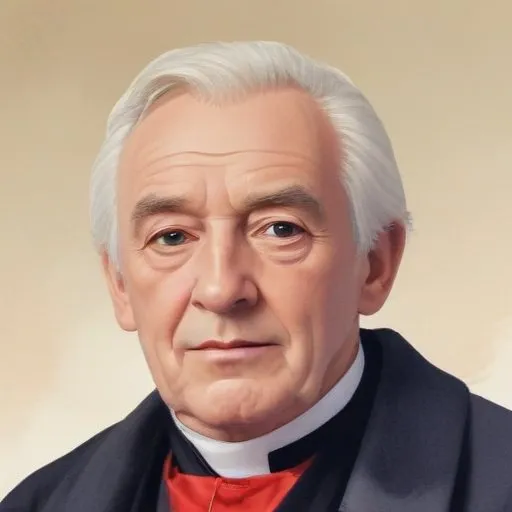
Ernest Wilberforce: A Pillar of the Anglican Church
A Bishop of Unwavering Dedication
Ernest Wilberforce, a stalwart figure in the Anglican Church, is renowned for his exemplary service as the first Anglican Bishop of Newcastle and later as the Bishop of Chichester. Throughout his distinguished career, Wilberforce demonstrated an unwavering commitment to his faith, community, and the betterment of society.
Early Life and Education
Born on January 22, 1840, at his father's rectory, Ernest was the third son of Samuel Wilberforce, another prominent bishop, and his wife, Emily Sargent. His family's strong Christian heritage and social conscience, particularly his grandfather
William Wilberforce's crusade to abolish the slave trade, greatly influenced his own values and actions.
Academic Pursuits
Wilberforce's educational journey took him to Harrow, where he studied from 1854 to 1857, followed by two years with a private tutor. He then attended Exeter College, Oxford, from 1859 to 1862, where he graduated with a BA degree, albeit with fourth-class honors. Though his academic achievements may not have been remarkable, he excelled as an oarsman, a testament to his athleticism and dedication.
Ministerial Career
Ernest's path to the ministry began with his marriage to Frances Mary, daughter of Sir Charles Anderson, in 1863. This union marked a significant turning point in his life, as he became more serious about his faith and career. He proceeded to earn his MA degree in 1867 and trained for the ministry at Cuddesdon College under the guidance of Edward King.
- Ordained as a deacon by his father in 1864 and a priest in 1865
- Served as curate at Cuddesdon and Lea
- Presented to the living at Middleton Stoney in 1868, but resigned two years later due to his wife's poor health
- Became his father's domestic chaplain at Winchester in 1870
- Appointed subalmoner to Queen Victoria in 1871
- Priest of Seaforth from 1873, where he introduced daily services and weekly holy communion, fostering a sense of community and spiritual growth
Episcopal Career
In 1882, Wilberforce was consecrated as the first Anglican Bishop of Newcastle, a diocese newly created by Queen Victoria. He served in this capacity for 14 years, earning a reputation for his moderate-high churchmanship and tactful approach to ecclesiastical matters. In 1896, he was translated to the Bishop of Chichester, a position he held until his passing in 1907.
Legacy and Impact
Ernest Wilberforce's contributions to the Anglican Church and society at large are multifaceted and far-reaching. As a bishop, he was instrumental in shaping the spiritual landscape of his dioceses, promoting unity, and fostering a sense of community. His dedication to his faith, family, and parishioners has left an indelible mark on the annals of Anglican history.
Personal Milestones and Key Life Events
- Loss of his wife Frances in 1870 due to tuberculosis
- Marriage to Mary Bromley in 1872, with whom he had three sons and three daughters
Historical Context and Comparative Analysis
Ernest Wilberforce's life and ministerial career are set against the backdrop of significant social, political, and ecclesiastical changes in 19th-century England. His moderate-high churchmanship and commitment to the Anglican Church place him alongside contemporaries such as Edward King and
Randall Davidson, who also played pivotal roles in shaping the Church of England during this period.
Influence on Modern Society
Wilberforce's emphasis on community, service, and spiritual growth has inspired generations of Anglicans and continues to resonate with people of faith today. His dedication to the betterment of society and his unwavering commitment to his values serve as a testament to the enduring power of faith and leadership.
FAQ
What is the biography of Ernest Wilberforce?
Ernest Wilberforce was an English bishop who served in various dioceses throughout his career. He was known for his strong leadership and his commitment to social justice.
What are the achievements of Ernest Wilberforce?
Ernest Wilberforce was a prolific writer and theologian who published several books on Anglican theology and spirituality. He was also a strong advocate for social justice, particularly in the areas of education and poverty relief.
What was the role of Ernest Wilberforce in the Anglican Church?
Ernest Wilberforce played a significant role in the Anglican Church, serving as a bishop in several dioceses and participating in various ecumenical dialogues. He was also a member of the House of Lords, where he advocated for church-state relations.
How did Ernest Wilberforce contribute to Anglican theology?
Ernest Wilberforce made significant contributions to Anglican theology, particularly in the areas of sacramental theology and spirituality. He was a major influence on the development of Anglican worship and liturgy.
What was the legacy of Ernest Wilberforce?
The legacy of Ernest Wilberforce is one of commitment to social justice, theological scholarship, and ecclesiastical leadership. He is remembered as a compassionate and visionary leader who inspired generations of Anglican clergy and laity.