


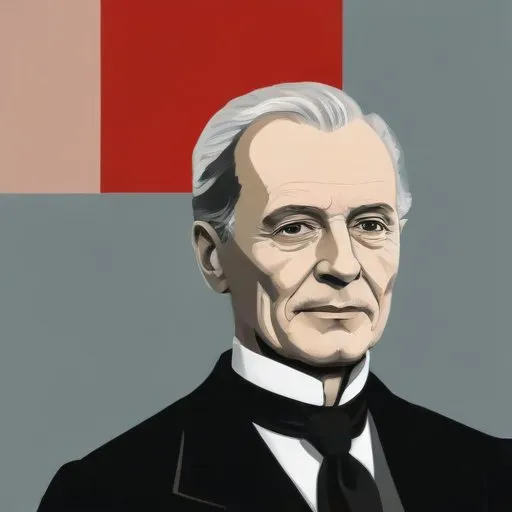
A renowned expert on international relations, geopolitics, and strategic studies, known for his insightful analyses and forecasts on global affairs.
Ernst Florian Winter, a renowned historian and political scientist, is best known for being the first director of the Diplomatic Academy of Vienna after World War II, as well as the chairman of the International Council of the Austrian Service Abroad. His remarkable career spanned over six decades, leaving an indelible mark on the world of international relations and diplomacy.
Born on December 16, 1923, in Vienna, Austria, Winter was the oldest of eight children to sociologist and former third vice mayor of Vienna, Ernst Karl Winter. Growing up in a family deeply rooted in politics, Winter was exposed to influential figures and thought-provoking discussions from a young age. He attended the humanistic grammar school in the Klostergasse in Währing and later Neulandschule, where he was part of the Austrian Catholic Bund Neuland.
As Austria succumbed to Nazi occupation, Winter's father, Ernst Karl, fled to Switzerland in 1938, leaving his family behind. The 14-year-old Winter kept the minutes of a critical discussion between his father and Federal Chancellor Kurt Schuschnigg, where the latter shared his concerns about the impending Anschluss. After a brief detention by the Gestapo, Winter's mother, Margarete, managed to secure his release. The family eventually fled Austria, making their way to New York City via Switzerland, France, and England in October 1939.
Winter's academic pursuits led him to become a prominent historian and political scientist. He served as the first director of the Diplomatic Academy of Vienna, a position that earned him recognition as a leading authority on international relations and diplomacy. As chairman of the International Council of the Austrian Service Abroad, Winter played a pivotal role in shaping Austria's foreign policy and fostering global understanding.
Winter's work was guided by a deep understanding of the complexities of international relations and a commitment to promoting peaceful cooperation. He believed in the importance of education and cultural exchange in bridging the divides between nations. His philosophical approach was rooted in the idea that nations could learn from each other and grow through mutual understanding and respect.
Ernst Florian Winter's contributions to the world of international relations and diplomacy are immeasurable. His tireless efforts to promote global understanding and peaceful cooperation have left a lasting impact on modern society. As a testament to his legacy, the Diplomatic Academy of Vienna continues to thrive, fostering the next generation of diplomats and international leaders.
Winter's words of wisdom continue to inspire generations of scholars and diplomats: "Education is the key to understanding, and understanding is the key to peace."
Ernst Florian Winter passed away on April 16, 2014, leaving behind a rich legacy of knowledge, wisdom, and dedication to the pursuit of peace. His remarkable life and career serve as a testament to the power of education, diplomacy, and international cooperation.
Born in 1904
A pioneer in international relations theory, known for his realist approach, which emphasizes the role of power and national interest in shaping global politics.
Born in 1924
A prominent figure in international relations theory, known for developing the neorealism school of thought, which emphasizes the role of power and anarchy in shaping global politics.
Born in 1923
A renowned diplomat and strategist who played a pivotal role in shaping global politics during the Cold War era, known for his Realpolitik approach and brokering peace agreements .
98 Years Old
A Polish-born American strategist and policymaker who served as National Security Advisor, shaping US foreign policy and advising presidents on global affairs. Known for his realist approach and expertise on geopolitics.
99 Years Old
A renowned author and academic who wrote extensively on political science, international relations, and cultural clashes, particularly in his influential book "The Clash of Civilizations".
74 Years Old
A renowned expert on international relations and democracy, known for his provocative "end of history" theory, which posits that liberal democracy is the final form of human government.
96 Years Old
A renowned sociologist and historian who developed the concept of world-systems theory, analyzing global economic and social structures, and their impact on modern societies.
