


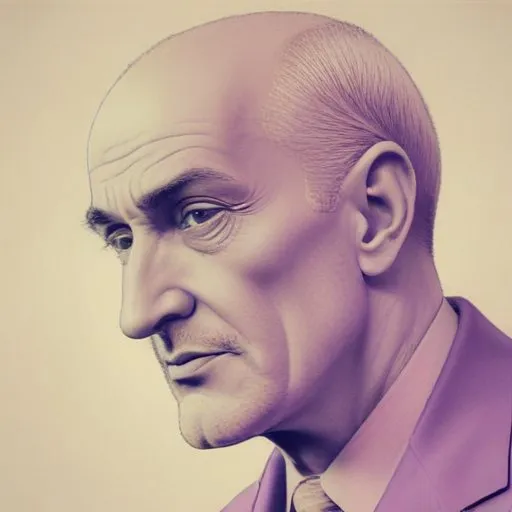
A visionary artist who blended surrealism and fantasy to create dreamlike paintings, sculptures, and illustrations that continue to inspire and fascinate audiences.
Ernst Fuchs, the Austrian master of the bizarre and fantastical, is renowned for his mesmerizing paintings, sculptures, and architectural designs that transport viewers to a realm of surreal wonder. As a founder of the Vienna School of Fantastic Realism, Fuchs' work blended the boundaries of art, architecture, and mysticism, earning him a revered spot in the annals of 20th-century art history.
Born on February 13, 1930, in Vienna, Austria, Fuchs was the only child of Maximilian and Leopoldine Fuchs. He demonstrated an early affinity for art, enrolling in the St. Anna Painting School, where he studied under Fritz Frhlich from 1944. The following year, he entered the Academy of Fine Arts Vienna, where he refined his skills under the guidance of Professor Robin Christian Andersen and Albert Paris von Gtersloh.
It was during his time at the Academy that Fuchs befriended fellow visionaries Arik Brauer, Rudolf Hausner, Helmut Leherb, Fritz Janschka, Wolfgang Hutter, and Anton Lehmden, with whom he would later establish the Vienna School of Fantastic Realism. This collective of kindred spirits sought to liberate art from the constraints of realism, instead embracing the fantastical and the surreal.
Fuchs' artistic style was deeply influenced by the avant-garde masters of the early 20th century, including Gustav Klimt, Egon Schiele, and Pablo Picasso. He also drew inspiration from the symbolic language of alchemy and the sermons of Meister Eckhart. In the 1950s, Fuchs revived the ancient technique of mischtechnik, a mixed media method that combines egg tempera and oil paints to achieve breathtaking, jewel-toned effects.
Fuchs' creative output extended far beyond the realm of visual art. He was a prolific poet, composer, and stage designer, with a deep passion for architecture. In 1972, he acquired the derelict Otto Wagner Villa in Htteldorf, which he meticulously restored and transformed into a testament to his artistic vision. The villa was inaugurated as the Ernst Fuchs Museum in 1988, showcasing his life's work in a fittingly surreal setting.
Ernst Fuchs' contribution to the world of art and architecture is immeasurable. His work continues to inspire generations of artists, designers, and dreamers, inviting them to enter the fantastical realm of the surreal and the unknown. As a testament to his enduring influence, Fuchs' creations remain a beacon of creative freedom, urging us to push the boundaries of what is possible and to embrace the magic that lies just beyond the edge of reality.
Ernst Fuchs passed away on November 9, 2015, leaving behind a legacy of captivating artworks, buildings, and designs that continue to enchant and inspire us today.
86 Years Old
A visionary artist who created eerie, biomechanical landscapes and creatures, most famously designing the Alien and its habitat in Ridley Scott's iconic film. His dark, surreal style has influenced countless sci-fi and horror artists.
Born in 1904
A renowned surrealist master of bizarre, dream-like paintings and sculptures that blur reality and fantasy, known for iconic works like "The Persistence of Memory" and "The Elephants".
Born in 1898
A Belgian surrealist painter who challenged perceptions by depicting everyday objects in unexpected contexts, creating thought-provoking and witty visual paradoxes.
Born in 1891
A pioneering figure in Surrealism, creating dreamlike, fantastical works that blurred reality and the subconscious, influencing generations of artists.
Born in 1896
French poet and author who founded Surrealism, a cultural movement that explored the subconscious and the world of dreams. He wrote novels, poems, and essays that continue to influence art and literature today.
Born in 1856
Pioneering psychoanalyst who developed theories on the subconscious mind, childhood experiences, and the structure of personality, revolutionizing our understanding of human behavior and psychology.
Born in 1900
A surrealist filmmaker who explored the human psyche through dreamlike, often unsettling narratives, leaving an indelible mark on world cinema.
Born in 1920
Visionary filmmaker behind surreal, poetic, and deeply personal cinematic masterpieces that blur the lines between reality and fantasy.
