


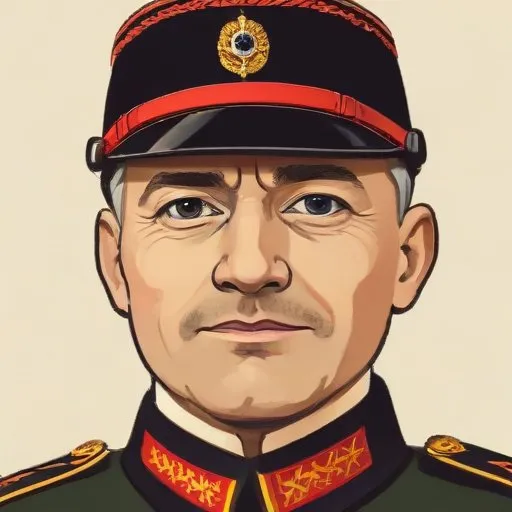
A German soldier and politician who served as the 8th Mayor of Marburg, known for his leadership and governance during a tumultuous period in German history.
Ernst Scheller is a name synonymous with controversy, politics, and war. As a Nazi Hauptmann and politician, Scheller held a prominent position in the Third Reich, serving as the mayor of Marburg and fighting on the Eastern Front during World War II.
Born on July 18, 1899, in Lintel, East Frisia, Scheller's early life is shrouded in mystery. However, it is known that he rose to prominence during the Nazi regime, with Adolf Hitler personally appointing him as the mayor of Marburg on April 27, 1934.
Scheller's bravery during World War II earned him recognition as a war hero. He fought valiantly on the Eastern Front, but his military career was cut short when he was severely injured in battle on December 29, 1941. His injuries ultimately took his life, passing away on January 16, 1942, in a lazaret in Simferopol.
Scheller's legacy is marred by his involvement with the Nazi regime, and his death did not bring an end to his influence. After his passing, Walter Vo took over as the commissarial mayor of Marburg, serving until the end of the war in 1944. Scheller's brief but tumultuous tenure as mayor and his role in the war effort continue to spark controversy and debate among historians and scholars.
Scheller's legacy serves as a cautionary tale about the dangers of blind loyalty and the corrupting influence of power. His involvement with the Nazi regime and his role in perpetuating its ideology continue to raise important questions about accountability and the responsibility of those in positions of power.
Despite the controversy surrounding his life and death, Scheller's story remains an important part of modern history, serving as a reminder of the devastating consequences of totalitarianism and the importance of critically examining the actions of those in power.
Born in 1889
The dictator of Nazi Germany, responsible for the genocide of six million Jews and millions of other people during World War II, and infamous for his extreme nationalist and anti-Semitic ideology.
Born in 1897
A mastermind of Nazi propaganda, he crafted a persuasive narrative that fueled the Third Reich's rise to power, leaving a lasting impact on the world.
Born in 1893
A high-ranking Nazi official, he was a decorated World War I fighter pilot and later became a prominent politician, serving as Minister President of Prussia. He's infamous for his role in the Nazi regime and war crimes trials.
Born in 1900
Leading the SS and Gestapo, he oversaw the Nazi regime's brutal security apparatus and implemented the "Final Solution," orchestrating the genocide of six million Jews during World War II.
Born in 1893
A German diplomat who served as the Nazi regime's Foreign Minister, orchestrating key alliances and treaties that led to World War II. He was a close associate of Adolf Hitler and played a crucial role in shaping Nazi foreign policy.
Born in 1876
A German naval leader who played a key role in the Kriegsmarine during World War II, overseeing the German U-boat fleet and naval operations. He was a close advisor to Adolf Hitler and implemented the German naval strategy during the war.
Born in 1891
A German naval commander who led the U-boat fleet during World War II and briefly served as President of Germany after Hitler's death, known for his role in the war and its aftermath.
Born in 1881
A German field marshal who played a crucial role in the Nazi war effort, serving as the commander-in-chief of the German Army from 1938 to 1941. He was a key figure in the invasion of Poland and the Battle of France.
