


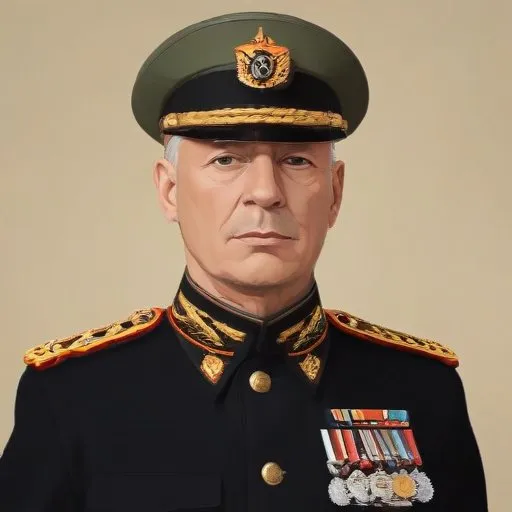
A German field marshal who played a crucial role in the Nazi war effort, serving as the commander-in-chief of the German Army from 1938 to 1941. He was a key figure in the invasion of Poland and the Battle of France.
Walther von Brauchitsch is best known as the Commander-in-Chief of the German Army during the first two years of World War II, playing a crucial role in the Battle of France and overseeing the German invasions of Yugoslavia and Greece. As a Generalfeldmarschall (Field Marshal), he was one of the highest-ranking officers in the German military, and his leadership had a significant impact on the war's early years.
Born on October 4, 1881, in Berlin, Germany, Brauchitsch came from a long line of military officers. His father, Bernhard Eduard von Brauchitsch, was a cavalry general, and the family name and his father's rank gave him a privileged position in Berlin's high society. From a young age, Brauchitsch was fascinated by politics and art, but his father encouraged him to pursue a military career, enrolling him in the Französische Gymnasium in Berlin.
Brauchitsch entered army service in 1901 and quickly distinguished himself as a capable and intelligent officer. During World War I, he served on the corps-level and division-level staff on the Western Front, earning a reputation for his bravery and tactical skills. After the war, he rose through the ranks, becoming the commander of Wehrkreis I, the East Prussian military district, in 1933. It was during this time that he borrowed heavily from Adolf Hitler, becoming financially dependent on the Führer's support.
In February 1938, Brauchitsch was appointed Commander-in-Chief of the German Army, a position he held until December 1941. During his tenure, he played a crucial role in the Battle of France, which ended in a decisive German victory. He also oversaw the German invasions of Yugoslavia and Greece, further expanding Germany's territorial control. In 1940, he was promoted to Generalfeldmarschall, becoming one of twelve generals to receive this high honor.
Brauchitsch's health began to decline in 1941, and after suffering a heart attack in November, he was dismissed as Commander-in-Chief. He spent the rest of the war in enforced retirement, during which time he was investigated for his role in the war. After the war, he was arrested on charges of war crimes but died of pneumonia in 1948 before he could be prosecuted.
Walther von Brauchitsch's legacy is complex and multifaceted. While he played a significant role in Germany's military successes during World War II, his dependence on Hitler's financial support and his involvement in war crimes have tainted his reputation. Nevertheless, his military prowess and strategic thinking remain an important part of German military history.
"The German army is not a mere instrument of war, but an instrument of policy."
Born in 1889
The dictator of Nazi Germany, responsible for the genocide of six million Jews and millions of other people during World War II, and infamous for his extreme nationalist and anti-Semitic ideology.
Born in 1876
A German naval leader who played a key role in the Kriegsmarine during World War II, overseeing the German U-boat fleet and naval operations. He was a close advisor to Adolf Hitler and implemented the German naval strategy during the war.
Born in 1888
A pioneering tank commander who revolutionized modern warfare with his innovative blitzkrieg tactics, earning him the nickname "Father of the Panzerwaffe".
Born in 1882
A high-ranking Nazi officer who served as the Chief of the OKW, the German High Command, during World War II, and was known for his unwavering loyalty to Hitler. He was tried and executed for war crimes after the war.
Born in 1893
A high-ranking Nazi official, he was a decorated World War I fighter pilot and later became a prominent politician, serving as Minister President of Prussia. He's infamous for his role in the Nazi regime and war crimes trials.
Born in 1893
A German diplomat who served as the Nazi regime's Foreign Minister, orchestrating key alliances and treaties that led to World War II. He was a close associate of Adolf Hitler and played a crucial role in shaping Nazi foreign policy.
Born in 1884
A high-ranking Nazi officer who played a key role in the invasion of Poland and the Soviet Union, and was also a strong supporter of the Nazi regime's racial policies.
Born in 1880
A German field marshal who led the Wehrmacht during World War II, playing a key role in the invasion of Poland and the Battle of Moscow. He was a prominent figure in the German high command during the war.
