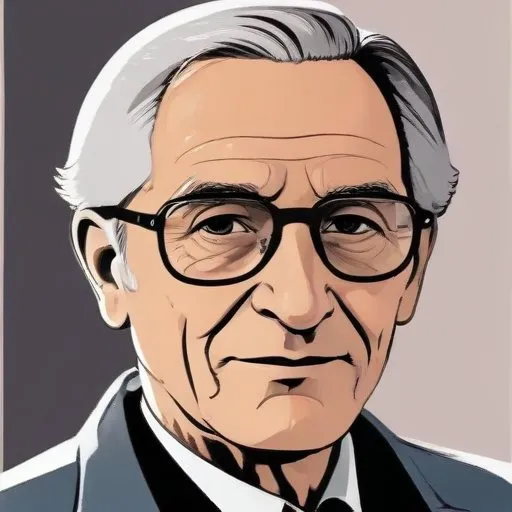
Eugen Goldstein: The Pioneer of Discharge Tubes and Anode Rays
A Legacy of Discovery in the Realm of Physics
Eugen Goldstein, a German physicist, is renowned for his groundbreaking work on discharge tubes and the discovery of anode rays, also known as canal rays. His pioneering research in the late 19th century laid the foundation for the identification of positive ions in the gas phase, including the hydrogen ion.
Early Life and Education
Born on September 5, 1850, in Gleiwitz, Upper Silesia (now Gliwice, Poland), Goldstein came from a Jewish family. He pursued his education in Breslau and later in Berlin, where he studied under the guidance of Helmholtz.
A Career Marked by Innovation and Discovery
Goldstein's career was marked by his fascination with discharge tubes. He worked at the Berlin Observatory from 1878 to 1890 and later became the head of the astrophysical section at the Potsdam Observatory in 1927. During his time at the observatories, Goldstein conducted extensive research on discharge tubes, building upon the work of
Julius Plücker and Johann Wilhelm Hittorf.
The Discovery of Anode Rays
Goldstein's most significant contribution to physics was the discovery of anode rays, which he achieved by creating a perforated cathode in a discharge tube. This innovation led to the identification of positive ions in the gas phase, a breakthrough that would shape the course of physics for generations to come.
Key Contributions to Physics
- Discovery of anode rays, later identified as positive ions in the gas phase
- Measurement of the velocity of cathode rays using the Doppler shift of spectral lines
- Demonstration of the emission of cathode rays perpendicularly from a metal surface
- Contribution to the understanding of the properties of cathode rays, later recognized as electrons
Awards and Honors
Goldstein's work was recognized and respected by his peers, earning him a reputation as a prominent physicist of his time. Although there is no record of specific awards or honors, his contributions to the field of physics remain a testament to his dedication and innovative spirit.
Personal Life and Legacy
Goldstein passed away on December 25, 1930, and was buried in the Weißeese Cemetery in Berlin. His great-nephews, Mikhail and Boris Goldstein, went on to become accomplished violinists, continuing the family's legacy in the world of arts and sciences. Goldstein's work continues to influence modern physics, and his discovery of anode rays remains a fundamental concept in the field.
Conclusion
Eugen Goldstein's pioneering research on discharge tubes and anode rays has left an indelible mark on the world of physics. His contributions have paved the way for future generations of scientists, solidifying his place as one of the most important physicists of the late 19th century.
FAQ
What was Eugen Goldsteins contributions to physics?
Eugen Goldstein was a German physicist who made significant contributions to the field of physics, including the discovery of canal rays and the development of the anode ray tube.
What are canal rays and how did Goldstein discover them?
Canal rays are streams of positively charged ions that are produced when a high-voltage electrical discharge is applied to a gas. Goldstein discovered canal rays in 1886 while studying cathode rays.
What is the significance of the anode ray tube?
The anode ray tube, also known as the Goldstein tube, is an early type of vacuum tube that was used to study electrical discharges. It was a crucial innovation in the development of modern physics and paved the way for later breakthroughs.
How did Eugen Goldsteins work impact the development of modern physics?
Goldsteins discoveries and innovations had a lasting impact on the development of modern physics, influencing the work of later scientists such as Wilhelm Conrad Röntgen and J.J. Thomson.
What recognition did Eugen Goldstein receive for his work?
Goldstein was recognized for his contributions to physics with several awards and honors, including the Copley Medal in 1908.