


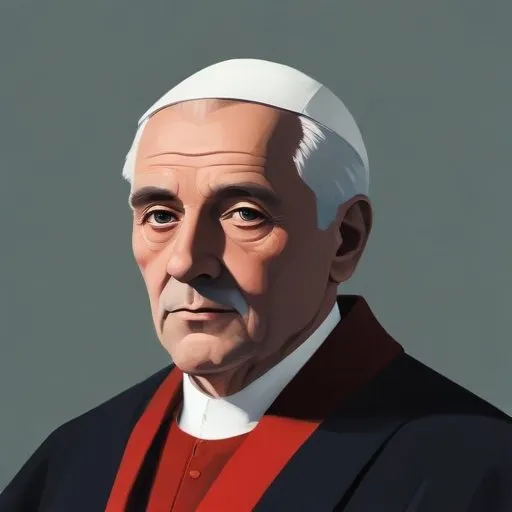
A 19th-century German theologian and scholar who pioneered the historical-critical method of biblical analysis, revolutionizing the field of New Testament studies.
Ferdinand Christian Baur was a renowned German Protestant theologian and founder of the Tübingen School of theology, a philosophical and theological movement that revolutionized biblical criticism and scholarship. He is widely recognized for his groundbreaking work on the dialectical approach to understanding early Christianity, which posits that the faith developed through the synthesis of opposing theses.
Born on June 21, 1792, in Schmiden, near Cannstatt, Baur's intellectual journey began at the theological seminary of Blaubeuren, where he trained under the tutelage of esteemed theologians. In 1809, he enrolled at the University of Tübingen, where he was exposed to the ideas of prominent philosophers Johann Gottlieb Fichte and Friedrich Schelling.
In 1817, Baur returned to the theological seminary at Blaubeuren as a professor, marking a turning point in his life and the birth of the Tübingen School. It was during this period that he began to develop his dialectical approach, which would later shape the course of biblical scholarship.
Baur's work was deeply influenced by the philosophy of Hegel, whose dialectical theory he applied to the study of early Christianity. He argued that the faith evolved through the synthesis of opposing theses, namely Jewish Christianity (Petrine Christianity) and Gentile Christianity (Pauline Christianity). This approach transformed the field of biblical criticism, providing a new framework for understanding the development of Christian theology.
Baur's work had a profound impact on biblical scholarship, shaping the course of higher criticism and influencing the development of modern theology. His ideas continue to be built upon in the twenty-first century, with scholars acknowledging the significance of his contributions.
Baur's legacy is often compared to that of his contemporaries, such as Adolf Hilgenfeld and Albert Schwegler, who further developed and modified his ideas. While the Tübingen School's influence waned in the early twentieth century, Baur's work remains a foundational pillar in the field of biblical criticism.
In 1860, Baur passed away on December 2, leaving behind a rich legacy of scholarly works that continue to shape the field of theology and biblical criticism.
"The only way to understand the New Testament is to see it as a synthesis of opposing forces."
In conclusion, Ferdinand Christian Baur's pioneering work in biblical criticism, philosophical approach, and legacy have left an indelible mark on modern theology, cementing his position as one of the most influential theologians of the 19th century.
Born in 1768
A pioneering theologian and philosopher who shaped modern Christian thought and hermeneutics, known for his emphasis on individual experience and understanding of religious texts.
Born in 1770
A German philosopher and academic who developed a comprehensive and systematic philosophy that emphasized the unity of all things and the dialectical process of thesis, antithesis, and synthesis. His ideas have had a profound impact on modern thought, influencing fields such as philosophy, politics, and art.
Born in 1804
A 19th-century philosopher who critiqued religion and idealism, arguing that God is a human creation and that people should focus on this life rather than the afterlife. His ideas influenced many prominent thinkers, including Karl Marx and Friedrich Nietzsche.
Born in 1884
A German Lutheran theologian and professor who demythologized the New Testament, seeking its deeper meaning beyond supernatural elements, and developed the concept of "existentialist theology".
Born in 1886
A 20th-century theologian who redefined Christian doctrine with his emphasis on God's revelation and humanity's sinful nature, influencing modern Christian thought.
