


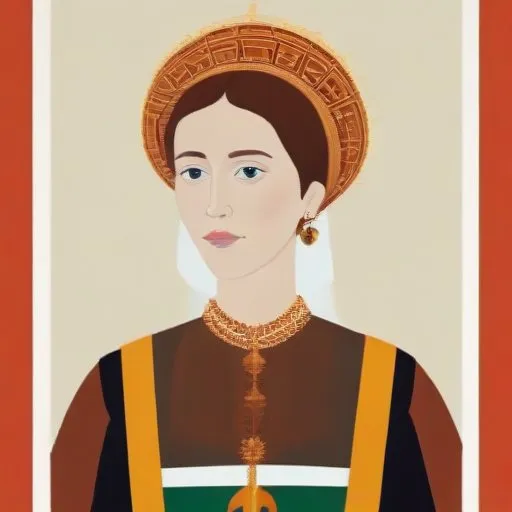
A devout Catholic who imposed religious uniformity, sparking the Thirty Years' War, and a strong advocate for the Counter-Reformation.
Ferdinand II, Holy Roman Emperor, is remembered as a staunch defender of Catholicism, who ruled with an iron fist, implementing strict Counter-Reformation measures to restore the Catholic Church's authority in the Holy Roman Empire. His reign, which spanned from 1619 to 1637, was marked by a series of conflicts, including the Thirty Years' War, and his unyielding commitment to the Catholic faith earned him the title "The Just."
Born on July 9, 1578, Ferdinand was the son of Archduke Charles II of Inner Austria and Maria of Bavaria, both devout Catholics. At the tender age of 11, he was sent to study at the Jesuits college in Ingolstadt, where he was groomed to become a leader in the Catholic Church.
Ferdinand's father died in 1590, and he inherited Inner Austria, Styria, Carinthia, Carniola, and smaller provinces. However, his cousin, Rudolf II, Holy Roman Emperor, appointed regents to administer these lands, limiting Ferdinand's power. It wasn't until 1596 and 1597 that Ferdinand was installed as the actual ruler of the Inner Austrian provinces.
Rudolf II also charged Ferdinand with the command of the defense of Croatia, Slavonia, and southeastern Hungary against the Ottoman Empire. Ferdinand took his mission seriously, and in 1600, he attempted to recapture the fortress of Nagykanizsa, which had been captured by the Ottomans. Although the action ended in defeat, it showcased Ferdinand's determination to protect the empire.
Ferdinand regarded the regulation of religious issues as a royal prerogative and introduced strict Counter-Reformation measures from 1598. He ordered the expulsion of all Protestant pastors and teachers and established special commissions to restore the Catholic parishes. These measures were aimed at strengthening the Catholic Church's grip on the empire.
During the first stage of the family feud known as the Brothers Quarrel, Ferdinand initially supported his cousin Matthias, who wanted to convince Rudolf II to abdicate. However, Matthias' concessions to the Protestants in Hungary, Austria, and Bohemia outraged Ferdinand, and he began to plan an alliance to strengthen the position of the Catholic Church in the Holy Roman Empire.
Ferdinand II's legacy is complex and multifaceted. While he is remembered as a defender of Catholicism, his methods were often brutal and divisive. Nevertheless, his commitment to the Catholic faith and his efforts to restore the Catholic Church's authority in the Holy Roman Empire are undeniable. He died on February 15, 1637, leaving behind a legacy that continues to shape the course of European history.
Ferdinand II's life was marked by conflict, controversy, and a unwavering commitment to the Catholic faith. His legacy continues to shape the course of European history, serving as a testament to the power of conviction and determination.
Born in 1500
Ruling over a vast empire from 1519 to 1556, he was a powerful and influential leader who played a crucial role in shaping European politics and religion. He is most known for his efforts to unify Christian Europe and defend it against the Ottoman Empire.
Born in 1397
Queen consort of Spain, married to Charles V, and a skilled politician who played a crucial role in governing the empire during her husband's absences. She was a patron of the arts and a strong supporter of the Spanish Inquisition.
Born in 1505
Governor of the Habsburg Netherlands, known for her strong leadership and cultural patronage, fostering a golden age of arts and literature.
Born in 1503
The first Habsburg to rule the Holy Roman Empire, he unified Austria and introduced the concept of a hereditary monarchy, shaping European politics for centuries to come.
Born in 1503
Queen of England from 1382 to 1394, known for her strong diplomatic skills and cultural influence, introducing European customs and fashion to the English court.
Born in 1459
First Holy Roman Emperor to rule simultaneously as King of the Romans and King of Spain, known for uniting fragmented German states and establishing the Habsburg dynasty.
