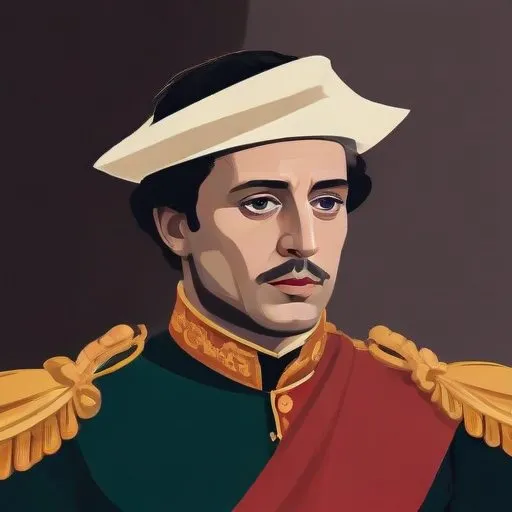
Francesco I d'Este, Duke of Modena: The Patron of Arts and Unifier of Territories
A Legacy of Cultural and Political Achievements
Francesco I d'Este, Duke of Modena, is renowned for his patronage of the arts, his military prowess, and his role in unifying the territories of Modena and Reggio. As a member of the House of Este, he played a significant part in shaping the cultural and political landscape of 17th-century Italy.
A Patron of the Arts
Francesco's love for the arts was evident in his patronage of some of the most prominent artists of his time. He commissioned works from artists such as Bernini, Velázquez, and Titian, adorning the Ducal Palace of Modena with their masterpieces. His court was also a hub for poets, musicians, and intellectuals, fostering a cultural renaissance in Modena.
Unifying the Territories
Francesco's military campaigns were instrumental in expanding and unifying the territories of Modena and Reggio. He successfully defeated the Spanish in the War of the Mantuan Succession, acquiring the Duchy of Reggio and solidifying his position as a major player in Italian politics.
Personal Milestones and Key Life Events
- Francesco was born on September 6, 1610, in Modena, Italy, to Cesare d'Este and Virginia de' Medici.
- He married Maria Farnese in 1631, strengthening ties with the powerful Farnese family.
- Francesco's son, Alfonso, succeeded him as Duke of Modena upon his death on October 14, 1658.
Philosophical Contributions and Beliefs
Francesco's philosophical inclinations were rooted in his support for the Counter-Reformation. He was a devout Catholic and played a key role in promoting the Catholic Church's agenda in Modena and Reggio.
Influence on Modern Society
Francesco's cultural and political legacy has had a lasting impact on modern society. His patronage of the arts has inspired countless artists, while his unification of the territories has shaped the modern political landscape of Italy.
Historical Context and Legacy
Francesco's reign occurred during a tumultuous period in Italian history, marked by conflict and power struggles. Despite these challenges, he managed to establish himself as a powerful and influential leader, leaving behind a rich cultural and political heritage.
Comparative Analysis with Contemporaries
Francesco's cultural achievements are often compared to those of his contemporaries, such as the Medici family in Florence. While the Medici focused on commerce and banking, Francesco's emphasis on the arts and politics distinguished him as a unique leader in 17th-century Italy.
Personal Relationships and Anecdotes
Francesco's marriage to Maria Farnese was marked by a deep affection and mutual respect. According to historical accounts, the couple shared a love for the arts and music, often hosting lavish festivals and performances at the Ducal Palace.
Impact on Pop Culture
Francesco's cultural legacy has influenced numerous artistic and cultural works, including films, literature, and music. His patronage of Bernini, for example, has inspired countless artistic interpretations and adaptations of the famous sculptor's works.
Trivia and Fun Facts
- Francesco was known for his extravagant spending habits, earning him the nickname "The Magnificent".
- He was a skilled military strategist, often taking to the battlefield himself to lead his troops.
- Francesco's love for music led him to establish the Accademia degli Intrepidi, a prestigious music academy in Modena.
By examining Francesco I d'Este's life and achievements, we gain insight into the intricacies of 17th-century Italian politics and culture. His legacy serves as a testament to the power of patronage, diplomacy, and military prowess in shaping the course of history.
FAQ
What was Francesco I dEstes title?
Francesco I dEste was the Duke of Modena and Reggio, a title he held from 1629 until his death in 1658.
What was Francesco I dEstes role in the Thirty Years War?
Francesco I dEste played a significant role in the Thirty Years War, initially supporting the Holy Roman Empire before switching sides to support France and the anti-Habsburg coalition.
What were Francesco I dEstes achievements?
Francesco I dEste was a skilled military leader and politician who expanded the Duchy of Modena and Reggio, and played a key role in shaping the politics of northern Italy during the 17th century.
What was Francesco I dEstes relationship with the French monarchs?
Francesco I dEste formed an alliance with France, and his daughter, Laura, married the French nobleman, Alfonso IV dEste, further strengthening the ties between the two nations.
What is Francesco I dEstes legacy?
Francesco I dEstes legacy is that of a shrewd politician and skilled military leader who expanded the Duchy of Modena and Reggio, and played a significant role in shaping the politics of northern Italy during the 17th century.