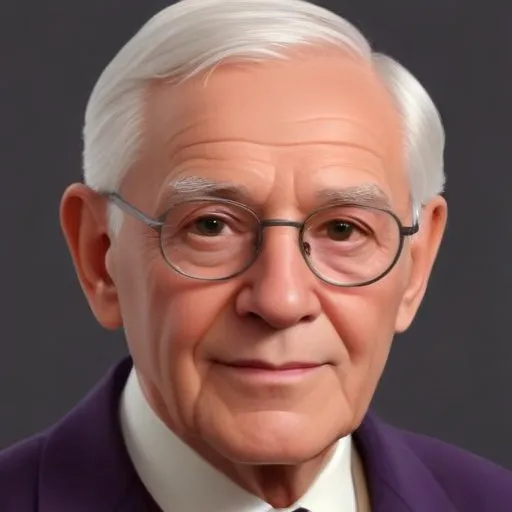
Frank L. Lambert: The Champion of Entropy Reform
A Legacy of Challenging Convention
Frank L. Lambert, a renowned American academic, is known for his tireless efforts to redefine the concept of thermodynamic entropy as a measure of energy dispersal, rather than disorder. This paradigm shift, which he advocated for throughout his career, has had a profound impact on the way chemistry is taught and understood.
Early Life and Education
Born on July 10, 1918, Lambert graduated with honors from Harvard University with an AB and later earned his Ph.D. from the University of Chicago. His academic excellence and thirst for knowledge paved the way for a distinguished career in academia.
Teaching Career and Philosophy
Lambert's passion for teaching led him to join the faculty of Occidental College, Los Angeles, where he taught from 1948 to 1981. He was known for his unorthodox approach to education, abandoning the traditional lecture system in favor of a more collaborative and interactive method. This student-centric approach fostered a sense of partnership between Lambert and his pupils, allowing them to take an active role in the learning process.
Research and Collaboration
Lambert's research focused on the synthesis and polarography of organic halogen compounds, and he made it a point to involve undergraduate students in his work. This approach not only provided students with valuable hands-on experience but also resulted in numerous publications featuring student coauthors.
The Energy Dispersal Model of Entropy
Lambert's most significant contribution to the field of chemistry was his work on the energy dispersal model of entropy. Through his publications in the Journal of Chemical Education, he challenged the conventional understanding of entropy as disorder and instead argued that it is a measure of energy dispersal. His groundbreaking articles, including "Shuffled Cards, Messy Desks, and Disorderly Dorm Rooms" (1999) and "Entropy Is Simple, Qualitatively" (2002), presented a compelling case for this new perspective.
Post-Retirement Pursuits
After retiring from teaching in 1981, Lambert went on to become the scientific advisor to the
J. Paul Getty Museum and later served as the principal aide to the Scientific Research Director at the Getty Conservation Institute.
Lifetime Achievements and Legacy
Frank L. Lambert's dedication to redefining entropy has left an indelible mark on the field of chemistry. His commitment to education, collaborative research, and innovative thinking has inspired generations of students and scholars. As we reflect on his remarkable life and achievements, we are reminded of the importance of challenging conventional wisdom and pushing the boundaries of human understanding.
- Awards and Honors: Lambert's contributions have been recognized through various awards and honors, which have cemented his status as a pioneer in his field.
- Influence on Modern Society: Lambert's work has had a profound impact on our understanding of entropy, which has far-reaching implications for fields such as physics, engineering, and materials science.
- Personal Milestones: Lambert's remarkable life was marked by numerous personal milestones, including his 100th birthday, which he celebrated in 2018.
A Lasting Impact
Frank L. Lambert's legacy extends beyond his academic achievements, as he has instilled in us a sense of curiosity, a drive to challenge the status quo, and a passion for sharing knowledge. As we move forward, we would do well to remember his wisdom and continue to build upon the foundations he laid.
FAQ
What is Frank L. Lamberts area of expertise in chemistry?
Frank L. Lambert is a Professor Emeritus of Chemistry at Occidental College, specializing in organic chemistry and natural products.
What notable research has Frank L. Lambert conducted?
Frank L. Lambert has conducted extensive research on the properties and applications of fulvenes, a class of organic compounds.
What awards has Frank L. Lambert received for his work?
Frank L. Lambert has received several awards for his contributions to chemistry, including the American Chemical Societys Award for Research at an Undergraduate Institution.
How has Frank L. Lamberts work impacted the field of chemistry?
Frank L. Lamberts research has expanded our understanding of organic compounds and their potential applications, influencing generations of chemists and researchers.
What is Frank L. Lamberts legacy in chemistry education?
Frank L. Lamberts legacy in chemistry education is that of a dedicated teacher and mentor, inspiring countless students to pursue careers in chemistry and related fields.