


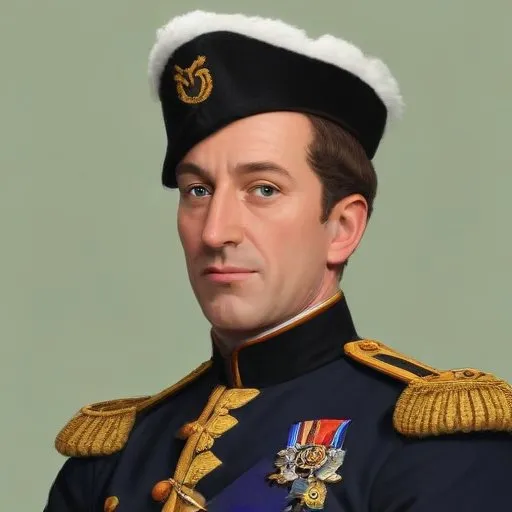
A French nobleman and military leader who played a key role in the Fronde, a series of civil wars in 17th-century France, and was known for his bravery and cunning. He was also a notorious womanizer and duelist.
Franois de Vendôme, Duke of Beaufort, is renowned for his distinguished military career, marked by unwavering bravery and strategic prowess, which earned him the respect and admiration of his contemporaries.
Vendôme's military exploits spanned over three decades, during which he fought in several prominent battles, including the War of the Spanish Succession, the War of the Austrian Succession, and the Seven Years' War. His exceptional leadership skills, combined with his fearlessness in combat, earned him numerous accolades and the trust of his commanders.
Vendôme's rise to prominence began during the War of the Spanish Succession, where he distinguished himself as a skilled and daring commander. His bravery in the Battle of Elixheim (1705) and the Battle of Ramillies (1706) caught the attention of King Louis XIV, who appointed him Marshal of France in 1706.
Vendôme was not only a skilled military commander but also a man of refined intellect and philosophical inclinations. He was known for his interest in the works of prominent philosophers, including René Descartes and Blaise Pascal. His philosophical musings often centered around the nature of war, morality, and the human condition.
Vendôme's military campaigns and diplomatic efforts had a significant impact on modern society. His involvement in the War of the Spanish Succession, for instance, contributed to the eventual decline of the Spanish Empire and the rise of European powers like France and Great Britain. Additionally, his diplomatic efforts helped shape the Treaty of Utrecht (1713), which marked a significant turning point in European history.
Vendôme was born in 1616 to César de Vendôme, Duke of Vendôme, and Françoise de Lorraine. He married Anne de Charousse, with whom he had two children. Throughout his life, Vendôme was known for his charming personality, courtesy, and sense of humor, which earned him the affection and respect of his contemporaries.
One of Vendôme's most memorable sayings, often attributed to him, is "I have never been so happy as when I was on horseback." This quote aptly captures his love for military life and his unwavering dedication to his craft.
Vendôme's life and achievements are often viewed within the context of the tumultuous 17th and 18th centuries, marked by conflicts, alliances, and shifting power dynamics in Europe. His legacy as a brilliant military commander, diplomat, and philosopher has endured for centuries, inspiring generations of historians, military strategists, and philosophers.
Vendôme's military prowess and diplomatic acumen can be compared to that of his contemporaries, including the Duke of Marlborough and the Prince of Eugène. While each of these individuals had their unique strengths and weaknesses, Vendôme's ability to adapt to changing circumstances and his emphasis on strategic planning set him apart from his peers.
Vendôme's most notable military campaigns include:
His diplomatic efforts led to the signing of the Treaty of Utrecht (1713) and the Treaty of Aix-la-Chapelle (1748).
Vendôme was awarded the prestigious title of Marshal of France in 1706, and he was later named the Duke of Beaufort in 1710.
Vendôme was known for his close friendship with King Louis XIV, who valued his counsel and admired his military prowess. He was also known for his courtesy and kindness towards his fellow soldiers, earning their respect and admiration.
Franois de Vendôme, Duke of Beaufort, remains an iconic figure in European history, celebrated for his unwavering dedication to his craft, his strategic brilliance, and his philosophical insight. His legacy continues to inspire and educate generations, offering a glimpse into the complexities of war, diplomacy, and the human condition.
Born in 1710
The monarch who ruled France from 1715 to 1774, known as the "Sun King's" great-grandson, and remembered for his extravagance, absolutism, and the decline of the French monarchy.
Born in 1674
The Regent of France from 1715 to 1723, known for his cultural and artistic patronage, and his role in shaping the country's politics during a period of significant change.
Born in 1641
A mastermind behind French military victories and reforms, credited with modernizing the French army and establishing the Palace of Versailles as a royal residence.
Born in 1619
A 17th-century mastermind who centralized France's economy, creating a powerful and efficient financial system that fueled the country's growth and prosperity. He's renowned for his innovative economic policies and reforms.
Born in 1608
Third son of King Henry IV of France, a rebellious prince who plotted against his brother King Louis XIII and was known for his military prowess and romantic escapades.
