


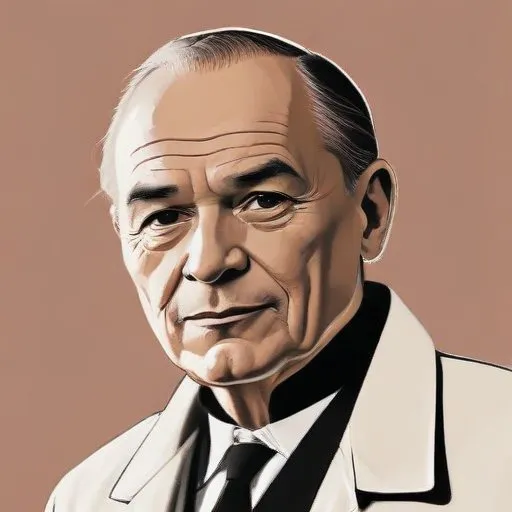
A Finnish novelist who explored the human condition through his lyrical and introspective works, often focusing on the struggles of rural life and the search for meaning.
Frans Eemil Sillanp, the celebrated Finnish author, made history in 1939 by becoming the first Finnish writer to be awarded the Nobel Prize in Literature. His profound understanding of Finland's peasantry and his exceptional skill in portraying their way of life and connection with nature earned him this prestigious recognition.
Born on September 16, 1888, into a poor peasant farming family in Hmeenkyr, Finland, Sillanp's parents managed to send him to school in Tampere. He excelled as a student and, with the aid of his benefactor Henrik Liljeroos, entered the University of Helsinki in 1908 to study medicine.
In 1913, Sillanp returned to his hometown and dedicated himself to writing. He began writing articles for the newspaper Uusi Suometar in 1914. His novel Hurskas kurjuus (Meek Heritage), published in 1919, sparked controversy due to its objective approach to the Finnish Civil War. However, it was his novel Nuorena nukkunut (The Maid Silja), translated to English in 1931, that brought him international acclaim.
Sillanp's Nobel Prize in 1939 was a milestone in his career, recognizing his contribution to literature. The award citation praised his "deep understanding of his country's peasantry and the exquisite art with which he has portrayed their way of life and their relationship with Nature." Just a few days after receiving the prize, the Winter War between Finland and the Soviet Union broke out. Sillanp traveled to Stockholm to accept the award and donated the golden medal to support Finland's war efforts.
As a principled individual, Sillanp opposed all forms of violence and believed in scientific optimism. His literary works epitomize this philosophy, portraying rural people as united with the land. His writing not only reflects his connection with nature but also his empathy for the Finnish peasantry.
In 1916, Sillanp married Sigrid Maria Salomki, whom he met in 1914. His relationships with notable figures, including painters Eero Jrnefelt and Pekka Halonen, composer Jean Sibelius, and author Juhani Aho, demonstrate his involvement in Finland's cultural circle.
Frans Eemil Sillanp's literary contributions have left an indelible mark on Finnish literature. His Nobel Prize has inspired generations of Finnish writers, solidifying Finland's presence in the world of literature. Through his work, Sillanp has gifted us with a profound understanding of Finland's peasantry and their intimate connection with nature.
As we reflect on Sillanp's remarkable life and literary achievements, we are reminded of the power of literature to transcend borders and capture the essence of human experience.
Born in 1920
Finnish novelist celebrated for his vivid depictions of war and its human toll, particularly in his masterpiece "Under the North Star" trilogy. His works are considered a cultural touchstone in Finland, offering a poignant exploration of the country's history and identity.
Born in 1878
A renowned Finnish poet and journalist, celebrated for his lyrical and expressive works that explored themes of love, nature, and Finnish identity. His poetry is still widely read and studied in Finland today.
