


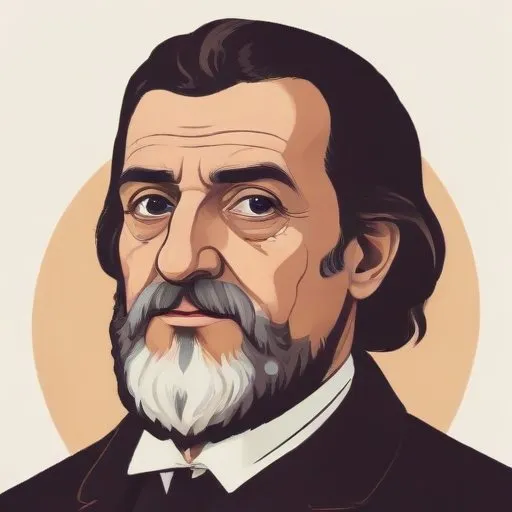
Developed a comprehensive theory of electricity and magnetism, and is considered one of the founders of the field of electrodynamics.
Franz Ulrich Theodor Aepinus, a German mathematician, scientist, and natural philosopher, is renowned for his groundbreaking research in electricity and magnetism. His works, which spanned over four decades, laid the foundation for the understanding of electromagnetic phenomena, earning him a prominent place in the annals of scientific history.
Aepinus was born on December 13, 1724, in Rostock, Duchy of Mecklenburg-Schwerin, to a family with a rich intellectual heritage. His ancestor, Johannes Aepinus, was a prominent theologian and controversialist during the Protestant Reformation. Aepinus's curiosity and aptitude for mathematics and science led him to study medicine initially, but he soon shifted his focus to the physical and mathematical sciences.
In 1755, his exceptional talents earned him admission to the Prussian Academy of Sciences, and he briefly served as the director of the Astronomisches Rechen-Institut. Two years later, he relocated to St. Petersburg, where he became a member of the Russian Academy of Sciences and a professor of physics, a position he held until his retirement in 1798.
Aepinus's magnum opus, Tentamen Theoriae Electricitatis et Magnetismi (An Attempt at a Theory of Electricity and Magnetism), published in 1759, is considered a landmark work in the field of electromagnetism. This treatise marked the first systematic attempt to apply mathematical reasoning to the study of electricity and magnetism.
In addition to his seminal work on electromagnetism, Aepinus published a treatise on the distribution of heat in the earth, De Distributione Caloris per Tellurem, in 1761. He also authored numerous memoirs on various subjects, including astronomy, mechanics, optics, and pure mathematics, which were featured in the journals of the learned societies of St. Petersburg and Berlin.
Aepinus's contributions to the field of electromagnetic theory paved the way for subsequent scientists, such as James Clerk Maxwell and Heinrich Hertz, to build upon his work. His research laid the groundwork for the development of modern electric power systems and paved the way for significant advances in physics and engineering.
In recognition of his outstanding achievements, Aepinus was elected a foreign member of the Royal Swedish Academy of Sciences in 1760. He also enjoyed the patronage of Empress Catherine II of Russia, who appointed him as tutor to her son Paul and endeavored to establish normal schools throughout the empire under his direction.
Aepinus's remarkable life and work continue to inspire scientists, researchers, and scholars, leaving an indelible mark on the history of science and mathematics.
Born in 1724
Developed influential philosophical frameworks, such as the Critique of Pure Reason, that shaped modern Western thought on ethics, morality, and human understanding.
Born in 1738
A pioneering astronomer and musician who discovered Uranus and two of its moons, and also composed symphonies and concertos.
Born in 1750
First female astronomer to receive a salary, discovered several comets and double stars, and assisted her brother William in his astronomical observations.
Born in 1749
Developed nebular hypothesis of the origin of the solar system and formulated Laplace's equation, a fundamental concept in mathematics and physics. He's considered the founder of celestial mechanics.
Born in 1736
Developed calculus, number theory, and celestial mechanics, making significant contributions to the fields of mathematics and astronomy.
Born in 1707
Pioneering mathematician and physicist who made immense contributions to fields like calculus, number theory, and optics, shaping the course of modern mathematics and physics.
Born in 1717
A French Enlightenment thinker who made significant contributions to mathematics, physics, and philosophy, particularly in the fields of fluid dynamics and the study of vibrating strings. He's also known for his work on the Encyclopedia, a comprehensive reference work that aimed to compile all knowledge of the time.
Born in 1733
A prominent 18th-century German Enlightenment figure, known for his influential literary criticism, satirical writings, and significant contributions to the development of German literature.
