


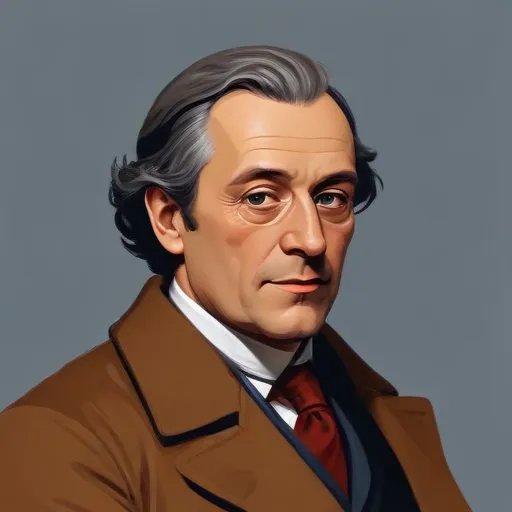
A prominent 18th-century German Enlightenment figure, known for his influential literary criticism, satirical writings, and significant contributions to the development of German literature.
Christoph Friedrich Nicolai was a German writer, bookseller, critic, and regional historian, renowned for his satirical novels and travelogues that captured the essence of 18th century Germany. Through his writings, Nicolai aimed to reform society, challenge authority, and promote literary excellence, earning him a prominent place in the annals of German literary history.
Born on March 18, 1733, in Berlin, Nicolai was the son of Christoph Gottlieb Nicolai, the founder of the esteemed Nicolaische Buchhandlung. He received a solid education, which laid the foundation for his future literary pursuits. In 1749, Nicolai traveled to Frankfurt Oder to learn the book trade, where he developed a deep appreciation for English literature.
Nicolai's entry into the literary world began with his anonymous publication, Briefe über den jetzigen Zustand der schönen Wissenschaften in Deutschland (1755), which sparked controversy by criticizing Johann Christoph Gottsched and his Swiss opponents, Johann Jakob Bodmer and Johann Jakob Breitinger. This work demonstrated Nicolai's courageous spirit and his commitment to promoting literary excellence.
Nicolai's romantic novels, although largely forgotten, were influential in their time. Two notable works stand out:
Christoph Friedrich Nicolai's contributions to German literature and criticism have had a lasting impact on the literary landscape. His commitment to promoting literary excellence, challenging authority, and advocating for reason and reform continue to inspire writers and scholars to this day.
As a testament to his legacy, Nicolai's works remain an essential part of Germany's cultural heritage, offering a unique window into the country's literary and intellectual history during the 18th century.
Remembered as a courageous writer, astute critic, and passionate advocate for literary reform, Christoph Friedrich Nicolai's remarkable life and works continue to captivate readers and inspire writers, solidifying his place as a celebrated figure in German literary history.
Born in 1729
A prominent Enlightenment thinker, he's known for his influential writings on philosophy, literature, and theology, which helped shape modern German culture. He's also credited with developing the concept of dramatic irony in literature.
Born in 1749
A German literary giant who penned iconic works like "Faust" and "The Sorrows of Young Werther", shaping the Romantic movement and influencing countless writers.
Born in 1759
A renowned poet and playwright who crafted influential works that explored the human condition, morality, and the struggle for freedom, leaving a lasting impact on German literature.
Born in 1724
Developed influential philosophical frameworks, such as the Critique of Pure Reason, that shaped modern Western thought on ethics, morality, and human understanding.
53 Years Old
A Jamaican artist who blends dancehall, reggae, and pop to create infectious hits, known for his energetic stage presence and chart-topping singles like "Gimme the Light" and "Baby Boy".
Born in 1776
A German Romantic-era mastermind who crafted dark, fantastical tales and composed mesmerizing music, leaving an indelible mark on literature and classical music.
Born in 1797
A 19th-century literary mastermind who penned poignant poetry and biting social commentary, known for his witty satire and romantic verses that still resonate today.
Born in 1770
A German philosopher and academic who developed a comprehensive and systematic philosophy that emphasized the unity of all things and the dialectical process of thesis, antithesis, and synthesis. His ideas have had a profound impact on modern thought, influencing fields such as philosophy, politics, and art.
