


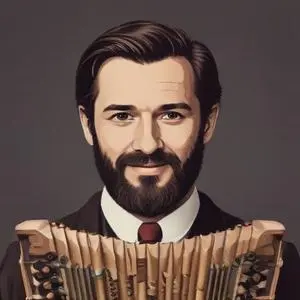
Austrian organist and composer who created the iconic melody to "Silent Night", a beloved Christmas carol still widely performed today.
Franz Xaver Gruber, an Austrian primary school teacher, church organist, and composer, is renowned for crafting the celestial music to the world's most beloved Christmas carol, Silent Night. Written in collaboration with lyricist Joseph Mohr, Gruber's composition has serenaded generations, transcending linguistic and cultural boundaries to become an integral part of the festive season.
Born on November 25, 1787, in the picturesque village of Hochburg-Ach, Upper Austria, Gruber was the son of linen weavers, Josef and Maria Gruber. Initially named Conrad Xavier, his baptismal record was later amended to Franz Xaver. Under the guidance of Hochburger schoolteacher Andreas Peterlechner, Gruber received his first music lessons, laying the foundation for his future compositional endeavors.
Gruber's journey as a schoolteacher began in 1807, when he assumed the role in Arnsdorf. Concurrently, he served as the church caretaker and organist, a position that allowed him to hone his musical skills. In 1808, he married Maria Elisabeth Fischinger Engelsberger, a widow, and the couple had two children, both of whom unfortunately passed away at a young age.
In 1816, Gruber took on additional responsibilities as organist and choirmaster at the Nikolauskirche in Oberndorf. It was here that he collaborated with Joseph Mohr, a Catholic priest, to create the iconic Christmas carol, Silent Night. Mohr, who had penned the original German lyrics in 1816, approached Gruber to set the poem to music. On Christmas Eve in 1818, the two men premiered Stille Nacht at the Christmas Mass in St. Nicholas Church, unaware of the enduring impact their creation would have on the world.
Following the death of his first wife in 1825, Gruber married a former student, Maria Breitfuss, with whom he had ten children, four of whom survived to adulthood. In 1829, he relocated to Berndorf, and later to Hallein, Salzburg, where he assumed the role of choir director, singer, and organist. After Maria's death in childbirth in 1841, Gruber married Katherine Wimmer the following year.
Franz Xaver Gruber's legacy extends far beyond the confines of his native Austria. Silent Night, translated into over 300 languages, has become an integral part of Christmas celebrations globally. Gruber's composition has inspired countless adaptations, parodies, and covers, cementing its status as a cultural touchstone. The Gruber-Mohr collaboration serves as a testament to the transcendent power of music, bridging cultural and linguistic divides to evoke a sense of unity and shared human experience.
In recognition of his contribution to the world of music, Gruber was awarded the Golden Spinney Order of Merit by the Austrian government in 1856. Today, his legacy is commemorated through a museum dedicated to his life and work in Hallein, Austria.
Franz Xaver Gruber's remarkable life, marked by his dedication to music, education, and community, serves as a testament to the enduring power of creativity and collaboration. As the world continues to serenade itself with the haunting melodies of Silent Night, Gruber's legacy remains an integral part of our collective cultural heritage.
Born in 1756
A child prodigy and master of classical music, he composed over 600 works, including symphonies, operas, and chamber music, that continue to inspire and influence musicians today.
Born in 1770
A musical genius who expanded the possibilities of classical music, creating iconic symphonies and piano sonatas that continue to inspire and influence generations of artists.
Born in 1797
A renowned composer of symphonies, operas, and chamber music, particularly famous for his emotional and expressive lieder (art songs) that showcased his mastery of melody and harmony.
Born in 1750
A renowned 18th-century composer and conductor, known for his operas and rivalry with Mozart, as depicted in the movie Amadeus.
Born in 1714
A pioneering opera composer who revolutionized the art form with his innovative and expressive works, blending music and drama in a way that captivated audiences.
Born in 1804
Austrian composer and conductor of waltzes, polkas, and other dance music, known for his lively and energetic compositions that helped popularize Viennese dance music.
Born in 1792
Operatic mastermind behind iconic comedies like "The Barber of Seville" and "William Tell," crafting catchy, witty, and playful music that still delights audiences today.
Born in 1809
A renowned 19th-century musician who masterfully blended classical and romantic styles, creating iconic works like the "Wedding March" and "Elijah" oratorio. His compositions continue to inspire and influence generations of artists.
