


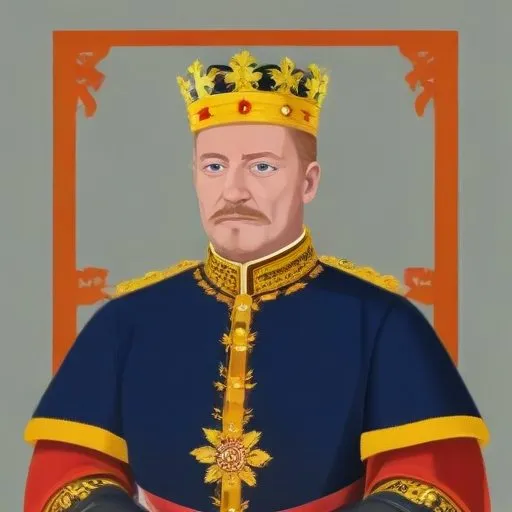
A 15th-century German ruler who played a key role in the early Protestant Reformation, supporting Martin Luther and protecting him from persecution. He's also known for his cultural achievements, including the establishment of the University of Wittenberg.
Frederick II, also known as "The Gentle", is remembered as one of the most influential Electors of Saxony, ruling from 1428 to 1464. He is renowned for his diplomatic prowess, securing crucial peace treaties, and establishing the first federal state parliament of Saxony, which granted the parliament the right to assemble without the ruler's summons.
Born on August 22, 1412, in Leipzig, Frederick was the eldest of seven children to Frederick I, Elector of Saxony, and Catherine of Brunswick and Lunenburg. His early life was marked by the struggle for power among his family members, which ultimately led to the division of their possessions.
After his father's death in 1428, Frederick, along with his younger brothers William III, Henry, and Sigismund, took over the government. In 1433, he successfully concluded peace with the Hussites, a significant achievement that brought stability to the region.
In 1438, Frederick led Saxon forces to victory in the Battle of Sellnitz, further solidifying his position as a skilled military leader. This same year, the first federal state parliament of Saxony was established, granting the parliament the right to assemble without the ruler's summons in matters of taxation.
The split of possessions among his brothers and himself led to disputes, which ultimately culminated in the Saxon Brother War in 1446. However, Frederick's diplomatic skills prevailed, and the war came to an end with the Peace of Naumburg in 1451.
Frederick's reign is marked by his commitment to establishing and maintaining peace in the region. The Treaty of Eger in 1459, which fixed the borders between Bohemia and Saxony, is a testament to his diplomatic prowess. This treaty, which still holds today, is one of the oldest existing borders in Europe.
Frederick II, Elector of Saxony, left a lasting impact on the region, and his reforms paved the way for future generations. His reign serves as a shining example of effective leadership, diplomacy, and vision.
Frederick II, Elector of Saxony, ruled during a tumultuous period in European history. His commitment to establishing and maintaining peace in the region, as well as his reforms, set a precedent for future generations. His legacy serves as a testament to the power of effective leadership and diplomacy.
Born in 1503
Elector of Saxony who played a key role in the Protestant Reformation and was a prominent leader of the Schmalkaldic League, a defensive alliance of Protestant states. He's also known for being captured and imprisoned by Emperor Charles V.
Born in 1483
A German monk and priest who sparked the Protestant Reformation, challenging Catholic Church authority and shaping Western Christianity. He's famous for nailing 95 theses to a church door, sparking a religious revolution.
Born in 1441
German ruler of Saxony who introduced the Reformation and played a key role in the early Protestant movement, shaping the course of European history.
Born in 1463
A key figure in the early Protestant Reformation, he protected and supported Martin Luther, providing a safe haven for him to translate the Bible into German. He's also known for his role in establishing the University of Wittenberg.
Born in 1585
Ruler of Saxony from 1611 to 1656, known for his role in the Thirty Years' War and his efforts to maintain Saxony's independence. He also supported the arts and architecture, commissioning several notable buildings.
Born in 1526
A 16th-century German ruler who played a key role in the Protestant Reformation and was a strong supporter of the arts, commissioning many notable works of literature and music.
Born in 1521
A 16th-century German ruler who played a key role in the Protestant Reformation and was a skilled military leader, known for his cunning and diplomacy. He was a significant figure in the complex web of alliances and conflicts of the time.
