


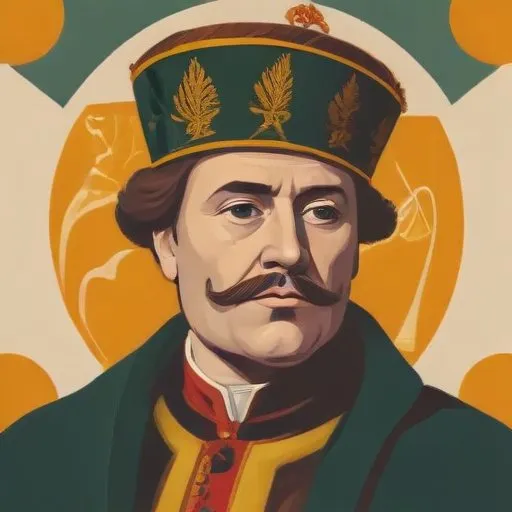
A 16th-century German ruler who played a key role in the Protestant Reformation and was a skilled military leader, known for his cunning and diplomacy. He was a significant figure in the complex web of alliances and conflicts of the time.
Maurice, Elector of Saxony, is renowned for his astute diplomatic prowess, which enabled him to navigate the complex web of alliances and disputes during the tumultuous 16th century, thereby securing extensive lands and the coveted electoral dignity for the Albertine branch of the Wettin dynasty. His strategic maneuvers not only elevated his family's status but also made him a prominent figure in the Protestant Reformation.
Born on March 21, 1521, Maurice was the fourth child and first son of Henry IV, Duke of Saxony, and his Protestant wife, Catherine of Mecklenburg-Schwerin. His early years were marked by a Catholic upbringing, but a significant turning point came in 1532 when he moved to the castle of his godfather, Cardinal Albert of Brandenburg, Archbishop of Magdeburg and Mainz. This two-year period of contemplation laid the foundation for his future as a skilled diplomat.
In 1539, Maurice's father converted to Protestantism, and when he succeeded George as Duke of Saxony, he made the duchy Protestant. Henry and Catherine took charge of their son's education, which was further influenced by his time with his cousin, John Frederick I, Elector of Saxony, in Torgau. Maurice's strong Protestant convictions were reinforced by his lifelong friendship with Philip I, Landgrave of Hesse, whom he met in Dresden.
In 1541, Maurice married Agnes, the eldest daughter of Philip I, Landgrave of Hesse, in a union that was initially opposed by his mother. The couple's strong mutual devotion was evident in their letters, and they had two children together: Anna, born in 1544, and Albert, born in 1545.
Maurice's shrewd manipulation of alliances and disputes eventually secured the electoral dignity for the Albertine branch of the Wettin dynasty. His legacy extends beyond his role as Elector of Saxony, as he played a crucial part in shaping the course of the Protestant Reformation and left an indelible mark on European history.
"A wise prince should be prepared to yield in small matters, that he may be able to persist in the greater."
Maurice's life and reign were marked by the tumultuous backdrop of the Protestant Reformation, the Schmalkaldic War, and the Council of Trent. Despite the challenges, he emerged as a skilled diplomat and defender of Protestantism, securing his place in history as a shrewd statesman and influential figure of the 16th century.
Maurice's diplomatic prowess and Protestant convictions set him apart from his contemporaries, such as Charles V, Holy Roman Emperor, and John Frederick I, Elector of Saxony. While they were engaged in bitter conflicts, Maurice navigated the complex web of alliances and disputes with ease, demonstrating his exceptional statesmanship.
Maurice's legacy extends beyond his role in the Protestant Reformation, as his diplomatic skills and strategic thinking continue to inspire leaders and policymakers to this day. His commitment to Protestantism also paved the way for the growth and development of Protestant churches across Europe.
In conclusion, Maurice, Elector of Saxony, was a master diplomat, a defender of Protestantism, and a shrewd statesman who left an indelible mark on European history. His legacy continues to inspire and influence leaders to this day, solidifying his place as one of the most important figures of the 16th century.
Born in 1483
A German monk and priest who sparked the Protestant Reformation, challenging Catholic Church authority and shaping Western Christianity. He's famous for nailing 95 theses to a church door, sparking a religious revolution.
Born in 1503
Elector of Saxony who played a key role in the Protestant Reformation and was a prominent leader of the Schmalkaldic League, a defensive alliance of Protestant states. He's also known for being captured and imprisoned by Emperor Charles V.
Born in 1526
A 16th-century German ruler who played a key role in the Protestant Reformation and was a strong supporter of the arts, commissioning many notable works of literature and music.
Born in 1585
Ruler of Saxony from 1611 to 1656, known for his role in the Thirty Years' War and his efforts to maintain Saxony's independence. He also supported the arts and architecture, commissioning several notable buildings.
Born in 1463
A key figure in the early Protestant Reformation, he protected and supported Martin Luther, providing a safe haven for him to translate the Bible into German. He's also known for his role in establishing the University of Wittenberg.
Born in 1441
German ruler of Saxony who introduced the Reformation and played a key role in the early Protestant movement, shaping the course of European history.
