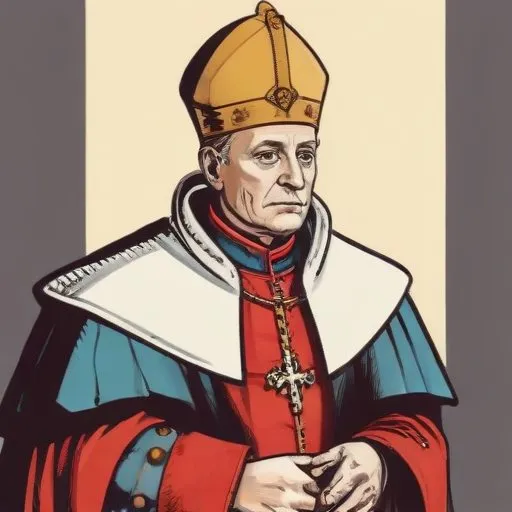
Albert of Brandenburg: The Cardinal Who Sparked the Reformation
The Sale of Indulgences and the Rise of Luther
Albert of Brandenburg, a German cardinal, elector, and archbishop, is infamous for his role in sparking the Protestant Reformation. His notorious sale of indulgences, which allowed individuals to purchase forgiveness for their sins, became the catalyst for
Martin Luther's dissent and eventually led to the schism of the Catholic Church.
Early Life and Career
Born on June 28, 1490, in Cölln on the Spree, now part of Berlin, Albert was the younger son of
John Cicero, Elector of Brandenburg, and Margaret of Thuringia. After his father's death in 1499, Albert's older brother, Joachim I Nestor, became elector of Brandenburg, while Albert held the title of margrave of Brandenburg. Albert studied at the University of Frankfurt an der Oder and went on to become Archbishop of Magdeburg at the age of 23.
Rise to Power and Controversy
In 1514, Albert was elected Archbishop of Mainz, making him sovereign of the Electorate of Mainz and archchancellor of the Holy Roman Empire. However, this appointment violated the canonical prohibition on holding more than one bishopric, and Albert did not meet the required age or educational qualifications. To overcome these obstacles, he received a study dispensation in 1513 and borrowed 20,000 guilders from Jacob Fugger to pay the confirmation fee to the Roman Curia.
The Indulgence Controversy
Albert's suggestion to
Pope Leo X to announce a special indulgence in his three dioceses sparked controversy. The papal bull, issued on March 31, 1515, allowed Albert to keep half of the income for his own purposes, while the other half was meant for the construction of the new St. Peter's Basilica. This move was seen as a blatant example of simony, where high-ranking Church officials would sell sacred offices and privileges.
Consequences and Legacy
Albert's actions did not go unnoticed, and Martin Luther, a German theologian and monk, publicly criticized the practice of selling indulgences. Luther's Ninety-Five Theses, posted on the door of the Castle Church in Wittenberg, marked the beginning of the Protestant Reformation and a direct challenge to the authority of the Catholic Church. Albert's role in this controversy cemented his place in history as a key figure in the Reformation.
Personal Milestones and Key Life Events
- 1490: Born on June 28 in Cölln on the Spree, now part of Berlin
- 1499: Father John Cicero dies, and brother Joachim I Nestor becomes elector of Brandenburg
- 1513: Becomes Archbishop of Magdeburg at the age of 23
- 1514: Elected Archbishop of Mainz and sovereign of the Electorate of Mainz
- 1515: Papal bull issued, allowing Albert to sell indulgences
- 1545: Dies on September 24, leaving behind a legacy of controversy and reform
Philosophical Contributions and Beliefs
Albert's actions were motivated by a desire for power and wealth, rather than a genuine commitment to religious reform. His indulgence sales were a means to raise funds for his own purposes, rather than a genuine attempt to promote spiritual growth. This approach to religious leadership further divided the Catholic Church and contributed to the rise of Protestantism.
Influence on Modern Society
The controversy surrounding Albert's indulgence sales had far-reaching consequences, shaping the course of Christian history and influencing modern society. The Protestant Reformation, sparked by Luther's response to Albert's actions, has had a profound impact on Western Christianity, leading to the development of various Protestant denominations and shaping the religious landscape of modern society.
FAQ
What was Albert of Brandenburgs role in the German Reformation?
Albert of Brandenburg, also known as Albert of Hohenzollern, played a significant role in the German Reformation as a German archbishop and a key figure in the Protestant Reformation. He was a vocal critic of Catholicism and supported the Protestant movement.
How did Albert of Brandenburg become an archbishop?
Albert of Brandenburg was appointed as the Archbishop of Mainz in 1514, despite being just 23 years old. This appointment was facilitated by his family connections and financial backing from the Fuggers, a prominent banking family.
What was Albert of Brandenburgs relationship with Martin Luther?
Albert of Brandenburg was an early supporter of Martin Luther, and the two maintained a close relationship. Albert even provided financial support to Luther during his exile in Wartburg Castle.
How did Albert of Brandenburg contribute to the development of Lutheranism?
Albert of Brandenburg played a crucial role in spreading Lutheranism throughout Germany. He used his influence and resources to promote the Protestant movement, establishing schools and churches and supporting Protestant clergy.
What was Albert of Brandenburgs legacy in German history?
Albert of Brandenburgs legacy is significant in German history, as he helped shape the course of the Protestant Reformation. His support of Luther and Lutheranism contributed to the movements growth and ultimately led to the development of Lutheranism as a distinct Christian denomination.