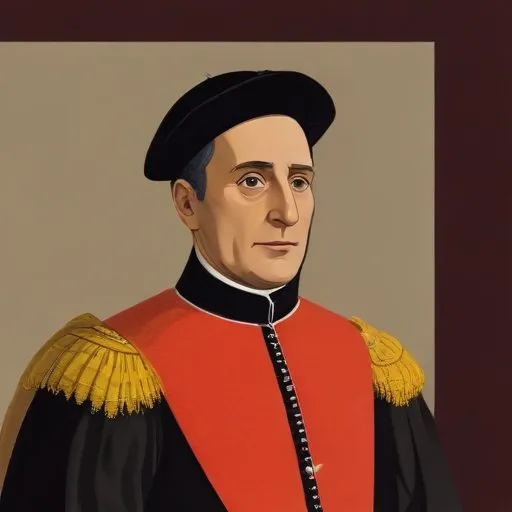
John Cicero, Elector of Brandenburg: The Unlikely Patron of the Arts
A Legacy of Culture and Power
John Cicero, Elector of Brandenburg, is best known for his esteemed position as the ruler of the Margraviate of Brandenburg from 1486 until his death in 1499. His reign was marked by a peculiar blend of politics and artistic patronage, earning him the cognomen Cicero, after the renowned Roman orator.
A Childhood Shaped by Ambition
Born on August 2, 1455, in Ansbach, Franconia, John was the eldest son of Elector
Albert III Achilles of Brandenburg and his first wife, Margaret of Baden. His childhood was spent amidst the grandeur of the Hohenzollern residence, where his father's ambition and influence laid the foundation for John's future roles.
A Life of Diplomacy and Intrigue
In 1466, John was summoned to Brandenburg by his uncle, Elector Frederick II, to assume the role of presumed heir. This marked the beginning of his involvement in the War of the Succession of Stettin, pitting him against the Pomeranian dukes. After his uncle's resignation in 1470, John's father took the reins, and in 1473, he appointed John as regent of the Brandenburg lands. The young elector's diplomatic prowess was soon put to the test as he navigated the complex web of alliances and rivalries that defined the region's politics.
A Family Affair: Marriages and Alliances
On August 25, 1476, John married Margaret of Wettin, a daughter of Landgrave William III of Thuringia, forging a strategic alliance that would shape the course of his reign. The couple had six children, including Joachim I Nestor, who would succeed John as Elector of Brandenburg, and Albert of Mainz, who would become a prominent Cardinal and Archbishop.
Patron of the Arts and Culture
John Cicero's love for the arts is perhaps his most enduring legacy. He fostered a culture of artistic expression, attracting scholars, poets, and musicians to his court. His patronage extended to the renowned University of Frankfurt an der Oder, which he founded in 1486. This institution became a beacon of learning, attracting luminaries from across Europe.
A Lasting Impact on Brandenburg
John Cicero's reign was marked by a resolute commitment to his people and his lands. He implemented reforms to strengthen the economy, promoted trade, and invested in the region's infrastructure. His legacy as a wise and just ruler has endured for centuries, cementing his place as one of the most important figures in Brandenburg's history.
Personal Milestones and Key Life Events
- 1455: Born on August 2 in Ansbach, Franconia
- 1466: Summoned to Brandenburg by his uncle, Elector Frederick II
- 1470: His uncle resigns, and John's father takes the reins
- 1473: Appointed regent of the Brandenburg lands
- 1476: Marries Margaret of Wettin and inherits the conflict with the Piast duke Henry XI of Gogaw
- 1486: Founds the University of Frankfurt an der Oder
- 1486: Succeeds his father as Elector of Brandenburg
- 1499: Dies on January 9
A Legacy of Cultural Significance
John Cicero's reign serves as a testament to the transformative power of art and culture. His vision for a harmonious balance between politics and patronage has left an indelible mark on the history of Brandenburg, inspiring future generations of leaders and artists alike. As we gaze upon the grandeur of his legacy, we are reminded of the enduring importance of nurturing the human spirit.
FAQ
Who was John Cicero, Elector of Brandenburg?
John Cicero, Elector of Brandenburg, was a German nobleman who ruled the Margraviate of Brandenburg from 1486 to 1499, playing a key role in the politics of the Holy Roman Empire.
What was John Ciceros relationship with the Hohenzollern dynasty?
John Cicero was a member of the Hohenzollern dynasty, which would eventually become one of the most influential royal houses in Europe, producing kings of Prussia and emperors of Germany.
How did John Cicero consolidate power?
John Cicero established himself as a powerful leader by defeating rival claimants, securing alliances with neighbouring states, and reforming the administration of Brandenburg.
What cultural achievements did John Cicero promote?
John Cicero patronized the arts and education, founding the University of Frankfurt an der Oder and attracting scholars and poets to his court.
What is John Ciceros legacy?
John Ciceros reign helped establish Brandenburg as a major power in the Holy Roman Empire, setting the stage for the Hohenzollern dynastys future achievements.