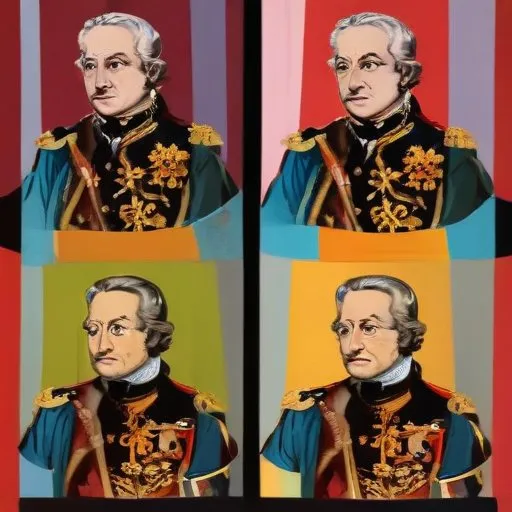
John George, Elector of Brandenburg: A Leader of Contrasts
A Legacy of Fiscal Pragmatism and Religious Tolerance
John George, Elector of Brandenburg, is remembered as a prince-electoral who navigated the complexities of 16th-century politics with a mix of fiscal pragmatism and religious tolerance. During his reign from 1571 to 1598, he implemented policies that shaped the economic and social landscape of Brandenburg, while also promoting education and cultural development.
Early Life and Family
Born on September 11, 1525, John George was a member of the House of Hohenzollern, the son of
Joachim II Hector, Elector of Brandenburg, and his first wife, Princess Magdalena of Saxony. He married three times, first to Princess Sophie of Legnica, then to Margravine Sabina of Brandenburg-Ansbach, and finally to Elisabeth of Anhalt-Zerbst. His children with Sabina would go on to play important roles in the future of Brandenburg.
Fiscal Reforms and Controversies
Upon ascending to the throne, John George inherited a debt of 2.5 million guilders from his father's reign. To address this financial crisis, he introduced a grain tax, which, although unpopular, helped to stabilize the economy. However, this tax also led to the exploitation of peasants, who were forced to rely on the nobility for support. Additionally, John George expelled Jews from Brandenburg in 1573, confiscating their assets and prohibiting their return.
Education and Cultural Achievements
Despite these controversies, John George was a strong advocate for education and cultural development. On July 13, 1574, he founded the Berlinisches Gymnasium zum Grauen Kloster, the first humanistic educational institution in Berlin. This institution would go on to play a significant role in the cultural and intellectual development of Brandenburg.
Religious Tolerance and Diplomacy
A staunch Lutheran, John George opposed the rise of Calvinism, yet he permitted the admission of Calvinist refugees from the wars in the Spanish Netherlands and France. This display of religious tolerance was unusual for the time period, and it contributed to Brandenburg's reputation as a haven for persecuted minorities. John George's diplomatic efforts also led to the Brandenburg electors becoming coregents with Duke Albert Frederick of Prussia in 1577.
Legacy and Impact
John George's legacy is complex and multifaceted. While his fiscal reforms and treatment of Jews are open to criticism, his commitment to education and cultural development, as well as his display of religious tolerance, are noteworthy achievements. As a leader, he navigated the complexities of 16th-century politics with a pragmatic sense of realism, shaping the course of Brandenburg's history in the process.
Timeline of Major Events
- 1525: Born on September 11
- 1545: Married Princess Sophie of Legnica
- 1571: Became Elector of Brandenburg
- 1573: Expelled Jews from Brandenburg
- 1574: Founded the Berlinisches Gymnasium zum Grauen Kloster
- 1577: Became coregent with Duke Albert Frederick of Prussia
- 1598: Died on January 8
Quotes and Memorable Sayings
"The welfare of my people is my greatest concern" - John George, Elector of Brandenburg
Influence on Modern Society
John George's legacy extends beyond his own time and place. His commitment to education and cultural development helped to lay the foundations for Brandenburg's future growth and prosperity. His display of religious tolerance, unusual for the time period, set an important precedent for future generations. Today, he is remembered as a leader who navigated the complexities of 16th-century politics with a mix of fiscal pragmatism and cultural vision.
FAQ
What was the role of John George in the Thirty Years War?
John George, Elector of Brandenburg, played a crucial role in the Thirty Years War, particularly during the 1630s. He formed an alliance with Sweden and led a military campaign against the Holy Roman Empire. Sub-question: What was the impact of John Georges alliance with Sweden on the war?
How did John George contribute to the development of Brandenburg?
John George made significant contributions to the development of Brandenburg, including the establishment of a strong military, the promotion of trade and commerce, and the expansion of education and culture.
What was John Georges relationship with the Hohenzollern family?
John George was a member of the Hohenzollern family, which was a powerful noble house in Germany. He played a key role in uniting the various branches of the family and strengthening its position.
What were John Georges religious beliefs and policies?
John George was a devout Lutheran and supported the Protestant cause during the Thirty Years War. He also implemented policies to promote the Lutheran faith in Brandenburg.
How is John George remembered in German history?
John George is remembered as a skilled military leader and a shrewd politician who played a significant role in shaping the history of Brandenburg and Germany during the 17th century.