


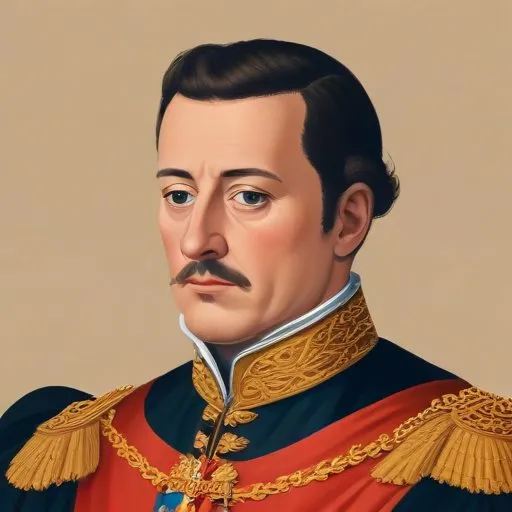
A 14th-century German nobleman who ruled Brandenburg and played a key role in the formation of the German Empire, known for his military conquests and territorial expansions.
Frederick I, Elector of Brandenburg, is renowned for being the first member of the House of Hohenzollern to rule the Margraviate of Brandenburg, setting the stage for the rise of one of the most influential royal houses in German history. Through his strategic alliances, military prowess, and cunning diplomatic maneuvering, Frederick I secured a lasting legacy that would shape the fate of Brandenburg and the Hohenzollern dynasty for centuries to come.
Born on September 21, 1371, in Nuremberg, Frederick was the second-born son of Burgrave Frederick V and the Wettin princess Elisabeth of Meissen. He entered the service of his brother-in-law, the Habsburg duke Albert III of Austria, at a young age, where he honed his military skills and developed essential connections that would serve him well in his future endeavors.
In 1395, Frederick's brother-in-law, Albert III, passed away, and Frederick joined forces with the Luxembourg king Sigismund of Hungary to combat the invading Ottoman forces. Despite suffering a crushing defeat at the Battle of Nicopolis in 1396, Frederick's military prowess and diplomatic acumen earned him recognition and respect among the German nobility.
In 1409, Frederick resumed his rule of Ansbach and subsequently entered into the service of King Sigismund, who had by then become the King of the Romans. This alliance proved pivotal, as Sigismund enlisted Frederick's help in securing the throne of the Holy Roman Empire following the death of King Rupert in 1410. Frederick's support was instrumental in Sigismund's ultimate victory, earning him the Margraviate of Brandenburg-Ansbach in 1415.
Frederick I's ascension to the Electorate of Brandenburg marked the beginning of the Hohenzollern dynasty's domination of the region. His cunning diplomacy, military prowess, and strategic alliances not only solidified his own power but also paved the way for his successors to expand their territories and influence. The Hohenzollerns would go on to produce some of the most prominent figures in German history, including Frederick the Great and Kaiser Wilhelm II.
Frederick I married Elisabeth of Bavaria-Landshut in 1401, with whom he had several children, including John the Alchemist and Frederick II, who would succeed him as Elector of Brandenburg. He died on September 20, 1440, leaving behind a legacy that would shape the course of German history for centuries to come.
While Frederick I's military campaigns and diplomatic maneuvering earned him recognition as a shrewd and capable leader, his involvement in the imperial confusion and subsequent struggle for power led to criticism from some quarters. Nonetheless, his ultimate triumph and the establishment of the Hohenzollern dynasty as a dominant force in German politics cemented his place as one of the most significant figures of his era.
In conclusion, Frederick I, Elector of Brandenburg, was a master strategist, skilled diplomat, and cunning politician who shaped the course of German history through his alliances, military campaigns, and strategic maneuvering. His legacy as the founder of the Hohenzollern dynasty continues to fascinate and inspire historians and scholars to this day.
Born in 1455
A 15th-century German nobleman who ruled Brandenburg and played a key role in the Imperial Reform of the Holy Roman Empire, known for his diplomatic and military skills.
Born in 1525
A 16th-century German nobleman who ruled Brandenburg and played a key role in the Protestant Reformation, issuing the "Emphyteutic Lease" to protect his people's rights.
Born in 1572
A 17th-century German ruler who united Protestant states and played a key role in the Thirty Years' War, known for his diplomatic and military skills. He strengthened the Hohenzollern dynasty, paving the way for Prussia's rise to power.
