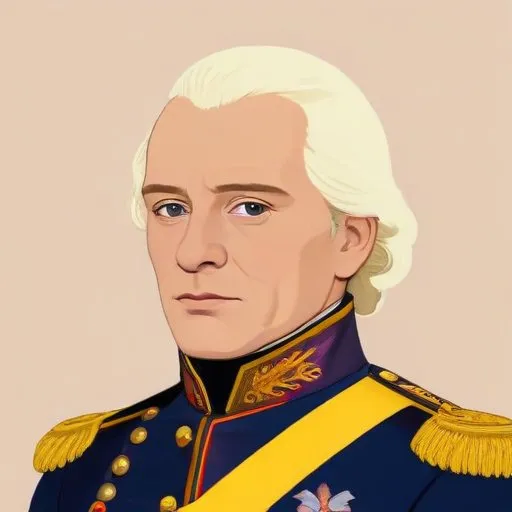
Friedrich Gnther, Prince of Schwarzburg: The Last of a Royal Line
A Life of Royalty and Legacy
Friedrich Gnther, Prince of Schwarzburg, was the final head of the House of Schwarzburg, a noble family that once ruled over the principalities of Schwarzburg-Rudolstadt and Schwarzburg-Sondershausen. He was the last claimant to the throne of the Principality of Schwarzburg, a title he held until his passing in 1971.
Early Life and Lineage
Born on March 5, 1901, in Groharthau, Kingdom of Saxony, Friedrich Gnther was the son of Prince Sizzo von Leutenberg and Princess Alexandra of Anhalt. His father, Prince Sizzo, was recognized as a dynast of the House of Schwarzburg in 1896, following a morganatic marriage that initially denied him succession rights. This recognition placed Friedrich Gnther in line to the throne, a position that would later become his reality.
United Principalities and Abdication
In 1909, the two Schwarzburg principalities were united in a personal union under Prince Gnther of Schwarzburg-Rudolstadt. However, the German Revolution of 1918 led to Prince Gnther's abdication, marking the end of the rule of the House of Schwarzburg.
Marriage and Divorce
Friedrich Gnther married Princess Sophie of Saxe-Weimar-Eisenach on April 7, 1938, in Heinrichau, Silesia. Unfortunately, the marriage was short-lived, and they divorced on November 1, 1938, without any children.
Death and Legacy
Friedrich Gnther passed away on November 9, 1971, in Munich, Bavaria. With his death, the House of Schwarzburg became extinct in the male line, bringing an end to a centuries-old royal lineage.
Historical Significance
The Schwarzburg principalities, though extinct, once played a significant role in German history. The House of Schwarzburg's legacy continues to be felt, with its influence on the region's culture, politics, and architecture still visible today.
Personal Milestones and Key Life Events
- 1901: Born in Groharthau, Kingdom of Saxony
- 1896: Father, Prince Sizzo, recognized as a dynast of the House of Schwarzburg
- 1909: United principalities of Schwarzburg-Rudolstadt and Schwarzburg-Sondershausen under Prince Gnther of Schwarzburg-Rudolstadt
- 1918: Prince Gnther's abdication following the German Revolution
- 1925: Prince Gnther becomes head of the deposed princely House of Schwarzburg
- 1938: Marriage to Princess Sophie of Saxe-Weimar-Eisenach
- 1938: Divorce from Princess Sophie of Saxe-Weimar-Eisenach
- 1971: Death in Munich, Bavaria
Friedrich Gnther's life was marked by a series of significant events that shaped his destiny and the fate of the House of Schwarzburg. Though the House of Schwarzburg may no longer exist, its legacy continues to be felt, and Friedrich Gnther's story remains an important part of German history.
FAQ
What were Friedrich Günthers responsibilities as Prince of Schwarzburg?
Friedrich Günther, Prince of Schwarzburg, ruled over the Principality of Schwarzburg from 1880 to 1909. During his reign, he oversaw the administration of the state and represented its interests in the German Empire.
What was Friedrich Günthers role in German politics?
As a member of the German nobility, Friedrich Günther played a minor role in German politics, primarily representing the interests of his principality in the German Empire.
How did Friedrich Günther contribute to the cultural development of Schwarzburg?
Friedrich Günther was a patron of the arts and supported the cultural development of Schwarzburg during his reign. He encouraged the growth of museums, libraries, and educational institutions in the principality.
What was Friedrich Günthers relationship like with his family?
Friedrich Günther was married to Princess Anna of Schönburg-Waldenburg and had several children with her. Little is known about his personal relationships within the family, but it is clear that he prioritized his duties as ruler of Schwarzburg.
How is Friedrich Günther remembered in historical records?
Friedrich Günther, Prince of Schwarzburg, is remembered as a minor figure in German history, notable primarily for his role as ruler of the Principality of Schwarzburg during the late 19th and early 20th centuries.