


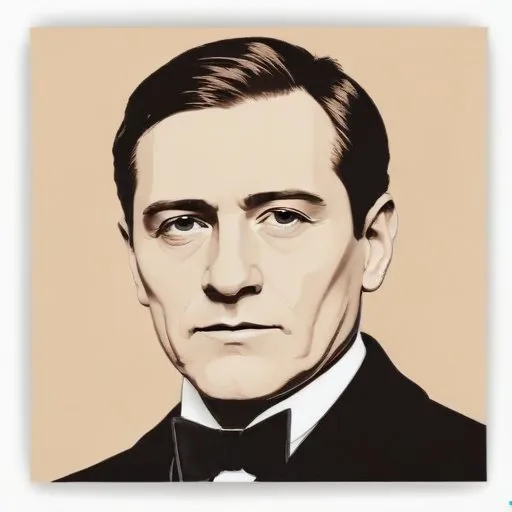
A German-Danish pianist and composer who wrote over 200 works, including operas, symphonies, and chamber music, and is often referred to as the "Beethoven of the flute" due to his extensive flute compositions.
Friedrich Kuhlau, a renowned Danish composer and pianist, is best known for his iconic work, Elves Hill, a masterpiece that embodies the essence of Danish National Romanticism. His music, a perfect blend of classical and romantic elements, has left an indelible mark on the world of classical music.
Born on September 11, 1786, in Uelzen, Lower Saxony, Germany, Kuhlau's life was marked by an unfortunate accident at the tender age of seven, which resulted in the loss of his right eye. Despite this setback, his parents, although of modest means, managed to provide him with piano lessons.
In 1802, Kuhlau moved to Hamburg, where he began studying piano with the esteemed scholar C.F.G. Schwencke. This marked the beginning of his musical journey, which would eventually take him to the pinnacle of success.
Kuhlau made his debut as a concert pianist in 1804, and soon began composing songs and chamber music to supplement his income. Interestingly, many of his compositions feature the flute, an instrument he himself did not play.
In 1810, Kuhlau fled to Copenhagen to avoid conscription in the Napoleonic Army, which had engulfed the small principalities and duchies of northern Germany. This pivotal move marked the beginning of his life-long association with Denmark, where he would go on to make significant contributions to the country's musical heritage.
During his time in Copenhagen, Kuhlau worked as a piano teacher and composer, publishing his first piano and flute compositions in 1810. His love for Beethoven's works led him to introduce many of the renowned composer's pieces to Copenhagen audiences, earning him recognition as a champion of classical music.
Kuhlau's music, characterized by its lyricism and technical mastery, has had a profound impact on Danish cultural history. His Elves Hill, a work that celebrates Danish folklore, remains an iconic masterpiece, with its melody still widely recognized today as the definitive arrangement.
Despite a devastating fire that destroyed his home and unpublished manuscripts, Kuhlau left behind a staggering legacy of over 200 published works, encompassing a wide range of genres, including opera, chamber music, and piano sonatas.
Today, Kuhlau is remembered as a central figure of the Danish Golden Age, a period marked by cultural and artistic flourishing. His music continues to inspire generations of musicians and composers, ensuring his place in the annals of classical music history.
Through his remarkable life and career, Friedrich Kuhlau has left an indelible mark on the world of classical music, inspiring generations to come.
Born in 1770
A musical genius who expanded the possibilities of classical music, creating iconic symphonies and piano sonatas that continue to inspire and influence generations of artists.
Born in 1756
A child prodigy and master of classical music, he composed over 600 works, including symphonies, operas, and chamber music, that continue to inspire and influence musicians today.
Born in 1732
A renowned composer and pianist of the Classical period, known for his symphonies, operas, and chamber music that showcased his innovative and expressive style. He played a significant role in shaping the Classical music era.
Born in 1752
A renowned pianist, composer, and conductor who revolutionized piano music with his technically demanding and expressive compositions, influencing generations of musicians.
Born in 1778
A renowned pianist and composer of the Classical and Romantic eras, known for his virtuosic piano concertos and contributions to the development of the sonata form.
Born in 1794
A renowned Czech pianist and composer of the Romantic era, known for his virtuosic technique and expressive playing style, as well as his compositions that blended classical and romantic elements.
Born in 1714
A renowned 18th-century musician, he was a prolific composer and virtuosic performer, known for his expressive and innovative keyboard music that bridged the Baroque and Classical styles. His compositions, particularly for harpsichord and piano, showcased his mastery of counterpoint and harmony.
