


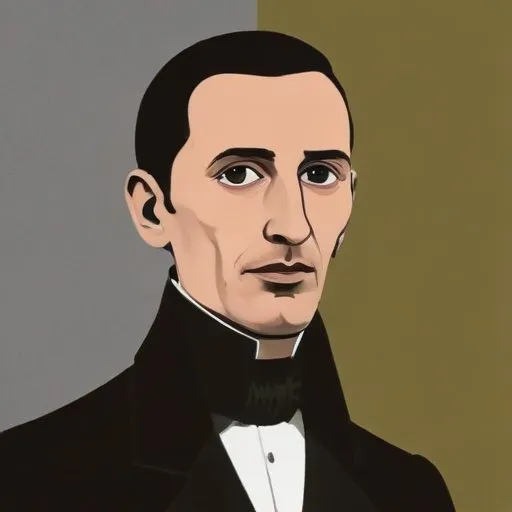
German Romantic writer and playwright who explored themes of identity, morality, and social class in his works, particularly in his influential novel "Sturm und Drang".
Friedrich Maximilian Klinger is best known for his influential plays and poems that shaped the German Enlightenment, a cultural and intellectual movement that emphasized reason, individualism, and critical thinking. As a pioneer of the Sturm und Drang (Storm and Stress) movement, Klinger's works are characterized by intense emotions, passion, and a rebellious spirit that resonated with the youth of his time.
Born on February 17, 1752, in Frankfurt am Main, Germany, Klinger was the youngest of six children. His early life was marked by financial struggles, which led him to pursue a career in the military. However, his true passion lay in writing, and he soon turned to literature as a means of expression and escape.
Klinger's literary career began with his novel Das wahre Bild vom Krieg (The True Picture of War), which was published anonymously in 1775. The novel's critical portrayal of war and the military establishment earned him both acclaim and controversy.
Klinger's works reflect his fascination with the human condition, the struggle for individuality, and the quest for truth. He was deeply influenced by the ideas of Immanuel Kant, Jean-Jacques Rousseau, and Gotthold Ephraim Lessing, which are evident in his plays and poems.
At the heart of Klinger's philosophy lies the concept of the individual's struggle against societal norms and conventions. His characters often embody the contradictions and conflicts of his time, making his works a powerful commentary on the human experience.
Klinger's most famous play, Sturm und Drang (1776), is a seminal work of the movement that shares its name. The play's themes of rebellion, passion, and free will resonated with the youth of the time and established Klinger as a leading figure of the Sturm und Drang movement.
Other notable works include Simsone Grisaldo (1776), Die neue Arria (1777), and Zwillinge (1780), which demonstrate Klinger's mastery of the dramatic form and his ability to craft complex, psychologically nuanced characters.
Klinger's works have had a lasting impact on German literature and culture. His play Sturm und Drang inspired a new generation of writers, including Friedrich Schiller and Johann Wolfgang von Goethe, who would go on to shape the landscape of German literature.
In modern times, Klinger's ideas and themes continue to resonate in popular culture. His emphasis on individuality, rebellion, and the struggle for truth can be seen in films, literature, and music that celebrate nonconformity and creativity.
In 1781, Klinger became a librarian at the Weimar Court, where he worked alongside Goethe and Schiller. This period marked a significant turning point in his life, as he was surrounded by like-minded intellectuals who shared his passion for literature and ideas.
Klinger died on February 25, 1831, in Dorpat, Estonia, where he had spent the final years of his life. His legacy as a pioneering playwright and poet continues to inspire generations of writers, artists, and thinkers.
Klinger's words continue to captivate and inspire, offering a glimpse into the mind of a visionary who dared to challenge the status quo and push the boundaries of human expression.
Born in 1749
A German literary giant who penned iconic works like "Faust" and "The Sorrows of Young Werther", shaping the Romantic movement and influencing countless writers.
Born in 1759
A renowned poet and playwright who crafted influential works that explored the human condition, morality, and the struggle for freedom, leaving a lasting impact on German literature.
53 Years Old
A Jamaican artist who blends dancehall, reggae, and pop to create infectious hits, known for his energetic stage presence and chart-topping singles like "Gimme the Light" and "Baby Boy".
Born in 1776
A German Romantic-era mastermind who crafted dark, fantastical tales and composed mesmerizing music, leaving an indelible mark on literature and classical music.
Born in 1773
A German Romantic poet, author, and critic who wrote influential works of fantasy and horror, shaping the genre and inspiring later writers like Edgar Allan Poe.
Born in 1778
Romantic-era writer of fantastical and often dark tales, exploring themes of love, death, and the supernatural. His works are considered precursors to modern fantasy literature.
Born in 1781
A German botanist and poet who traveled the world, discovering new plant species and writing romantic poetry that explored the human condition.
