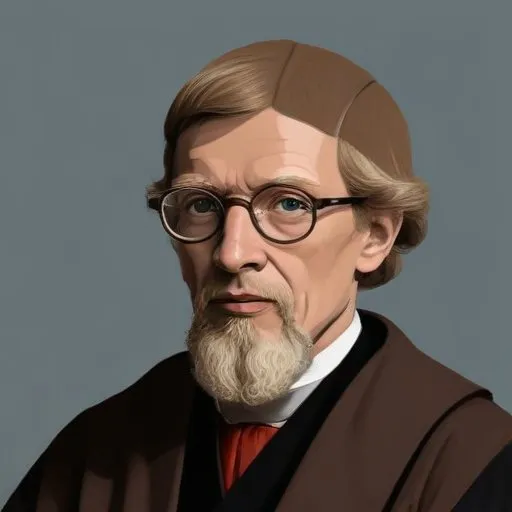
Frits Staal: Unraveling the Mysteries of Vedic Rituals and Indian Philosophy
A Pioneering Scholar of Indian Logic and Philosophy
Frits Staal, a renowned Dutch philosopher, and scholar, is best known for his groundbreaking work in the study of Vedic rituals and mantras, as well as his scientific exploration of ritual and mysticism. As a pioneering figure in the field of Indian philosophy, Staal's contributions have had a profound impact on our understanding of ancient Indian thought and its relevance to modern scholarship.
Early Life and Education
Born on November 3, 1930, in Amsterdam, Staal was the son of architect Jan Frederik Staal. He pursued his undergraduate degree in mathematics, physics, and philosophy from the University of Amsterdam, graduating in 1954. Staal's fascination with Indian philosophy and Sanskrit led him to Madras and Banaras, where he earned his doctorate in 1957.
Academic Career and Contributions
Staal's academic career spanned across various prestigious institutions. He served as a lecturer in Sanskrit at the School of Oriental and African Studies, University of London (1958-1962), and later as an Assistant and Associate Professor of Indian Philosophy at the University of Pennsylvania (1961-1962). In 1962, he became Professor of General and Comparative Philosophy in Amsterdam, a position he held until 1967. Staal's most notable appointment was as Professor of Philosophy and South Asian Languages at the University of California, Berkeley, where he taught from 1968 until his retirement in 1991.
Philosophical Contributions
Staal's work challenged conventional notions of Indian philosophy, arguing that ancient Indian grammarians, particularly Pāṇini, had mastered methods of linguistic theory that weren't rediscovered until the 1950s. He demonstrated how modern mathematical logic could be applied to linguistics, echoing the ideas of
Noam Chomsky. Chomsky himself acknowledged that Pāṇini's grammar was the first generative grammar in the modern sense.
Awards and Honors
In recognition of his outstanding contributions, Staal was elected as a corresponding member of the Royal Netherlands Academy of Arts and Sciences in 1979.
Legacy and Impact
Frits Staal's pioneering work has left an indelible mark on the fields of Indian philosophy, Sanskrit studies, and linguistics. His research has inspired generations of scholars, and his legacy continues to shape our understanding of ancient Indian thought and its relevance to modern scholarship.
Personal Life and Later Years
Staal retired to Thailand, where he passed away on February 19, 2012, at the age of 81. His remarkable life's work serves as a testament to his boundless curiosity, intellectual rigor, and passion for unraveling the mysteries of Indian philosophy.
Throughout his life, Frits Staal embodied the spirit of intellectual inquiry, leaving behind a rich legacy that continues to inspire and enlighten scholars and enthusiasts alike.
- Frits Staal's work embodies the power of human curiosity, encouraging us to venture beyond the boundaries of conventional thought.
FAQ
What is Frits Staals background in philosophy?
Frits Staal was a Dutch philosopher and scholar who made significant contributions to the fields of philosophy, linguistics, and Indology.
How did Frits Staal become interested in philosophy?
Frits Staal developed an interest in philosophy at a young age and went on to study at the University of Amsterdam, later becoming a prominent figure in Dutch philosophy.
What were some of Frits Staals notable contributions?
Frits Staal made significant contributions to the fields of philosophy, linguistics, and Indology, including his work on the philosophy of language and Indian philosophy.
Did Frits Staal receive any awards for his contributions to philosophy?
Yes, Frits Staal received several awards and honors for his contributions to philosophy, including the Spinoza Prize.
What is Frits Staals legacy in Dutch philosophy?
Frits Staals legacy is that of a dedicated philosopher and scholar who expanded our understanding of language, philosophy, and Indian thought, inspiring future generations of philosophers.