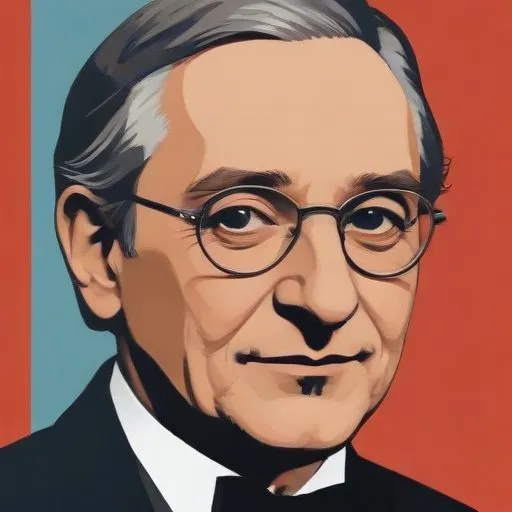
Gabriel Lippmann: The Pioneer of Colour Photography
A Breakthrough in Colour Reproduction
Gabriel Lippmann, a Franco-Luxembourgish physicist and inventor, revolutionized the field of photography by discovering a method to reproduce colours photographically based on the phenomenon of interference. This groundbreaking achievement earned him the Nobel Prize in Physics in 1908.
Early Life and Education
Born on August 16, 1845, in Bonnevoie, Luxembourg, Lippmann's parents, Isae and Miriam Rose Lvy, were French Jews. His father managed the family's glovemaking business, and in 1848, the family relocated to Paris. Lippmann received his early education from his mother before attending the Lyce Napoléon (now Lyce Henri IV). He showed a keen interest in mathematics and was admitted to the École Normale Supérieure in Paris in 1868.
Academic Pursuits
Lippmann's academic journey took him to Heidelberg University, where he studied electricity under the guidance of
Gustav Kirchhoff. He received his doctorate with summa cum laude distinction in 1874. Upon returning to Paris in 1875, Lippmann continued his research until 1878, when he became a professor of physics at the Sorbonne, teaching acoustics and optics.
Contributions to Physics
Lippmann's research led to several significant contributions to various branches of physics. One of his early discoveries was the relationship between electrical and capillary phenomena, which enabled him to develop a sensitive capillary electrometer.
Capillary Electrometer
The capillary electrometer, also known as Lippmann's electrometer, was an invention that measured electric potential differences with high accuracy. This device was instrumental in advancing the field of electrometry.
Colour Photography
Lippmann's most notable achievement was the development of a method to reproduce colours photographically based on the phenomenon of interference. This breakthrough led to the creation of the Lippmann process, which involved coating a photographic plate with a thin layer of mercury and exposing it to light. The resulting image displayed a range of colours, paving the way for modern colour photography.
Awards and Honours
Lippmann's pioneering work in colour photography earned him the Nobel Prize in Physics in 1908. He was also awarded the Rumford Medal in 1896 for his contributions to the field of thermodynamics.
Legacy
Gabriel Lippmann's innovative spirit and groundbreaking research have left a lasting impact on the fields of physics and photography. His work continues to inspire scientists and photographers to push the boundaries of colour reproduction and imaging technology.
Fun Facts
- Lippmann's early interest in mathematics was encouraged by his mother, who taught him the subject.
- He was known for his thoughtfulness and attentiveness, often getting lost in thought.
- Lippmann's love for physics led him to decline a teaching position, opting instead to focus on research.
FAQ
What is Gabriel Lippmanns contribution to physics?
Gabriel Lippmann was a Luxembourger-French physicist who made significant contributions to the fields of electricity, magnetism, and optics. He is best known for inventing the first practical color photography process.
What is Gabriel Lippmanns process of color photography?
Gabriel Lippmanns process of color photography involves the use of a plate coated with a layer of silver halide, which is then exposed to light through a grid of tiny prisms. This process creates a color image that can be reproduced and printed.
What is Gabriel Lippmanns Nobel Prize work?
Gabriel Lippmann was awarded the Nobel Prize in Physics in 1908 for his invention of the first practical color photography process. His work revolutionized the field of photography and paved the way for modern color photography techniques.
What are Gabriel Lippmanns other achievements?
Gabriel Lippmann was a prolific researcher who made significant contributions to many areas of physics, including electromagnetism, thermodynamics, and optics. He was also a dedicated teacher and served as the director of the Sorbonnes laboratory of physical chemistry.
What is Gabriel Lippmanns legacy in physics?
Gabriel Lippmanns legacy in physics is that of a pioneer in the field of color photography. His invention of the first practical color photography process has had a lasting impact on the development of modern photography and imaging technologies.