


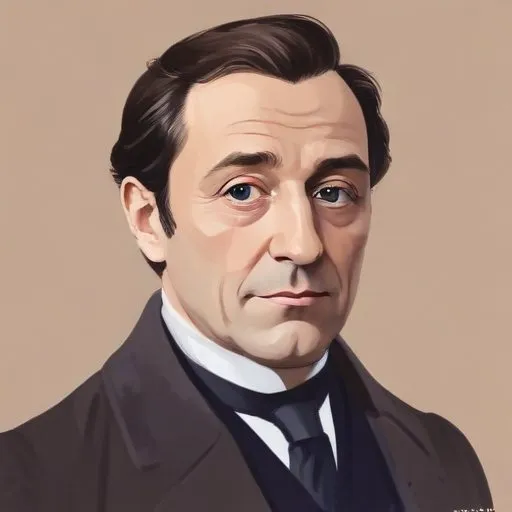
The 13th President of France, a lawyer-turned-politician who played a significant role in shaping the country's government and economy during the early 20th century. He's most known for his efforts to reform the French constitution and strengthen the office of the presidency.
Gaston Doumergue, a French politician, served as the President of France from 1924 to 1931, leaving an indelible mark on the country's history. He is remembered for his leadership during a tumultuous period in French politics, navigating the nation through critical times with his unwavering dedication and vision.
Born on August 1, 1863, in Aigues-Vives, Gard, Doumergue came from a Protestant family. His father, Pierre Doumergue, was a vigneron, and his mother, Françoise Pattus, instilled in him a strong sense of republican ideals and the Protestant faith.
After completing his secondary education at the boys' high school in Nîmes, Doumergue pursued law at the School of Law in Paris, earning a license and doctorate in law. He registered at the Nîmes bar in 1885 and gained experience as a lawyer before entering the judiciary in 1890 as a substitute in Hanoi, French Indochina.
Doumergue's political career took off in 1893, when he successfully contested a partial legislative election in December of the same year. He went on to hold various ministerial portfolios, eventually becoming the President of the Council of Ministers in 1913, although his tenure was short-lived due to his forced resignation a few months later.
In 1923, Doumergue was elected as the President of the Senate, a position that propelled him to the presidency of France in 1924, succeeding Alexandre Millerand, who had resigned.
During his presidency, Doumergue focused on strengthening the country's economy, which was grappling with the aftermath of World War I. He implemented measures to stabilize the franc, reduce debt, and promote industrial growth.
After completing his term as President of France, Doumergue refused to compete against his eventual successor and chose to retire. However, he returned to the political arena in 1934, chairing a government of national unity during the crisis sparked by the riots of February 6, 1934.
Doumergue was the great-uncle of playwright Colette Audry and filmmaker Jacqueline Audry. He remained committed to his Protestant faith throughout his life, which shaped his values and principles.
In his personal life, Doumergue was known for his strong sense of patriotism, which was instilled in him from a young age. He often referred to himself as belonging to the "generation of revenge," driven by a desire to redeem France's honor after the defeat of 1870.
Gaston Doumergue's unwavering commitment to France and its people has left a lasting impact on the nation's history. His leadership, vision, and dedication continue to inspire generations, solidifying his place as one of France's most notable politicians.
Born in 1860
A French statesman who served as President of France during a tumultuous period, playing a crucial role in shaping the country's response to World War I. He's also known for his efforts to reform the French economy and stabilize the franc.
Born in 1862
A French statesman who served as Prime Minister of France and was awarded the Nobel Peace Prize for his efforts to establish the European unity and collective security. He played a key role in shaping the League of Nations and promoting international cooperation.
Born in 1872
A French lawyer and politician who served as Prime Minister of France, known for his efforts to rebuild the country after World War I and his advocacy for European unity.
Born in 1863
A French mathematician and politician who served as Prime Minister of France, making significant contributions to mathematics, particularly in the field of differential equations. He's also known for his role in shaping France's early 20th-century politics.
Born in 1872
A French lawyer and politician who served as Prime Minister of France, known for his leadership during the Popular Front government and his role in shaping the country's social and economic policies.
Born in 1884
Led France through the Munich Crisis, signing the Munich Agreement, and played a crucial role in the country's early World War II efforts. He's infamous for appeasing Nazi Germany, hoping to avoid war.
Born in 1878
A French lawyer and politician who served as Prime Minister of France during the tumultuous period of World War II, known for his attempts to reform the French government and resist German occupation.
Born in 1856
A French general who led the country to defeat in World War II and later collaborated with the Nazis, serving as the Chief of State of Vichy France. He's infamous for his role in the French surrender and subsequent authoritarian regime.
