


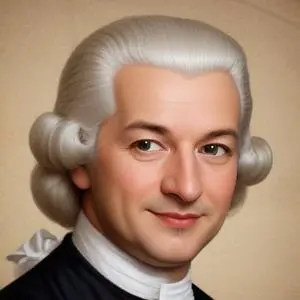
A Baroque composer and multi-instrumentalist, he wrote over 3,000 works, including orchestral suites, operas, and sacred music, earning him the title "Father of Church Music".
Georg Michael Telemann, a German composer and theologian, is best known for his remarkable contributions to the world of Baroque music, particularly in the realm of church music and continuo playing. Despite being the grandson of the renowned Georg Philipp Telemann, Georg Michael carved out his own niche, leaving an indelible mark on the musical landscape of 18th-century Europe.
Born on April 20, 1748, in Plön, Germany, Georg Michael was the son of Andreas Telemann, a local pastor, and Augusta Clara Catharina Capsius. After his father's untimely death in 1755, Georg Michael moved to Hamburg, where he was taken under the wing of his 74-year-old grandfather, Georg Philipp Telemann. This fortuitous circumstance allowed Georg Michael to receive an exceptional education, attending the Gelehrtenschule des Johanneums and later the Akademisches Gymnasium.
In 1773, Georg Michael published his treatise on continuo playing, Unterricht im Generalbaß-Spielen, demonstrating his expertise in this essential aspect of Baroque music. This seminal work showcases his dedication to preserving and promoting the art of continuo playing.
In 1773, Georg Michael relocated to Riga, Latvia, where he assumed the position of music director of the city churches and cantor at Riga Cathedral. During his tenure, he directed the performance of twenty-one of his grandfather's passions, ensuring the continuation of the Telemann legacy.
In 1812, Georg Michael published a collection of Chorale settings for organ, Sammlung alter und neuer Choral-Melodien, further solidifying his reputation as a master of church music. He later took on the role of organist at Riga Cathedral, a position he held until 1828, when he retired due to failing eyesight. Georg Michael Telemann passed away on March 4, 1831, in Riga, leaving behind a rich legacy that continues to inspire generations of musicians and music enthusiasts.
Through his remarkable body of work, Georg Michael Telemann reminds us that even in the shadow of greatness, individual talent and dedication can forge a unique and lasting impact on the world of music.
Born in 1685
A master of Baroque music, he composed over 1,000 works, including orchestral suites, cantatas, and passions, that still inspire and influence musicians today. His innovative use of counterpoint and harmony raised the bar for classical music.
Born in 1685
A renowned Baroque composer and organist, famous for creating majestic orchestral suites, operas, and oratorios, including the iconic "Messiah" masterpiece.
Born in 1678
A virtuosic violinist and prolific composer, he crafted over 400 concertos, including "The Four Seasons," which remains a beloved and iconic masterpiece of classical music.
Born in 1659
A renowned Baroque composer, known for his iconic opera "Dido and Aeneas" and contributions to English classical music.
Born in 1653
A virtuosic violinist and composer who revolutionized the concerto grosso form, creating a new era of classical music. His influential works elevated the violin to a solo instrument, shaping the course of Western classical music.
Born in 1660
Baroque-era mastermind behind over 600 cantatas, operas, and orchestral works, shaping the course of classical music with his innovative style and harmonic genius.
Born in 1756
A child prodigy and master of classical music, he composed over 600 works, including symphonies, operas, and chamber music, that continue to inspire and influence musicians today.
