


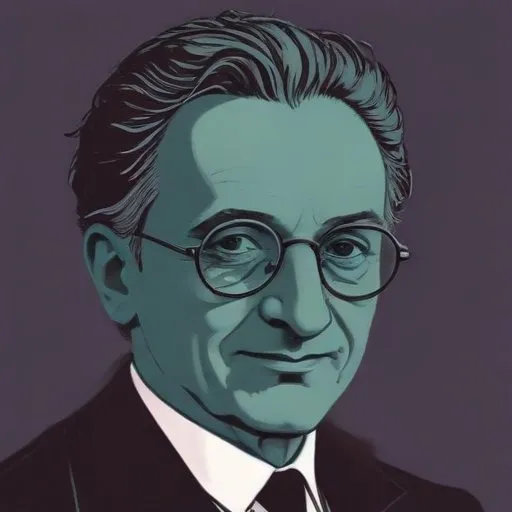
Pioneering electrochemist who conducted groundbreaking experiments on galvanism, inspiring Mary Shelley's Frankenstein. Known for his bold demonstrations of reanimating dead bodies using electricity.
Giovanni Aldini, an Italian physician and physicist, is renowned for his groundbreaking experiments in galvanism, a precursor to modern electrostimulation techniques. His most famous public demonstration, performed in 1803 on the executed criminal George Forster, showcased the ability to animate deceased limbs using electrical stimuli.
Born on April 10, 1762, in Bologna, Italy, Aldini came from a family of intellectuals. His brother, Count Antonio Aldini, was a statesman, and his uncle, Luigi Galvani, was a pioneering physiologist. Aldini graduated in physics from the University of Bologna in 1782 and later became a professor of experimental physics at the same institution in 1798, succeeding his uncle.
Aldini's scientific work focused on galvanism, anatomy, and its medical applications. He also explored the construction and illumination of lighthouses and developed experiments for preserving human life and material objects from destruction by fire. His research and findings were published in multiple languages, including French, English, Italian, and Latin.
In 1803, Aldini conducted his most infamous experiment on the corpse of George Forster, an executed criminal, at Newgate Prison in London. The demonstration involved applying galvanic stimuli to the deceased body, causing the jaws to quiver, the eyes to open, and the limbs to move. This spectacle sparked both fascination and horror in the public and laid the groundwork for later discussions on the nature of life and death.
Aldini's experiment on George Forster has been linked to Mary Shelley's creation of Frankenstein, as it is believed to have inspired her writing. Although Shelley never mentioned Aldini directly, galvanism was a topic of discussion among her social circle, and its influence on her work cannot be overstated.
In recognition of his contributions, the Emperor of Austria awarded Aldini the title of Knight of the Iron Crown and appointed him as a councillor of state at Milan. Aldini bequeathed a significant sum to establish a school of natural science for artisans in Bologna, ensuring his legacy in the pursuit of scientific knowledge.
Aldini's remarkable scientific achievements, coupled with his intriguing public demonstrations, have cemented his place in the history of science. His work has inspired generations of scientists, writers, and thinkers, ensuring his legacy as a pioneer in the field of galvanism.
Born in 1745
Italian physicist who invented the first electrical battery, revolutionizing the field of electricity and paving the way for countless technological advancements.
Born in 1737
Pioneering researcher who discovered bioelectricity, sparking a new understanding of the human body and paving the way for modern medical advancements.
Born in 1778
Pioneering chemist and physicist who discovered several elements, including potassium and sodium, and invented the Davy lamp, a safety lamp for miners. His groundbreaking work laid the foundation for modern chemistry and electrochemistry.
Born in 1791
Pioneering scientist who discovered electromagnetic induction, formulated the laws of electrolysis, and invented the first electrical generator, revolutionizing our understanding of electricity and its applications.
Born in 1831
Developed groundbreaking theories that unified electricity and magnetism, and predicted the existence of radio waves, revolutionizing our understanding of the physical world.
Born in 1808
An Italian-American engineer credited with inventing the first practical telephone, predating Alexander Graham Bell's patent. He's known for his pioneering work in telecommunications.
Born in 1874
Developer of the first practical wireless telegraph, pioneering radio communication and earning a Nobel Prize in Physics. Known for revolutionizing long-distance communication.
Born in 1856
A pioneering engineer who harnessed the power of alternating current (AC) to transform the world's electrical systems, and is credited with developing groundbreaking technologies like radio communication and X-ray imaging.
