


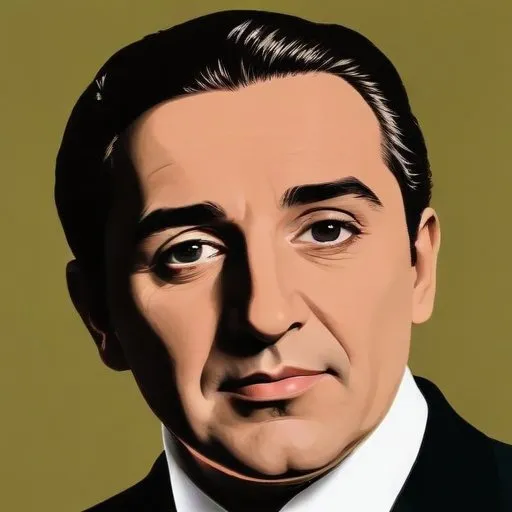
This 18th-century Italian soprano and author was a renowned vocal instructor, leaving behind a legacy of influential singing treatises and manuals that shaped the art of classical singing. Their written works remain essential reading for vocal students and professionals to this day.
Giovanni Battista Mancini was a celebrated Italian soprano castrato, voice teacher, and author, renowned for his exceptional vocal technique and influential writings on singing. Born on January 1, 1714, in Ascoli Piceno, Italy, Mancini left an indelible mark on the world of music, shaping the art of singing for generations to come.
Mancini's musical journey began in Naples, where he studied singing with the esteemed composer Leonardo Leo. He later moved to Bologna to continue his vocal training under the guidance of Antonio Bernacchi, a prominent castrato singer. During this period, Mancini also honed his skills in composition and counterpoint with the renowned music theorist Giovanni Battista Martini.
At the tender age of 16, Mancini embarked on his singing career, performing in Italy and Germany. His exceptional talent and dedication soon earned him international recognition, leading to an invitation from Empress Maria Theresa of Austria to become the k. k. CammerMusicus and teach her daughters singing in Vienna.
Mancini's teaching career was marked by unprecedented success, with many of his pupils going on to become renowned singers in their own right. His unique approach to vocal pedagogy and emphasis on proper technique earned him a reputation as one of the most respected voice teachers of his time.
In 1774, Mancini published his seminal work, Pensieri, e riflessioni pratiche sopra il canto figurato (Thoughts and Practical Reflections on Figurative Singing), which remains a seminal text in the field of vocal pedagogy. This comprehensive treatise on singing provides valuable insights into the art of figurative singing, offering practical advice on topics such as breath control, phrasing, and ornamentation.
Mancini's writings sparked a debate with fellow voice teacher Vincenzo Manfredini, but his pioneering work continued to influence generations of singers and teachers. His book was later translated into English and published in both Boston (1912) and Champaign, Illinois (1967).
Giovanni Battista Mancini's legacy extends far beyond his impressive singing career. As a dedicated teacher and author, he left an indelible mark on the world of music, shaping the art of singing for centuries to come. His influential writings and pedagogical approach continue to inspire vocal instructors and singers around the world.
Today, Mancini's work remains a testament to his innovative spirit and dedication to the art of singing. His remarkable life and achievements serve as a reminder of the power of passion, hard work, and innovation in the pursuit of excellence.
Born in 1705
A renowned 18th-century opera singer, known for their extraordinary vocal range and emotional performances, captivating European royal courts and aristocracy.
Born in 1728
An 18th-century Italian composer and educator, known for his operas and influence on the development of classical music. He was a prominent figure in the Neapolitan school of opera composition.
Born in 1740
An 18th-century Italian composer and educator, known for his operas and contributions to the development of classical music. His works were widely performed and admired by European royalty and aristocracy.
Born in 1749
An 18th-century Italian composer and educator, known for his operas and sacred music, particularly his comic operas that showcased his mastery of melody and harmony.
Born in 1756
A child prodigy and master of classical music, he composed over 600 works, including symphonies, operas, and chamber music, that continue to inspire and influence musicians today.
Born in 1770
A musical genius who expanded the possibilities of classical music, creating iconic symphonies and piano sonatas that continue to inspire and influence generations of artists.
Born in 1792
Operatic mastermind behind iconic comedies like "The Barber of Seville" and "William Tell," crafting catchy, witty, and playful music that still delights audiences today.
Born in 1801
Operatic mastermind behind bel canto classics like "Norma" and "La Sonnambula", renowned for their beautiful, expressive melodies and dramatic flair.
