


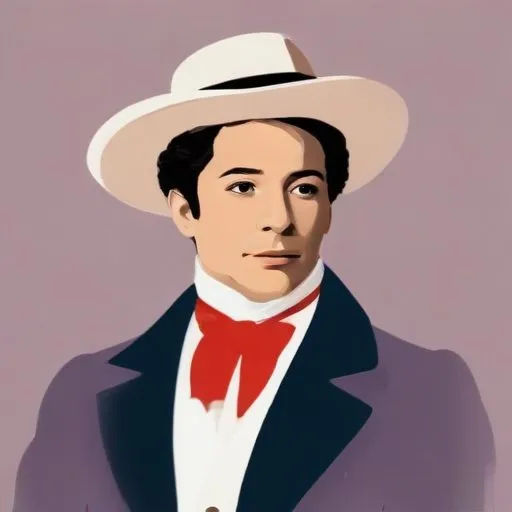
A renowned 18th-century opera singer, known for their extraordinary vocal range and emotional performances, captivating European royal courts and aristocracy.
Known for his breathtaking soprano vocal range and ability to sing the highest note customary at the time, C6, Farinelli was a celebrated Italian castrato singer of the 18th century and one of the greatest singers in the history of opera. Born as Carlo Maria Michelangelo Nicola Broschi on January 24, 1705, in Andria, Italy, Farinelli's remarkable talent would take him to the heights of fame and earn him a lasting legacy in the world of music.
Farinelli was born into a family of musicians, with his father Salvatore being a composer and maestro di cappella of the city's cathedral. His mother, Caterina Barrese, was a citizen of Naples. The Duke of Andria, Fabrizio Carafa, a member of the prestigious House of Carafa, honored Maestro Broschi by taking a leading part in the baptism of his second son, Carlo Maria Michelangelo Nicola.
In 1712, Farinelli's brother Riccardo was enrolled at the Conservatory of S. Maria di Loreto, specializing in composition. Carlo had already shown talent as a boy singer and was introduced to the famous singing teacher Nicola Porpora, who was a successful opera composer and maestro at the Conservatory of S. Onofrio.
Farinelli's training with Porpora laid the foundation for his remarkable career. He made his debut in 1720 in the opera "Angelica e Medoro" by Porpora, and his talent was soon recognized by the royal courts of Europe. He performed for King Philip V of Spain, King Louis XV of France, and Emperor Charles VI of Austria, among others.
Farinelli's rise to fame was meteoric, with his performances celebrated for their beauty, power, and emotional depth. He was praised by contemporaries such as Johann Joachim Quantz, who described him as "the greatest singer of all time."
Farinelli's impact on the world of opera was immense. He popularized the genre, making it more accessible to a wider audience. He also inspired a new generation of composers, including Handel, Hasse, and Traetta, who wrote music specifically for him.
Farinelli's legacy extends beyond his music. He was a fashion icon, known for his exquisite taste in clothing and jewelry. He was also a philanthropist, supporting charitable causes and providing financial assistance to struggling musicians.
Farinelli's personal life was marked by controversy. He was known for his close relationships with prominent politicians and royalty, which often sparked rumors of scandalous affairs. He was also involved in a bitter rivalry with fellow castrato singer, Caffarelli.
Despite the controversies, Farinelli remained a beloved figure in European society until his death on September 16, 1782. He was buried in the church of S. Maria di Montesanto in Rome, where his tomb remains a testament to his enduring legacy.
Farinelli's remarkable talent, stunning performances, and lasting legacy have cemented his place in the annals of opera history. He remains one of the most celebrated singers of all time, and his music continues to inspire and delight audiences around the world.
Born in 1714
A prominent composer of the Neapolitan School, he wrote over 80 operas and was a key figure in the transition between the Baroque and Classical periods. His music was known for its dramatic intensity and expressive melodies.
Born in 1710
A Baroque composer, violinist, and organist who made significant contributions to the development of opera and sacred music, particularly with his famous "Stabat Mater" composition.
Born in 1685
A renowned Baroque composer and organist, famous for creating majestic orchestral suites, operas, and oratorios, including the iconic "Messiah" masterpiece.
Born in 1685
A virtuosic harpsichordist and composer, renowned for crafting over 550 sonatas that showcased his innovative and expressive style, blending Italian and Portuguese influences. 42
Born in 1660
Baroque-era mastermind behind over 600 cantatas, operas, and orchestral works, shaping the course of classical music with his innovative style and harmonic genius.
Born in 1686
A renowned Baroque composer and teacher, known for his operas and vocal music, influencing many famous composers, including Haydn and Mozart.
Born in 1678
A virtuosic violinist and prolific composer, he crafted over 400 concertos, including "The Four Seasons," which remains a beloved and iconic masterpiece of classical music.
