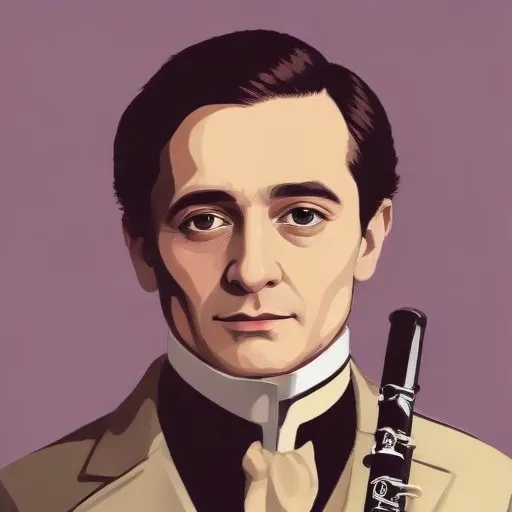
Johann Joachim Quantz: The Flutist and Composer Who Shaped the Baroque Period
A Master of the Flute
Johann Joachim Quantz is renowned for his mastery of the flute, composing hundreds of flute sonatas and concertos that showcased his virtuosity. His treatise, "On Playing the Flute," remains an influential guide for flute performance, demonstrating his profound understanding of the instrument and its capabilities.
Early Life and Musical Beginnings
Born in Oberscheden, near Göttingen, in the Electorate of Hanover on January 30, 1697, Quantz was initially destined to follow in his father's footsteps as a blacksmith. However, after his father's death, he was given the opportunity to pursue a different career path. Quantz began his musical studies with his uncle, Justus Quantz, a town musician in Merseburg, and later with
Johann Friedrich Kiesewetter, an organist.
Formative Years and Influences
From 1714 to 1716, Quantz devoted himself to the study of composition, pouring over scores of renowned masters to adopt their style. He joined the town band in Dresden in 1716 and later studied counterpoint with
Jan Dismas Zelenka. In 1718, he became an oboist in the Dresden Polish Chapel of August II, Elector of Saxony and King of Poland. During this period, he befriended
Johann Georg Pisendel, concertmaster of the Royal Orchestra, who significantly influenced his style.
The Grand Tour and Flute Studies
Between 1724 and 1727, Quantz embarked on a Grand Tour of Europe as a flutist, further refining his skills. He studied briefly with Pierre-Gabriel Buffardin, principal flute in the Royal Orchestra, and
Francesco Gasparini, a composer and counterpoint expert.
Compositions and Legacy
Quantz's extensive oeuvre includes over 300 flute sonatas, concertos, and chamber music pieces. His compositions were appreciated by prominent composers such as
Johann Sebastian Bach,
Joseph Haydn, and
Wolfgang Amadeus Mozart. His work "On Playing the Flute" remains a valuable resource for flutists, offering insights into the performance practices of the Baroque period.
Court Life and Royal Associations
In 1741, Quantz became the flute teacher and composer to
Frederick the Great, King of Prussia, a position he held until his death in 1773. During his time at the court, he wrote numerous compositions for the king, including flute concertos and chamber music.
Philosophical Contributions
Quantz's treatise, "On Playing the Flute," not only provides practical advice on flute performance but also offers philosophical insights into the role of music in society. He believed that music should be a moral and emotional expression, rather than mere entertainment.
Influence on Modern Society
Quantz's legacy extends beyond the Baroque period. His compositions and performance practices have influenced generations of flutists, shaping the development of Western classical music. His treatise remains a seminal work, offering valuable insights into the art of flute playing and music pedagogy.
Personal Milestones and Key Life Events
- 1697: Born in Oberscheden, near Göttingen, in the Electorate of Hanover
- 1708-1713: Began musical studies with his uncle, Justus Quantz
- 1716: Joined the town band in Dresden
- 1718: Appointed oboist in the Dresden Polish Chapel
- 1724-1727: Completed the Grand Tour of Europe as a flutist
- 1741: Became flute teacher and composer to Frederick the Great, King of Prussia
- 1773: Died on July 12, at the age of 76
Timeline
- 1697 - Born in Oberscheden, near Göttingen, in the Electorate of Hanover
- 1708-1713 - Began musical studies with his uncle, Justus Quantz
- 1714-1716 - Devoted himself to the study of composition
- 1716 - Joined the town band in Dresden
- 1717 - Studied counterpoint with Jan Dismas Zelenka
- 1718 - Appointed oboist in the Dresden Polish Chapel
- 1724-1727 - Completed the Grand Tour of Europe as a flutist
- 1741 - Became flute teacher and composer to Frederick the Great, King of Prussia
- 1773 - Died on July 12, at the age of 76
By exploring Quantz's life, compositions, and philosophical beliefs, we gain a deeper understanding of the cultural and musical landscape of the Baroque period. His enduring legacy as a flutist, composer, and music theorist continues to inspire and influence generations of musicians.
FAQ
What was Johann Joachim Quantzs contribution to music?
Johann Joachim Quantz was a prominent German flute player and composer who made significant contributions to the development of the flute and its repertoire. He wrote numerous works for the flute, including concertos, sonatas, and chamber music.
How did Johann Joachim Quantz influence the development of the flute?
Johann Joachim Quantz was a pioneer in the development of the modern flute, and his writings and teachings helped to establish the instrument as a central part of classical music. He was also an influential teacher, and his students included several prominent flute players and composers.
What was Johann Joachim Quantzs relationship with Frederick the Great?
Johann Joachim Quantz was a favorite of Frederick the Great, King of Prussia, and served as his flute teacher and composer. He wrote several works for the king, including concertos and chamber music.
What legacy did Johann Joachim Quantz leave behind?
Johann Joachim Quantz left behind a significant legacy as a flute player, composer, and teacher. His works remain important parts of the classical flute repertoire, and his influence can still be seen in the development of the flute today.
Where did Johann Joachim Quantz live and work?
Johann Joachim Quantz lived and worked primarily in Berlin, where he served as flute teacher and composer to Frederick the Great. He also spent time in Dresden, where he was employed by the Elector of Saxony.