


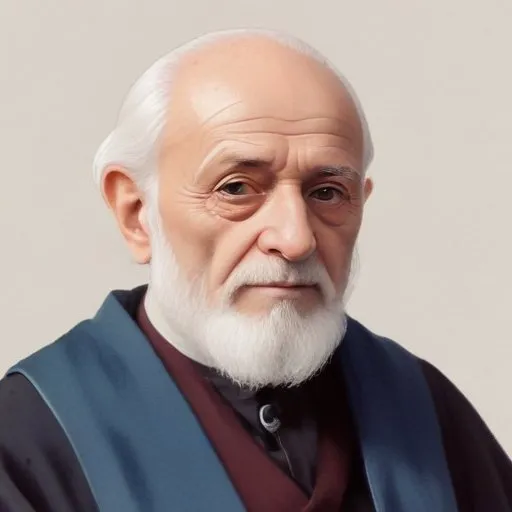
An Italian philosopher and academic who developed the philosophical basis for fascism, influencing Benito Mussolini's regime, and wrote extensively on idealism and the role of the state.
Giovanni Gentile, an Italian philosopher, fascist politician, and pedagogue, is renowned for being the intellectual foundation of Italian fascism, and his own philosophical system, known as actual idealism or actualism. He, alongside Benedetto Croce, was a prominent exponent of Italian idealism, which has been described as the subjective extreme of the idealist tradition.
Gentile was born on May 30, 1875, in Castelvetrano, Italy. He was inspired by Risorgimento-era Italian intellectuals such as Mazzini, Rosmini, Gioberti, and Spaventa, from whom he borrowed the idea of autoctisi, or self-construction. He was also strongly influenced by the German idealist and materialist schools of thought, namely Karl Marx, Hegel, and Fichte, with whom he shared the ideal of creating a Wissenschaftslehre, or Epistemology, a theory for a structure of knowledge that makes no assumptions.
Gentile's actual idealism or actualism posits that reality is purely spiritual and that the only true reality is the individual's consciousness. He believed that the individual's thoughts and feelings are the only true reality and that everything else is merely a projection of the individual's mind.
His philosophical system has been described as the subjective extreme of the idealist tradition, and he is often seen as one of the most important Italian philosophers of the 20th century.
Gentile's ideas had a significant impact on modern society. He was a key figure in the development of Italian fascism and provided an intellectual foundation for the movement. His ideas on education and pedagogy also had a lasting impact on the Italian education system.
In 1923, Gentile introduced the "Gentile Reform," which aimed to reform the Italian education system and promote the values of fascism. The reform had a lasting impact on the Italian education system and remained in place until 1962.
Gentile's association with fascism has been widely criticized, and he is often seen as a controversial figure. His support for Mussolini and the fascist regime has led to accusations of complicity in the regime's atrocities.
Despite this, Gentile remains an important figure in Italian intellectual history, and his ideas continue to be studied and debated by scholars today.
Gentile's legacy is complex and multifaceted. He played a significant role in shaping Italian fascist ideology and remains an important figure in Italian intellectual history.
However, his association with the fascist regime has tainted his legacy, and he is often remembered as a controversial figure.
Despite this, Gentile's ideas continue to influence philosophical debates, and his contribution to the development of Italian idealism remains significant.
Born in 1883
Italian fascist revolutionary and politician who led the National Fascist Party and ruled Italy from 1922 to 1943, known for his authoritarian regime and aggressive military campaigns.
Born in 1891
An Italian philosopher and politician who developed the concept of cultural hegemony, arguing that power is maintained through cultural and ideological means, rather than just economic or political control.
94 Years Old
A renowned Italian intellectual who wrote bestselling novels like "The Name of the Rose" and "Foucault's Pendulum", blending mystery, history, and philosophy, while also being a prominent literary critic and philosopher.
84 Years Old
Italian philosopher and academic who developed the concept of "homo sacer" and critiqued modern democracy, arguing that it often perpetuates a "state of exception" where citizens' rights are suspended. His work has influenced contemporary thought on politics, ethics, and human rights.
Born in 1889
A German philosopher and academic who explored the meaning of existence, time, and human existence, influencing 20th-century philosophy with his concept of "Being-in-the-world".
Born in 1906
A 20th-century philosopher and theorist who explored the nature of power, politics, and humanity, particularly in the context of totalitarianism and the Holocaust.
Born in 1899
A renowned philosopher and academic who interpreted ancient Greek philosophers, particularly Plato and Aristotle, to understand modern politics and society. His ideas have influenced contemporary political thought and American conservatism.
