


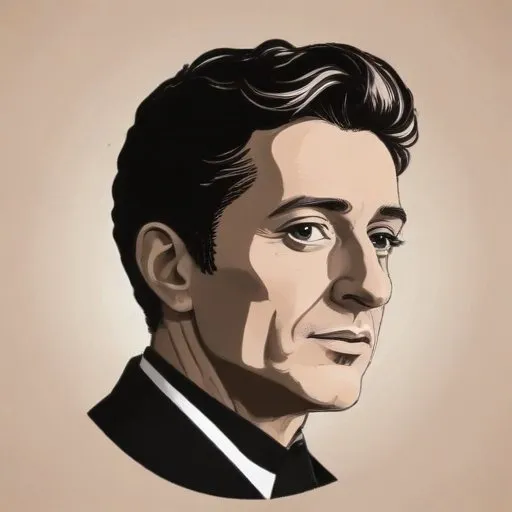
A prominent composer of classical music, particularly operas and symphonies, known for his contributions to the development of the classical period.
Giovanni Marco Rutini, born on April 25, 1723, in Florence, Italy, was a renowned composer, pianist, and kapellmeister who left an indelible mark on the world of opera and classical music. With a career spanning over four decades, Rutini composed numerous operas, piano sonatas, and other musical works that showcased his mastery of melody, harmony, and drama.
Rutini's early life was steeped in music, with his father, a violinist, introducing him to the world of classical music. He studied at the Naples Conservatorio della Pietà dei Turchini, where he honed his skills as a composer and performer.
In 1748, Rutini joined the Locatelli ensemble in Prague, where he began composing operas and kapellmeister works. His first Prague opera, Alessandro nell'Indie, premiered in 1750 to great acclaim, followed by Semiramide riconosciuta, dedicated to the nobility of the Czech Kingdom.
Rutini moved to St. Petersburg, Russia, with Locatelli and his ensemble, where he composed comic operas to librettos by Carlo Goldoni. He also had the privilege of teaching piano to Catherine II, the future Russian empress.
In the early 1760s, Rutini returned to Florence, where he continued to compose operas, including
Rutini's manuscripts are preserved in the Landesbibliothek in Dresden, the library of the Florence Conservatory, and the Civico Museo Bibliographico in Bologna. His contributions to opera and piano music have influenced generations of composers, including Wolfgang Amadeus Mozart and Ludwig van Beethoven.
Rutini's life and work serve as a testament to his dedication to his craft, his passion for music, and his ability to create works that continue to inspire and delight audiences to this day.
Born in 1782
A virtuosic violinist and composer who revolutionized the instrument's technical possibilities, leaving an indelible mark on classical music.
Born in 1770
A musical genius who expanded the possibilities of classical music, creating iconic symphonies and piano sonatas that continue to inspire and influence generations of artists.
Born in 1756
A child prodigy and master of classical music, he composed over 600 works, including symphonies, operas, and chamber music, that continue to inspire and influence musicians today.
Born in 1714
A pioneering opera composer who revolutionized the art form with his innovative and expressive works, blending music and drama in a way that captivated audiences.
Born in 1710
A Baroque composer, violinist, and organist who made significant contributions to the development of opera and sacred music, particularly with his famous "Stabat Mater" composition.
Born in 1749
An 18th-century Italian composer and educator, known for his operas and sacred music, particularly his comic operas that showcased his mastery of melody and harmony.
Born in 1714
A prominent composer of the Neapolitan School, he wrote over 80 operas and was a key figure in the transition between the Baroque and Classical periods. His music was known for its dramatic intensity and expressive melodies.
Born in 1740
An 18th-century Italian composer and educator, known for his operas and contributions to the development of classical music. His works were widely performed and admired by European royalty and aristocracy.
